Why Stretching in the Morning Helps (and What Really Drives It)
Many people assume that why stretching in the morning helps comes down to "lengthening tight muscles" after a night of lying still. That explanation is tidy, but it is only a small part of the picture. A more useful way to think about it is that morning stretching is a gentle signal to the whole body, including joints, circulation, and the nervous system, that it is time to shift from rest to activity. Individual experiences vary quite a bit, and stretching is not a cure for any condition.
Below, the common myth and the more likely explanations are paired side by side, followed by a way to tell which one might apply to you and a few questions readers often still have.
The common misconception: "Your muscles are just shortened overnight"
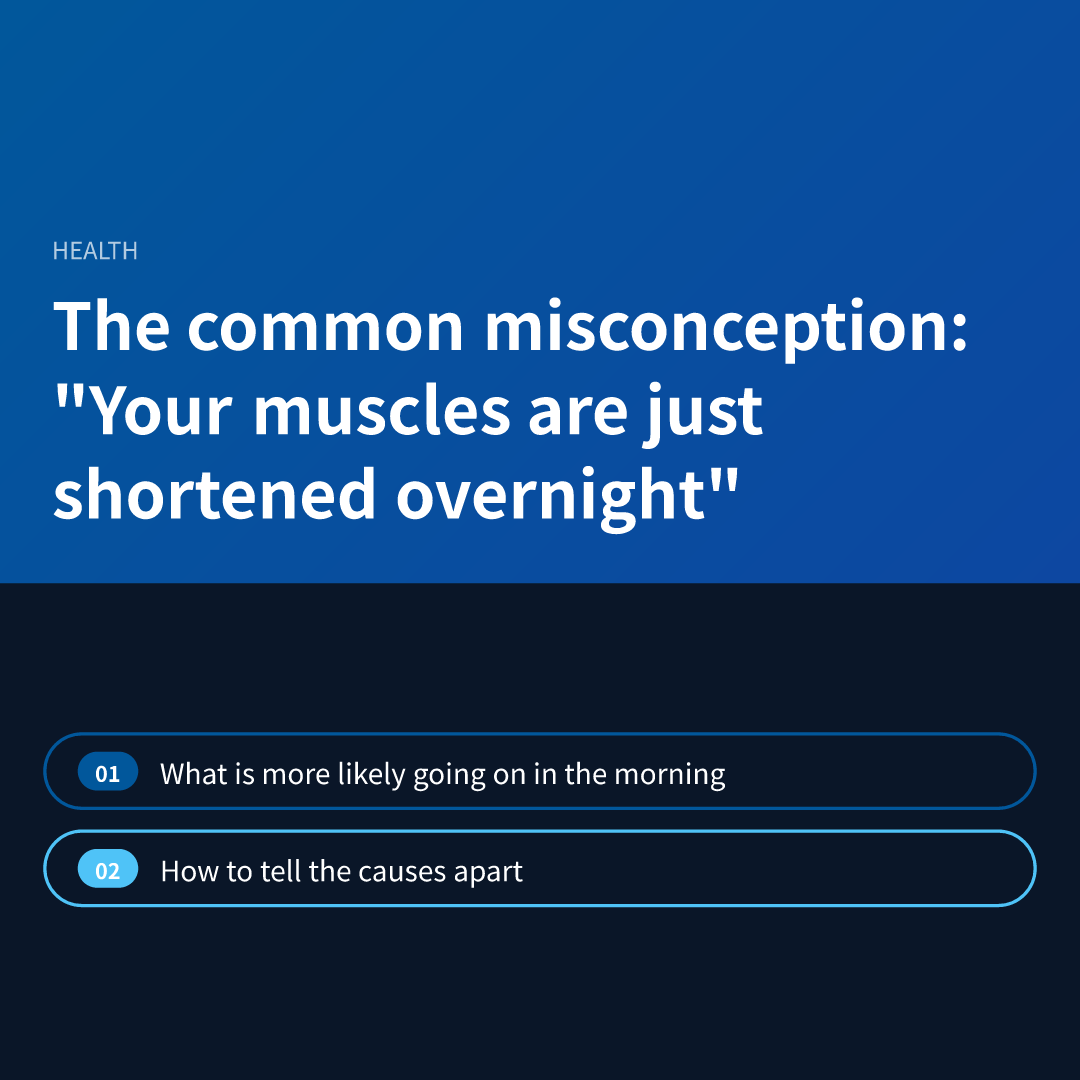
The popular story goes like this: you sleep curled up, your muscles shrink and tighten, and stretching pulls them back to their proper length. It sounds sensible, and it is easy to picture. But it is not a well-supported description of what happens in a healthy body.
Why the "shortened muscle" idea falls short
Muscles do not generally lose length in a few hours of sleep and then regain it in a few minutes of stretching. Sports medicine sources and general guidance from organizations such as the NIH describe stretching as something that can affect how far a joint moves and how a stretch feels, rather than permanently reshaping muscle tissue in one session. In other words, the sense of "loosening" is real for many people, but the mechanism is less mechanical than the myth suggests.
Why the myth persists
The myth lasts because the sensation is convincing. You wake up feeling stiff, you reach overhead, and a few moments later you feel looser. It is natural to connect those dots and conclude that muscles were short and are now long. The experience is genuine; the explanation attached to it is what tends to be oversimplified.
A related misunderstanding: stretching as a warm-up
Another assumption is that stretching alone "warms up" the body. General exercise guidance, including material from the CDC on physical activity, treats stretching and warming up as related but different things. Light movement that raises circulation is usually what people mean by a warm-up, while stretching mainly works on range of motion and comfort. Morning stretching can overlap with both, which adds to the confusion.
What is more likely going on in the morning
If shortened muscles are not the main story, what is? Several overlapping factors are commonly discussed. None of them is guaranteed to apply to every person, and they often work together.
Real cause 1: Reduced movement and joint fluid
During sleep, joints stay in relatively fixed positions for hours. Joints are lubricated by synovial fluid, which tends to circulate better when the joint moves. After a long stretch of stillness, many people notice a "gelling" feeling that eases as they start moving. Gentle stretching is one of the simplest ways to get those joints moving through their usual range, which may be part of why it feels good on waking.
Real cause 2: Circulation and body temperature
Body temperature and blood flow shift across the sleep-wake cycle. Early in the day, tissues are often a bit cooler and less primed for movement. Light stretching and easy movement may encourage blood flow to the muscles and surrounding tissue, which many people experience as feeling more ready to move. How pronounced this is differs from person to person and depends on things like age, fitness, and the room temperature.
Real cause 3: The nervous system and how a stretch feels
A great deal of what we call "tightness" is the nervous system's interpretation of tension, not just the physical state of the muscle. Research summarized by public health bodies suggests that tolerance to a stretch can change with repeated practice, meaning the body becomes more comfortable at a given range. Morning stretching may help set a calmer, more relaxed baseline for that sensation, which can make the first movements of the day feel easier.
Real cause 4: Posture, sleep position, and mattress effects
How you sleep can shape how you feel on waking. Side sleeping, a pillow that tilts the neck, or a mattress that does not suit your body may leave certain areas feeling cranky. Stretching may help you notice and ease those areas, but it does not replace attention to sleep setup if the same spot is sore day after day.
Real cause 5: Mood, breathing, and routine
Not every benefit is purely physical. Many people find that a few minutes of slow stretching and steady breathing creates a calm, intentional start to the day. General wellness guidance from sources like MedlinePlus often notes that regular physical activity is associated with better mood and stress management, and a gentle morning routine can be an easy entry point. This is one reason stretching can feel worthwhile even when the physical change is modest.
How to tell the causes apart
Because several factors overlap, it can help to pay attention to patterns rather than guessing. The goal is not to diagnose yourself, only to notice what your body seems to be telling you.
Stiffness that eases quickly with movement
If you feel stiff on waking but it fades fairly soon once you are up and moving, that pattern is commonly linked to ordinary overnight stillness, joint fluid changes, and circulation. For many people this is a normal, harmless feature of waking up. Light stretching may make the transition feel smoother, though it is not required.
Soreness tied to a particular spot or sleep position
If one side of your neck or one shoulder is regularly uncomfortable, the cause may relate to pillow height, mattress, or how you lie. Stretching might take the edge off, but adjusting the sleep setup is often discussed as the more direct fix. A change in how you feel when you alter your position is a useful clue.
Stiffness that lingers or comes with other symptoms
Morning stiffness that lasts a long time, returns daily, affects several joints, or comes with swelling, warmth, redness, or fever is a different situation. Health organizations such as the Arthritis Foundation and the NIH note that persistent morning stiffness can be associated with certain joint or inflammatory conditions. In that case, stretching is not a substitute for being evaluated by a qualified clinician.
Pain, numbness, or tingling
Sharp pain, numbness, tingling, or weakness is not the same as ordinary stiffness. If stretching makes these sensations worse, or they appear after an injury, it is sensible to stop and speak with a healthcare professional rather than push through. Comfort and gentle effort are generally the guideposts, not discomfort for its own sake.
Who may want extra guidance first
People who are recovering from an injury or surgery, who are pregnant, who have a known joint, spine, or bone condition, or who have balance or blood pressure concerns may want to ask a clinician or physical therapist what kinds of morning movement suit them. Personal circumstances change what is appropriate, so there is no single routine that fits everyone.
Keeping expectations realistic
Morning stretching is generally considered a low-barrier habit, but it is not a promise of specific results. Some people notice they feel looser and more alert; others notice little difference. Both experiences are common.
It also helps to keep the effort gentle. General guidance from public health sources tends to describe stretching as something done to a point of mild tension rather than pain, and breathing normally rather than holding your breath. How long and how often suits you is a personal matter, and a physical therapist or other qualified professional can tailor that to your body if you want specifics.
Finally, stretching is one piece of a broader picture. Overall physical activity, sleep quality, and daily posture habits are usually discussed alongside it. Stretching may complement those habits, but it does not replace them.
Frequently asked questions
Is it better to stretch right after waking or after moving around a bit?
Many people find it more comfortable to move lightly for a short while first, such as walking around or a few easy motions, before stretching more deeply. This is a common preference rather than a firm rule, and it varies with how stiff you feel and how your body responds. If you are unsure, a physical therapist can suggest an approach that suits your situation.
Does morning stretching improve flexibility over the long term?
Regular stretching is generally associated with gradual improvements in range of motion for many people, according to general fitness guidance from public health sources. Changes tend to build over time rather than appear right away, and the amount differs from person to person. Consistency and comfort usually matter more than intensity.
Can stretching in the morning replace exercise?
No, stretching is usually considered a complement to physical activity, not a replacement. The CDC's general physical activity guidance describes several types of movement, such as aerobic and muscle-strengthening activity, that stretching alone does not cover. A short stretching routine can still be a pleasant way to begin a more active day.
When should I talk to a professional about morning stiffness?
It is reasonable to seek qualified medical care if stiffness is long-lasting, keeps coming back, affects multiple joints, or is paired with swelling, warmth, fever, or unexplained pain. The same applies if you notice numbness, weakness, or symptoms that began after an injury. A clinician can look at your specific situation, which an article cannot do.
Disclaimer: This article is for informational purposes only and is not a substitute for professional medical advice, diagnosis, or treatment. Please consult a licensed professional for personal health decisions.
Related reading: Why Fiber Matters in Your Diet: What's Really Going On