Tips for Walking More During the Day, Without Overhauling Your Schedule
Many people now spend most of their waking hours seated, at a desk, in a car, or on a couch, and that pattern has made everyday movement a popular search topic. Remote work, long commutes, and streaming habits all quietly remove the small walks that used to happen on their own. Readers often aren't asking how to train for anything. They want to know how to move a bit more without rearranging their whole life.
The simplest answer is that walking more usually comes from changing your surroundings and routines slightly, not from relying on willpower. Tying short walks to things you already do, such as phone calls, coffee breaks, and errands, tends to be easier to keep up than a big new commitment. According to the CDC's general physical activity guidance, regular movement is linked with many health benefits, and even light activity is generally considered better than staying seated for long stretches. What suits you depends on your health, schedule, and surroundings.
Where This Question Comes Up
The question tends to appear at predictable moments. Someone starts a new desk job, moves to a car-dependent neighborhood, or notices after a long winter that their days have become very still. Others come to it after reading general public health messages about sitting too much and wonder where to begin.
Here is a typical, made-up example. Dana works from home on video calls from morning to late afternoon. She doesn't feel she has time for a gym routine, and by evening she's tired. Her real problem isn't motivation. Her day has no natural reasons to stand up and walk, so nothing prompts her to.
A second example: Marcus commutes by car and works in an office park with few sidewalks. He parks as close to the door as he can and eats lunch at his desk. For him, the obstacle is the environment, not the habit itself. Both situations show that "walk more" advice has to fit the setting, or it won't stick.
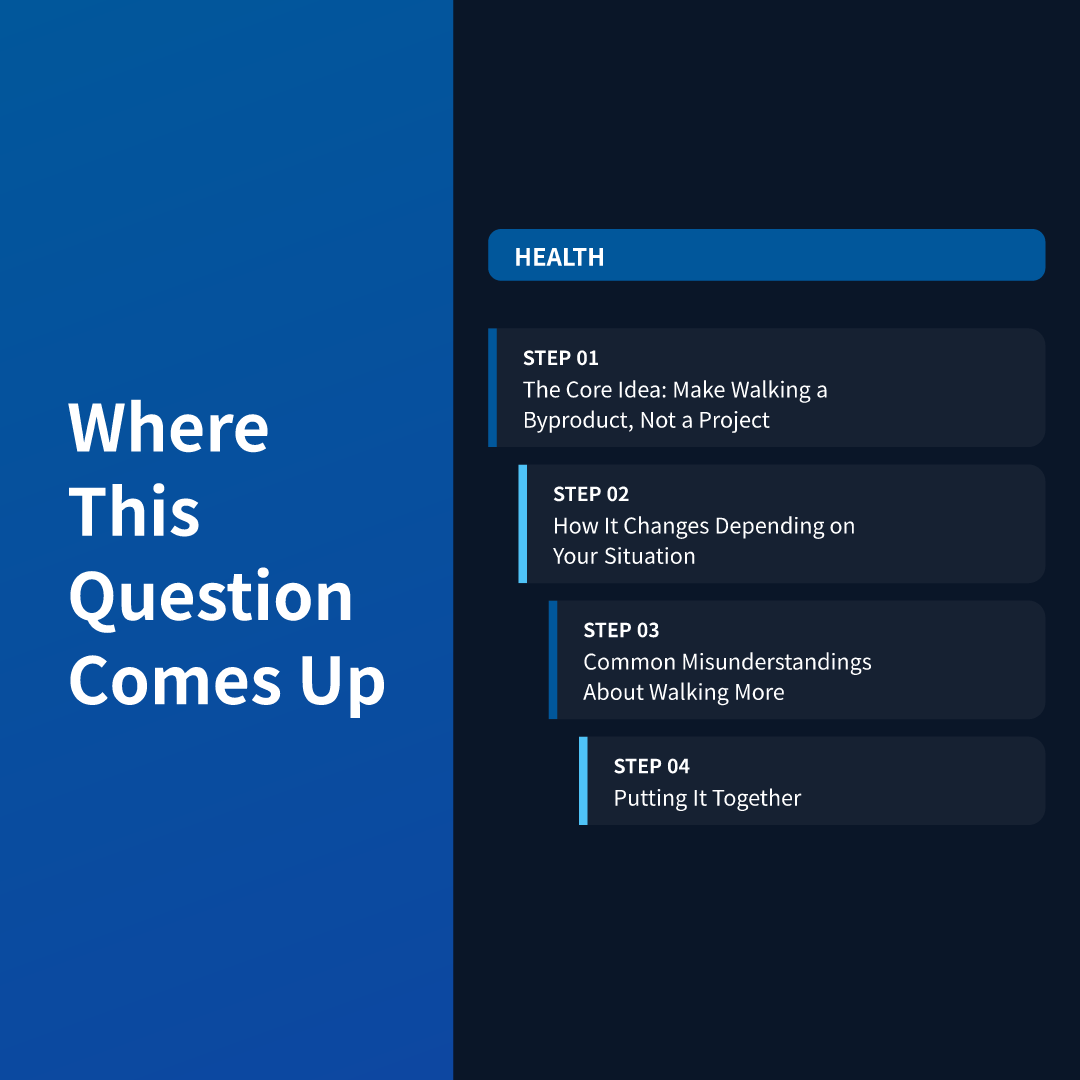
The Core Idea: Make Walking a Byproduct, Not a Project
A helpful way to think about it is that daily steps are the sum of many small moments. Instead of carving out a dedicated block of time, you look for ordinary points in the day where walking can replace standing still or sitting. Public health agencies such as the CDC and the National Institutes of Health generally describe physical activity as something that can be accumulated in shorter bouts, which is why short walks are widely considered worthwhile.
Attach walks to things you already do
Habit researchers often describe the idea of pairing a new behavior with an existing cue. In practice, that might mean walking while taking a phone call that doesn't need a screen, strolling around the block after a meal, or pacing during a routine check-in. The existing activity acts as the reminder, so you don't have to remember anything new.
Change the setup, not just the intention
Small environmental tweaks can quietly add movement. Some people park farther from entrances, get off public transit one stop early, or use the stairs when the destination is only a few floors up. Others place a water bottle or printer across the room so that getting up becomes part of the day. These changes work because they don't depend on feeling inspired.
Break up long sitting stretches
General guidance from public health sources often encourages interrupting long periods of sitting with brief movement. A short walk to refill a glass, check the mail, or stretch your legs counts as a break. Timers, calendar reminders, or a smartwatch nudge can help if you tend to lose track of time while focused.
How It Changes Depending on Your Situation
No single approach works for everyone. Your job, climate, neighborhood, energy level, and health history all shape what is realistic. The ideas below are starting points to adapt, not a prescription.
If you work from home
Dana's situation calls for creating "fake commutes" and built-in reasons to leave the chair. Some people take a short walk before starting work and another when they finish, which creates a boundary between the workday and personal time. Taking audio-only meetings on foot, or walking while thinking through a problem, can also fit naturally into a remote schedule.
If you work in an office or drive a lot
Marcus has different options. He might choose a lunch spot a short walk away instead of eating at his desk, or suggest walking one-on-one meetings with a colleague. Parking at the far end of the lot, or using a restroom on a different floor, adds small amounts of movement without much planning. Where sidewalks are limited, indoor options such as hallways, stairwells, or a nearby mall may help, depending on what is available and safe.
If you're a caregiver or run errands often
People who spend their days looking after children or relatives often already move a lot, but in short, interrupted bursts. For them, walking more may mean using stroller walks, choosing a farther store, or combining several errands into one on-foot trip. The goal is to notice opportunities that fit around responsibilities instead of adding another task to the list.
If weather, safety, or terrain gets in the way
Heat, cold, ice, poor lighting, and uneven sidewalks are legitimate barriers. Indoor walking, well-lit routes, daytime walks, and walking with a friend or neighbor are common workarounds. If a route feels unsafe, it's reasonable to pick a different one. Comfortable, supportive shoes and weather-appropriate clothing also make a difference for many people.
If you have a health condition or physical limitation
People living with heart or lung conditions, joint pain, balance problems, recent injury or surgery, pregnancy, or other concerns may need individualized guidance on how much and what kind of walking is appropriate. The CDC and the National Institute on Aging both note that activity recommendations can be adjusted for different abilities and conditions. A clinician who knows your history is the right person to help you decide what is reasonable.
Common Misunderstandings About Walking More
"It only counts if it's a long, dedicated walk"
Many people assume that short walks aren't worth the effort. General public health messaging, including from the CDC, tends to emphasize that movement can add up across the day. A few minutes here and there are not a replacement for everything else, but they are not meaningless either.
"I need a step count target to do this right"
Step counters can be motivating for some people and stressful for others. A number on a device is just one way to notice movement, and the right target varies by age, health, and lifestyle. If tracking makes walking feel like a chore or a source of guilt, it's fine to focus on simple habits instead, like taking a short stroll after meals.
"If I skip a day, the whole thing is ruined"
Busy weeks, illness, travel, and bad weather happen. Habits generally form through repetition over time, and one quiet day rarely undoes that. Returning to the next small opportunity is usually more useful than abandoning the plan.
"Walking more will fix everything"
Walking can be a pleasant part of a healthy routine, and it may support general well-being, mood, and energy for many people. It isn't a cure for any condition, and results vary from person to person. Sleep, nutrition, stress, medical care, and other factors matter too, so it's best to see walking as one piece of the picture.
"Pain means I'm doing it right"
Mild muscle awareness after moving more than usual can be normal for some people, but sharp, persistent, or worsening pain is not something to push through. Chest discomfort, unusual shortness of breath, dizziness, or fainting during activity are reasons to stop and seek medical attention promptly. When in doubt, it's better to ask than to guess.
Putting It Together
The most workable tips for walking more during the day tend to be small, flexible, and attached to routines you already have. Think about where your day is most still, and look for one or two spots to add a few minutes of movement. Over time, those small additions can feel natural instead of forced.
You don't need special gear or a perfect plan. A comfortable pair of shoes, a route you feel safe on, and a loose idea of when you might step outside are often enough to begin. If something doesn't fit your life, adjust it. The point is sustainability, not perfection.
Short Conclusion
- Anchor walks to existing routines like calls, meals, and errands so you don't have to rely on motivation alone.
- Adjust your surroundings and expectations to fit your job, weather, and abilities, because small changes can add up and what works varies from person to person.
- Build gradually and listen to your body, treating walking as one supportive habit and not a cure-all.
Consider talking with a doctor or other qualified health professional before increasing activity if you have a heart or lung condition, joint or balance problems, are pregnant, are recovering from an injury or surgery, or haven't been active in a long time. Seek medical care promptly if walking brings on chest pain, severe breathlessness, dizziness, fainting, or sudden swelling or pain in a leg. A professional can help tailor tips for walking more during the day to your own health and circumstances.
Disclaimer: This article is for informational purposes only and is not a substitute for professional medical advice, diagnosis, or treatment. Please consult a licensed professional for personal health decisions.
Related reading: Simple Ways to Eat More Vegetables Without Overthinking It