Why Fiber Matters in Your Diet: What's Really Going On
Many people assume fiber is just "roughage" that scrubs the digestive tract clean, but that picture misses what fiber actually does. Why fiber matters in your diet has more to do with how it changes the way food moves, how it feeds gut bacteria, and how it shapes the way you feel after eating. Fiber is the part of plant foods that your body cannot fully break down, and that very quality is what makes it useful. This article sets the common myths next to what is generally understood, so you can see where the confusion starts.
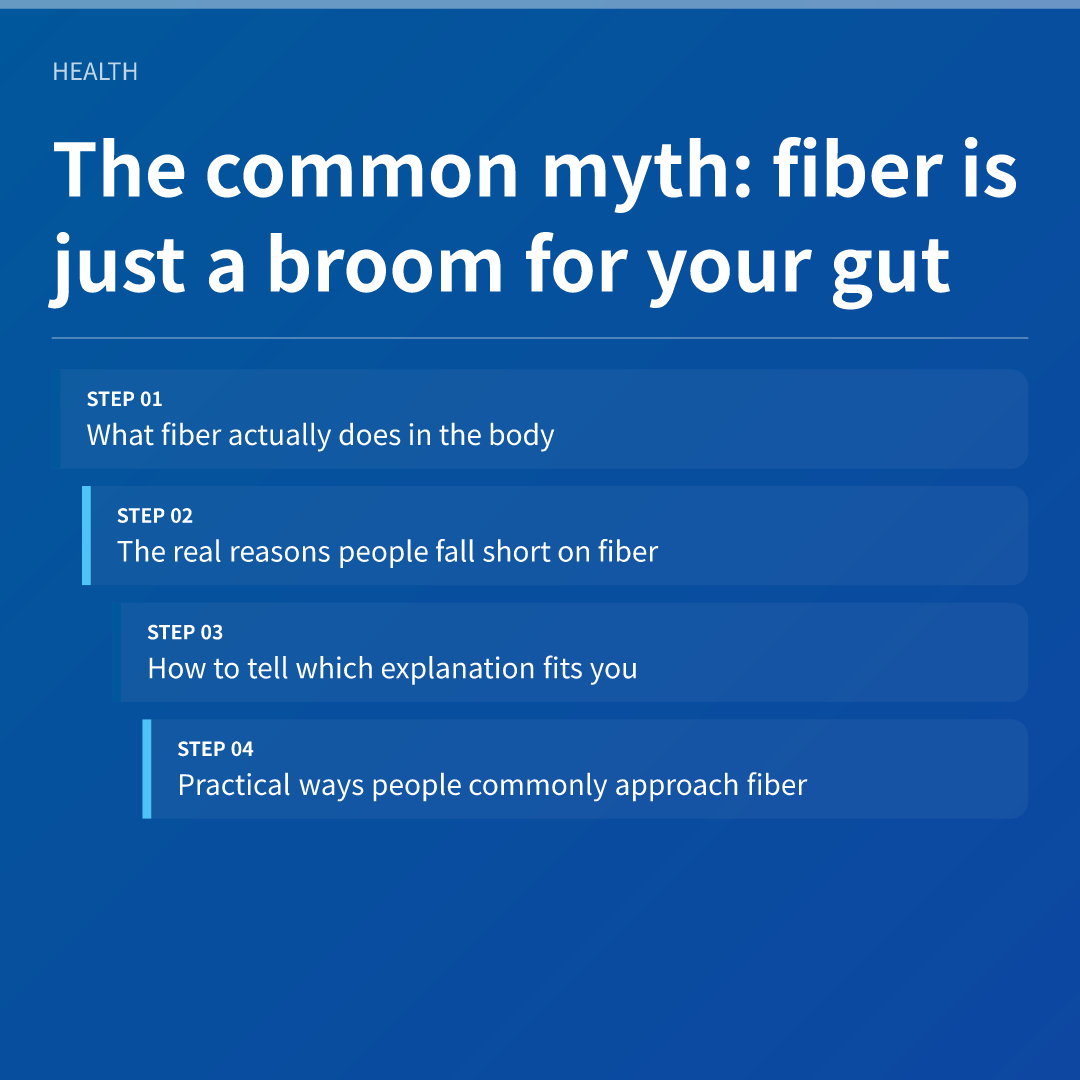
The common myth: fiber is just a broom for your gut
The most popular explanation is that fiber works like a brush, sweeping waste out of the body. It is a tidy image, and it is not entirely wrong, but it is incomplete. Treating fiber as a simple scrubber leads people to think more is always better, or that only one kind matters.
Myth: Fiber only matters if you are constipated. What is generally understood: Digestive regularity is one part of the picture. According to the National Institutes of Health and MedlinePlus general guidance, dietary fiber is also discussed in connection with fullness after meals, blood sugar patterns, and cholesterol. Constipation is just the most noticeable situation where people notice the difference.
Myth: Fiber passes through you and does nothing. What is generally understood: Because fiber is not absorbed like other carbohydrates, it is not "nothing." It adds bulk, holds water, and gives the bacteria in your large intestine something to work with. Passing through intact is the whole point.
Myth: A fiber supplement and a bowl of lentils are the same thing. What is generally understood: Whole foods bring fiber together with water, vitamins, minerals, and other plant compounds. Supplements exist and some people use them, but whether one makes sense for you is a question for a pharmacist or doctor, not something a general article can settle.
What fiber actually does in the body
Fiber is usually described in two broad types, and most plant foods contain a mix of both. Understanding the difference clears up a lot of the confusion above.
Soluble fiber: the gel-forming kind
Soluble fiber dissolves in water and forms a gel-like texture in the digestive tract. Foods such as oats, beans, apples, and citrus fruit are commonly mentioned as sources. Because the gel slows digestion, it is often linked with feeling full for longer and with a steadier rise in blood sugar after a meal. The U.S. Department of Agriculture's dietary guidance and the National Institutes of Health describe fiber-rich eating patterns as part of a balanced diet, though individual responses differ.
Insoluble fiber: the bulking kind
Insoluble fiber does not dissolve. It adds bulk and helps material move along. Whole grains, nuts, and the skins of many vegetables and fruits are typical sources. This is the type most connected to the "broom" idea, which is why the myth has some truth in it, just not the full story.
Fermentable fiber and your gut bacteria
Some fibers are fermented by bacteria in the large intestine. Researchers are actively studying how this process relates to gut health, and the science is still developing. It is reasonable to say that a varied, plant-rich diet gives gut bacteria a wider range of food, but claims about specific health outcomes should be treated cautiously. Individual gut makeup varies widely, so the same food can feel different from one person to the next.
The real reasons people fall short on fiber
The myth-based explanation says people eat too little fiber because they are lazy or do not "try hard enough." In practice, the reasons are usually more ordinary and more structural.
Everyday food patterns
Many convenient foods are made from refined grains, which have had much of their fiber removed. Quick breakfasts, white bread, pastries, and many snacks fall into this group. If meals lean on these items, fiber intake can drop without anyone noticing. The CDC and USDA dietary guidance generally encourage more vegetables, fruits, beans, and whole grains for this reason.
Not enough variety
Someone may eat a salad every day and still get a narrow range of plant foods. Different fibers come from different foods, so variety tends to matter as much as quantity. Beans, lentils, berries, seeds, whole grains, and a mix of vegetables each contribute differently.
Fluid and pacing
Fiber works alongside water. When fiber goes up quickly and fluids stay low, some people notice bloating, gas, or discomfort. This is one reason health organizations commonly suggest changing intake gradually rather than all at once. Everyone's tolerance is different, so pacing is a personal matter.
Health conditions and diet restrictions
Some people have digestive conditions, or are following a medically supervised diet, where fiber needs to be handled carefully. Certain bowel conditions, recent surgery, or swallowing difficulties can change what is appropriate. In those cases, general advice may not apply, and a clinician or registered dietitian is the right person to ask.
Budget, time, and access
Fresh produce can be expensive or hard to find in some areas, and cooking from scratch takes time. Canned or frozen vegetables and dried or canned beans are widely used options that many people find more practical. Reading labels can help, since packaged foods vary a lot.
Related reading: How to Choose Whole Grains at the Grocery Store
How to tell which explanation fits you
Because the myth and the real causes overlap, it helps to sort out what is going on in your own situation. None of this is a diagnosis, just a way to organize your thinking before talking with a professional.
- If meals are mostly refined or packaged foods: a food-pattern issue is a likely explanation. Fiber may simply be missing from the menu rather than something being wrong with your body.
- If you eat plenty of plants but feel bloated or uncomfortable: tolerance, pacing, or the type of fiber may be involved. Some people react more strongly to certain foods.
- If changes in bowel habits are new, persistent, or come with other symptoms: this is not a diet puzzle to solve alone. Unexplained changes are worth discussing with a healthcare professional.
- If you take medications or have a chronic condition: ask a pharmacist or doctor how fiber, including fiber supplements, may interact with your situation.
Signs that call for medical attention
Blood in the stool, ongoing abdominal pain, unexplained weight loss, persistent vomiting, or a sudden and lasting change in bowel habits should be checked by a qualified professional. These are not things to fix by adding more fiber on your own. The CDC and other health agencies consistently advise seeking care for warning signs like these.
Different needs at different life stages
Children, older adults, pregnant people, and those with specific health conditions may have different needs and tolerances. General guidance from agencies such as the USDA gives broad patterns, but a pediatrician, obstetric provider, or dietitian can tailor advice. What works for a friend may not suit you.
Practical ways people commonly approach fiber
Rather than overhauling everything, many people find small swaps more sustainable. This is general lifestyle information, not a personal prescription.
- Choosing whole grain versions of familiar staples, like bread, pasta, or rice, is a common starting point.
- Adding beans or lentils to soups, salads, and grain dishes is a widely used approach.
- Keeping the skin on fruits and vegetables, where appropriate, retains more fiber.
- Snacking on fruit, nuts, or raw vegetables instead of refined snacks is another everyday option.
Pairing these changes with regular fluids and a gradual pace is often described as more comfortable for the digestive system. If something causes persistent discomfort, it is reasonable to pause and ask a professional rather than push through.
Frequently asked questions
Can you have too much fiber?
Yes, some people experience gas, bloating, cramping, or changes in stool when fiber rises quickly or goes very high. Tolerance differs from person to person, and some health conditions call for extra care. If discomfort lingers, a doctor or registered dietitian can help figure out what is behind it.
Do fiber supplements work as well as fiber from food?
They are not identical, because food provides fiber alongside other nutrients and a variety of fiber types. Supplements are sometimes used for specific reasons, but whether one is appropriate depends on your health, medications, and goals. Ask a pharmacist or doctor before starting one, and follow the product label and their guidance.
Does cooking or processing change the fiber in food?
It can, though the effect depends on the food and the method. Heavy refining, such as turning whole grains into white flour, removes much of the fiber, while ordinary cooking generally leaves a lot of it in place. Checking ingredient lists and choosing less processed versions is a common way people keep more fiber in their meals.
Why do some high-fiber foods bother my stomach?
Fermentable fibers and certain carbohydrates in foods like beans, onions, and some grains can cause gas or bloating in some people. Sensitivity varies, and a sudden jump in intake often makes it more noticeable. If particular foods keep causing trouble, a healthcare professional can help sort out whether something else is going on.
Disclaimer: This article is for informational purposes only and is not a substitute for professional medical advice, diagnosis, or treatment. Please consult a licensed professional for personal health decisions.