How Many Steps a Day Is Reasonable for You?
You glance at your phone at the end of the day and see a step count that is far from the round number everyone talks about. Maybe you feel guilty, maybe you feel fine, and either way you wonder whether the number even matters. A reasonable daily step count is usually one that is a little higher than what you do now, fits your health and schedule, and can be kept up without pain or exhaustion, so there is no single magic figure for everyone.
The popular round-number goal has been repeated so often that many people treat it as a rule. It is better understood as a handy marker than a medical requirement. The sections below explain where step goals come from, how they shift from person to person, and when it makes sense to check in with a professional.
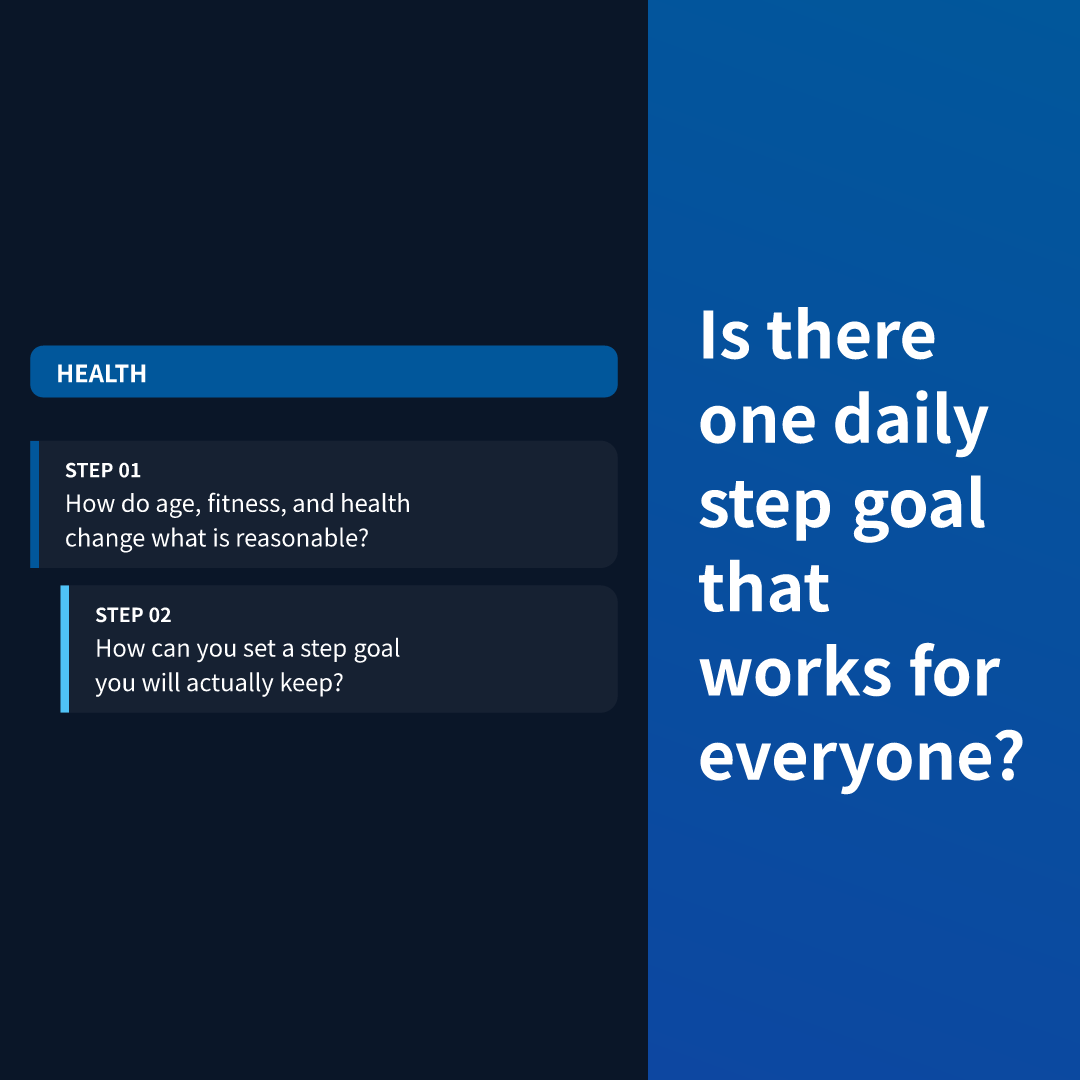
Is there one daily step goal that works for everyone?
No. Step goals are a rough tool, and what counts as reasonable depends on your age, health, fitness, and daily routine. A number that feels easy for a young, active person may be unrealistic for someone recovering from surgery or managing a long-term condition.
The well-known round-number target has a fairly casual history. It is often traced back to marketing for an early pedometer rather than to a formal medical recommendation. That does not make walking unhelpful. It simply means the figure is a convenient benchmark, not a threshold where health suddenly changes.
Public health guidance tends to focus on movement over time rather than steps. According to the CDC's physical activity guidance, adults are generally encouraged to include regular moderate-intensity activity during the week, along with muscle-strengthening activities. Brisk walking is one common way people meet that general guidance, and steps are just one way of tracking it.
Research summarized by public health agencies generally suggests that people who move more tend to have better health outcomes than people who are mostly sedentary. Some studies have also suggested that the benefits of added steps tend to level off at higher counts, and that older adults may see benefits at lower counts than younger adults. The exact pattern varies between studies, so it is best to treat any single figure with caution.
What a step count does and does not tell you
A step count measures how often you moved, not how hard you worked or how well you slept. Ten minutes of brisk walking and a slow stroll can produce similar steps but feel very different to your body. Pace, hills, and the rest of your day all matter.
Devices also vary. Phones, watches, and clip-on trackers may count a little differently, especially if you push a stroller, carry shopping, or keep your hands still while walking. Think of the number as a trend you can compare with yourself, not an exact measurement.
How do age, fitness, and health change what is reasonable?
Your starting point matters more than any universal target. For many people who are currently inactive, a sensible goal is to nudge their usual count upward gradually, rather than jump straight to a high number. Sudden jumps in activity can leave muscles, joints, and feet sore, and soreness makes it harder to keep going.
Age plays a role too. Older adults often get meaningful benefit from regular daily movement at counts lower than the figures aimed at younger adults, and balance and strength activities can matter just as much. The CDC and the National Institute on Aging both describe general activity guidance for older adults that includes aerobic movement, strength work, and balance practice, though specifics should be tailored to the individual.
Here are some situations where the answer can look quite different:
- Mostly sedentary days: Many people begin by noticing their usual pattern for a week, then aiming for a modest, steady increase.
- Desk-based work: Short walking breaks spread through the day may feel more doable than one long walk, and some people find this easier to sustain.
- Active jobs: Nurses, retail workers, and delivery drivers can rack up high counts without any exercise. Their goal may be recovery and variety rather than more steps.
- Older age: Comfort, balance, and fall prevention often matter as much as the number itself.
- Weight management goals: Walking can be one part of an overall routine, but results vary widely and depend on food, sleep, and many other factors.
Fitness level also changes what feels like effort. If a short walk leaves you breathless, that is useful information about your starting point, not a failure. Gradual progress tends to feel better than a sudden leap.
When a lower goal is the wiser goal
Some people have good reason to go slower or follow individual advice. This can include people with heart or lung conditions, joint problems, balance difficulties, foot or nerve problems, a history of falls, or those who are pregnant or recovering from an injury or procedure. Their clinician may suggest a different pace, duration, or type of activity.
If you take medication that affects your heart rate, blood pressure, or blood sugar, it is also reasonable to ask how increased activity may fit with your routine. The details depend on your situation, and that is a conversation for your healthcare team or pharmacist, not something a general article can settle.
How can you set a step goal you will actually keep?
Start from your current average, add a little, and focus on consistency rather than perfection. A goal that you can meet on most days is usually more useful than an ambitious one you abandon after a week. Many people find it easier to look at weekly patterns than to judge each day on its own.
Habit research in general suggests that attaching walking to something you already do tends to help. That might mean a short stroll after a meal, getting off public transit a stop early, or taking phone calls on your feet. These are ideas people commonly use, not rules, and what fits depends on your schedule and surroundings.
Pay attention to how you feel, too. Steady, comfortable walking should not cause sharp pain. Mild muscle tiredness can be normal when you do more than usual, but pain that is sudden, worsening, or sharp is a reason to pause and get advice.
Ways to make more steps feel manageable
- Break walking into shorter pieces if one long block feels hard to schedule.
- Choose supportive, comfortable footwear, especially as your activity increases.
- Walk with a friend, family member, or pet if company keeps you going.
- Use a tracker as a gentle prompt, not a judge, and take rest days when you need them.
- Consider weather, lighting, and terrain so that your route feels safe and comfortable.
It also helps to remember that steps are not the only kind of movement that counts. Swimming, cycling, and wheelchair-based activity do not always register on a step counter, yet they contribute to overall activity. If walking is not an option for you, a clinician or physical therapist can discuss alternatives that suit your body.
Signs it is time to talk with a professional
Seek medical advice before increasing activity if you have chest discomfort, unusual shortness of breath, dizziness, fainting, or unexplained swelling during or after walking. These can have many causes, and some need prompt attention. If symptoms feel severe or sudden, local emergency services are the right call.
It is also reasonable to ask a healthcare professional for guidance if you have a chronic condition, have been inactive for a long time, or are unsure what level is appropriate. MedlinePlus, the U.S. National Library of Medicine's consumer health resource, describes physical activity as beneficial for many people while noting that individual conditions can change the advice. A professional can tailor suggestions to you in ways a general guide cannot.
Related reading: Simple Ways to Eat More Vegetables Without Overthinking It
Frequently asked questions
Do I need to hit my step goal every single day?
No, missing a day does not undo your progress. Most people have busy days, sick days, and rest days, and looking at your weekly pattern is usually more realistic than judging one day. Consistency over time tends to matter more than any single total.
Can too many steps be a problem?
For some people, a sudden big increase can lead to sore feet, shin pain, or joint irritation. Gradual changes are generally easier on the body, and persistent pain is worth discussing with a healthcare professional. People with existing conditions should ask for individual guidance before making large changes.
Do steps count the same as other exercise?
Not exactly, because steps measure how much you move and not how intense the movement is. Public health guidance, including from the CDC, also mentions muscle-strengthening activity, and older adults are often encouraged to include balance work. Walking can be a helpful part of a broader routine, while other activities may add different benefits.
Disclaimer: This article is for informational purposes only and is not a substitute for professional medical advice, diagnosis, or treatment. Please consult a licensed professional for personal health decisions.