Simple Ways to Eat More Vegetables Without Overthinking It
Simple ways to eat more vegetables are small, repeatable food habits that add plant foods to meals you already eat, rather than a strict diet overhaul. They usually work by making vegetables easier, tastier, and more convenient, not by adding willpower. Below you will find what the idea actually means, where it fits in daily life, how it differs from similar ideas, and why it matters for everyday decisions.
What "Eating More Vegetables" Actually Means
At its core, the idea is about increasing the regular presence of vegetables in your meals and snacks. It does not require a particular food, a trendy powder, or a special plan. A handful of spinach in eggs, a side of roasted carrots, or raw peppers next to a sandwich all count as small additions.
According to the U.S. Dietary Guidelines for Americans, vegetables are a core part of a healthy eating pattern, and the guidance encourages variety across types such as leafy greens, red and orange vegetables, beans and peas, and starchy vegetables. The USDA's MyPlate guidance also describes filling a meaningful part of the plate with vegetables and fruits. Exact amounts depend on age, sex, activity level, and individual needs, so a general guideline is a starting point rather than a personal prescription.
Fresh, frozen, canned, and cooked all count
Many people assume only raw, fresh produce is worthwhile. The USDA's MyPlate guidance notes that fresh, frozen, canned, and dried options can all fit into an eating pattern. Frozen and canned vegetables are often more affordable and last longer, which can make them practical for busy households. If sodium is a concern, labels are worth reading, and a pharmacist, doctor, or registered dietitian can help with personal limits.
"Vegetable" is a broad category
Leafy greens, cruciferous vegetables like broccoli and cabbage, root vegetables, alliums like onions and garlic, and legumes are all commonly grouped under the vegetable umbrella in dietary guidance. Variety matters because different vegetables provide different mixes of fiber, vitamins, minerals, and plant compounds. Thinking in terms of variety rather than a single "superfood" keeps the goal realistic.
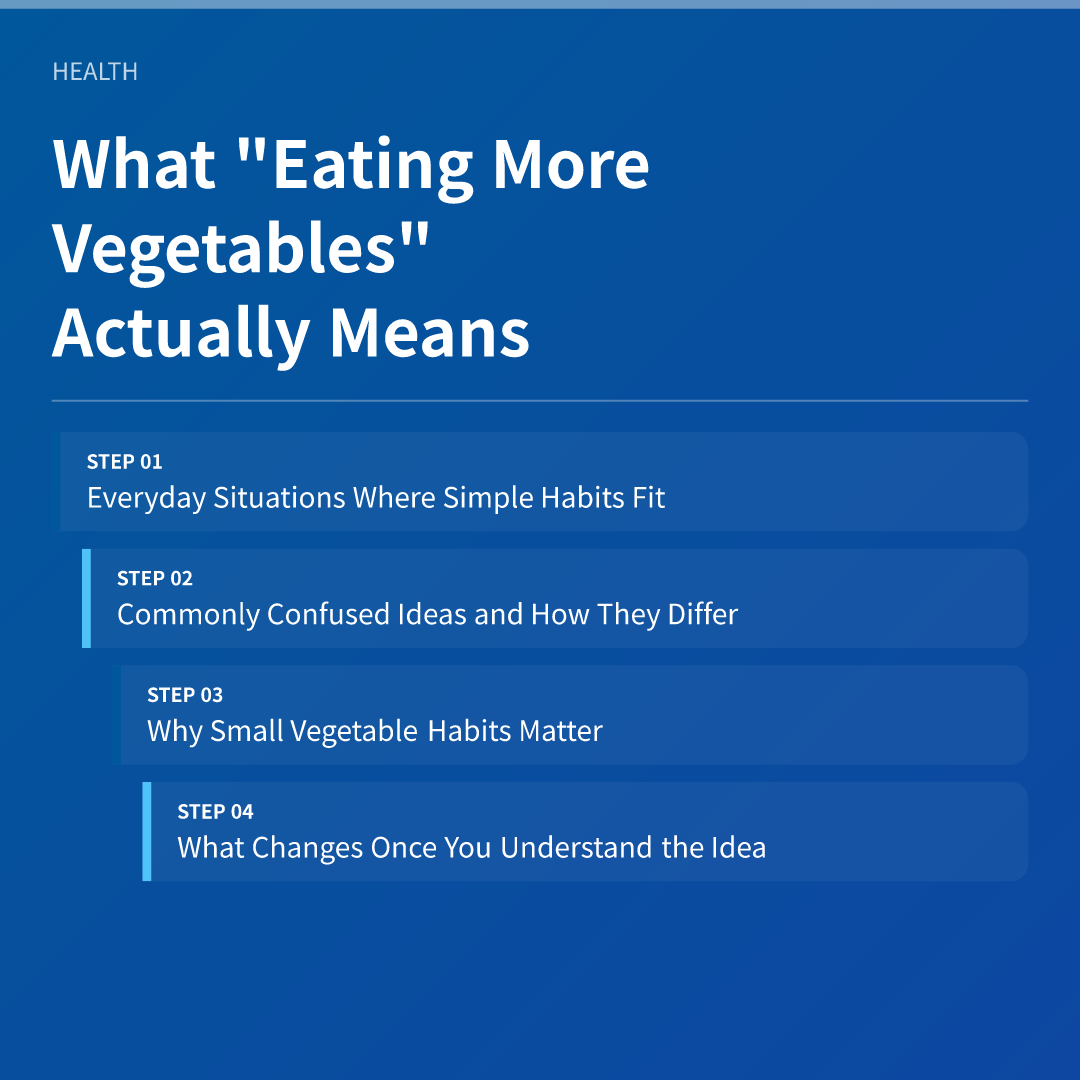
Everyday Situations Where Simple Habits Fit
The easiest changes tend to attach to routines you already have. Think of it like adding a lane to a road you already drive, rather than building a new road. Here are common situations and the kinds of adjustments people often find manageable.
Breakfast
Breakfast is often the meal with the fewest vegetables. Some people add spinach, tomatoes, or mushrooms to eggs, blend greens into a smoothie, or put leftover roasted vegetables into a breakfast wrap. If mornings are rushed, preparing ingredients the night before can reduce friction.
Lunch and packed meals
Sandwiches and wraps can hold extra lettuce, cucumber, shredded carrots, or sliced peppers. Soups and grain bowls are flexible, and a bag of baby carrots or snap peas beside a lunch is about as low-effort as it gets. Washing and cutting vegetables once for several days is a common time-saver.
Dinner
Dinner is where many people already eat vegetables, so the opportunity is often in proportion and flavor. Some households fill part of the pan with extra vegetables in stir-fries, pasta sauces, tacos, casseroles, and curries. Roasting, grilling, sautéing with a little oil, or adding herbs and spices can change how appealing the same vegetable tastes.
Snacks
Snacking is a natural spot for raw vegetables with hummus, yogurt-based dips, or nut butter pairings where appropriate. Roasted chickpeas, edamame, or a small side salad can also fill that role. People with food allergies or digestive conditions should check what suits them with a qualified professional.
Eating out and busy days
When cooking is not an option, many restaurants offer vegetable sides, salads, or vegetable-forward mains. Pre-cut produce, salad kits, steam-in-bag frozen vegetables, and canned beans or tomatoes can bridge the gap on hectic days. These are convenience tools, not shortcuts that cancel a healthy pattern.
Commonly Confused Ideas and How They Differ
The phrase gets mixed up with several nearby concepts. Separating them can prevent frustration and unrealistic expectations.
Eating more vegetables versus going vegetarian or vegan
Adding vegetables does not mean removing meat, dairy, or other foods. Vegetarian and vegan diets are broader eating patterns with their own planning considerations. A person can eat more vegetables while still following any eating style, and anyone changing their overall diet substantially may want to talk with a registered dietitian or doctor.
Vegetables versus juices, powders, and supplements
Juices, green powders, and supplements are sometimes marketed as vegetable replacements. The U.S. Food and Drug Administration regulates dietary supplements differently from medicines, and supplements are not intended to treat or prevent disease. Whole vegetables generally provide fiber and a combination of nutrients that processed products may not match. Anyone considering a supplement, especially while taking medication, should ask a pharmacist or doctor first.
Eating more vegetables versus a "detox" or cleanse
Adding vegetables is a gradual habit, not a cleanse. Short-term detox plans often make sweeping claims that are not well supported, and results vary. A steady pattern of varied foods is generally what public health guidance emphasizes.
Eating more vegetables versus a weight-loss plan
Vegetables can be part of many eating patterns, and some people find that filling meals with them helps them feel satisfied. But the idea is about overall food quality, not a promise of weight change. Body weight depends on many factors, and a healthcare professional can discuss personal goals.
Why Small Vegetable Habits Matter
Many people find it hard to fit as many vegetables into their daily meals as they would like. Many people enjoy eating patterns built around vegetables, fruits, whole grains, and other nutrient-dense foods as part of a varied, balanced diet. These are patterns observed across populations, and they do not guarantee any individual outcome.
Vegetables are generally good sources of fiber, and the National Institutes of Health describes fiber as important for digestive health. Many vegetables are also naturally lower in calories for their volume, which is part of why they are often used to build filling meals. Still, nutrient needs differ, and no single food can do everything.
Why "simple" tends to beat "perfect"
Big, rigid goals often fall apart within a few weeks, while small changes are easier to repeat. Behavior researchers commonly describe habits as more durable when they are tied to existing routines and require little effort. That is why starting with one meal, one vegetable, or one easy prep step is a reasonable approach for many people.
Practical obstacles worth naming
- Taste: Bitterness or texture can put people off. Different cooking methods, seasonings, and pairings may change the experience, and tastes can shift gradually over time.
- Cost: Frozen, canned, and seasonal options are often more budget-friendly. Local programs and community resources may also help.
- Time: Pre-cut or pre-washed products and batch prep can reduce effort.
- Food waste: Freezing leftovers or using vegetables in soups and sauces can help stretch groceries.
- Household preferences: Letting family members choose a vegetable or customize toppings can ease resistance, especially with children.
Personal variation and cautions
Some people need to adjust vegetable intake for health reasons. For example, those on certain blood-thinning medications are often advised to keep leafy green intake consistent, and people with kidney conditions may have specific guidance about certain vegetables. Increasing fiber quickly can cause gas, bloating, or discomfort in some people, and a gradual change is commonly suggested. People with irritable bowel syndrome, other digestive conditions, food allergies, or a history of disordered eating should consider talking with a doctor or registered dietitian before changing their eating habits.
Seek medical care if you notice persistent digestive symptoms, unexplained weight changes, signs of an allergic reaction such as hives or swelling, or anything else that worries you. Food habits are one piece of overall health, and they do not replace medical evaluation.
What Changes Once You Understand the Idea
Seeing simple ways to eat more vegetables as small, flexible additions rather than a strict diet shifts how you decide things day to day. Two judgments in particular tend to change.
- You judge a meal by what you can add, not what you must give up. Instead of asking whether a dinner is "good" or "bad," you can ask whether a vegetable could fit in somewhere, whether fresh, frozen, or canned. That keeps the focus on progress rather than perfection.
- You judge a product or plan by whether it replaces food or supports it. When a juice, powder, or cleanse claims to do the work of vegetables or to fix a health problem, you will know to be cautious, check the source, and ask a pharmacist, doctor, or registered dietitian before relying on it.
Disclaimer: This article is for informational purposes only and is not a substitute for professional medical advice, diagnosis, or treatment. Please consult a licensed professional for personal health decisions.
Related reading: Simple Stretches for Desk Workers: Why Your Body Stiffens