Beginner Strength Exercises at Home: Terms Explained
Starting beginner strength exercises at home often stalls on vocabulary rather than effort. Words like "reps," "sets," "progressive overload," and "neutral spine" show up in videos and articles as if everyone already knows them, and it is easy to feel behind before you begin. This guide translates the most common terms into plain language, explains why each one matters, and points out the misunderstandings that trip beginners up.
Nothing here is a personal exercise prescription. Bodies, health histories, and goals differ, so treat this as general background that can help you ask better questions of a qualified professional.
Key terms explained in plain language
Each term below follows the same pattern: what it means in everyday words, why it matters, and where people commonly get it wrong.
Repetition and set
In plain words: A repetition (rep) is one complete movement, such as lowering into a squat and standing back up. A set is a group of reps done together before resting.
Why it matters: Reps and sets are the basic building blocks of nearly every strength plan, so understanding them makes written routines readable. They also give you a simple way to notice change over time.
Common misunderstanding: Many beginners assume more reps always means better results. In general, quality of movement and manageable effort matter more than piling on volume, and a trainer or clinician can help you judge what suits you.
Bodyweight exercise
In plain words: A bodyweight exercise uses your own weight as resistance, with no equipment. Squats, wall push-ups, and glute bridges are familiar examples.
Why it matters: Bodyweight movements are the usual starting point for home routines because they need little space or money. General public health guidance encourages including muscle-strengthening activity as part of overall activity, and this can be done at home.
Common misunderstanding: "Bodyweight means easy." Some bodyweight moves are quite demanding for a new exerciser, and many can be made easier or harder by changing angle, range of motion, or pace.
Progressive overload
In plain words: Gradually asking your muscles to do a little more over time, so they keep adapting.
Why it matters: If a routine never changes, the body tends to adjust and progress can level off. The idea is widely discussed in general exercise guidance on strength training.
Common misunderstanding: People hear "overload" and think it means pushing to exhaustion or pain. It generally refers to small, gradual changes, and sharp or worsening pain is a signal to stop and get advice rather than push through.
Range of motion
In plain words: How far a joint moves during an exercise.
Why it matters: Moving through a comfortable range helps you practice control, and the right range differs from person to person based on mobility and any past injuries.
Common misunderstanding: Deeper is not automatically better. A smaller, controlled movement is often a sensible place to begin, and a professional can tell you what is appropriate for your joints.
Form
In plain words: The way you position and move your body during an exercise.
Why it matters: Good form is generally associated with working the intended muscles and reducing unnecessary strain. Because it is hard to judge your own form, many people find a mirror, a recorded video, or an in-person session with a qualified instructor useful.
Common misunderstanding: Beginners sometimes believe there is one perfect form for everyone. Bodies vary in proportions and flexibility, so small differences are normal.
Core and neutral spine
In plain words: The core is the group of muscles around your trunk, and a neutral spine means keeping your back in its natural, gently curved position rather than rounding or arching sharply.
Why it matters: These cues show up in nearly every beginner video, and they are meant to help you stay stable during movements like planks and bridges.
Common misunderstanding: "Core" does not mean only abdominal muscles or a visible six-pack. It involves muscles in the back, hips, and sides as well.
Rest and recovery
In plain words: The time between sets and between workout days when muscles are not being worked hard.
Why it matters: Muscles generally adapt during recovery, not only during the exercise itself. General guidance often notes that strength work is typically spread across the week rather than packed into every day.
Common misunderstanding: Skipping rest is often seen as dedication. Persistent fatigue, ongoing soreness, or pain that lingers can be a reason to slow down and check in with a professional.
Muscle soreness
In plain words: The achy, tender feeling that can appear a day or two after unfamiliar exercise.
Why it matters: Mild soreness is a common experience for new exercisers, so knowing it exists can reduce worry.
Common misunderstanding: Soreness is not a reliable measure of a "good" workout, and it is different from sharp, sudden, or joint-centered pain. Pain that feels wrong deserves attention from a clinician.
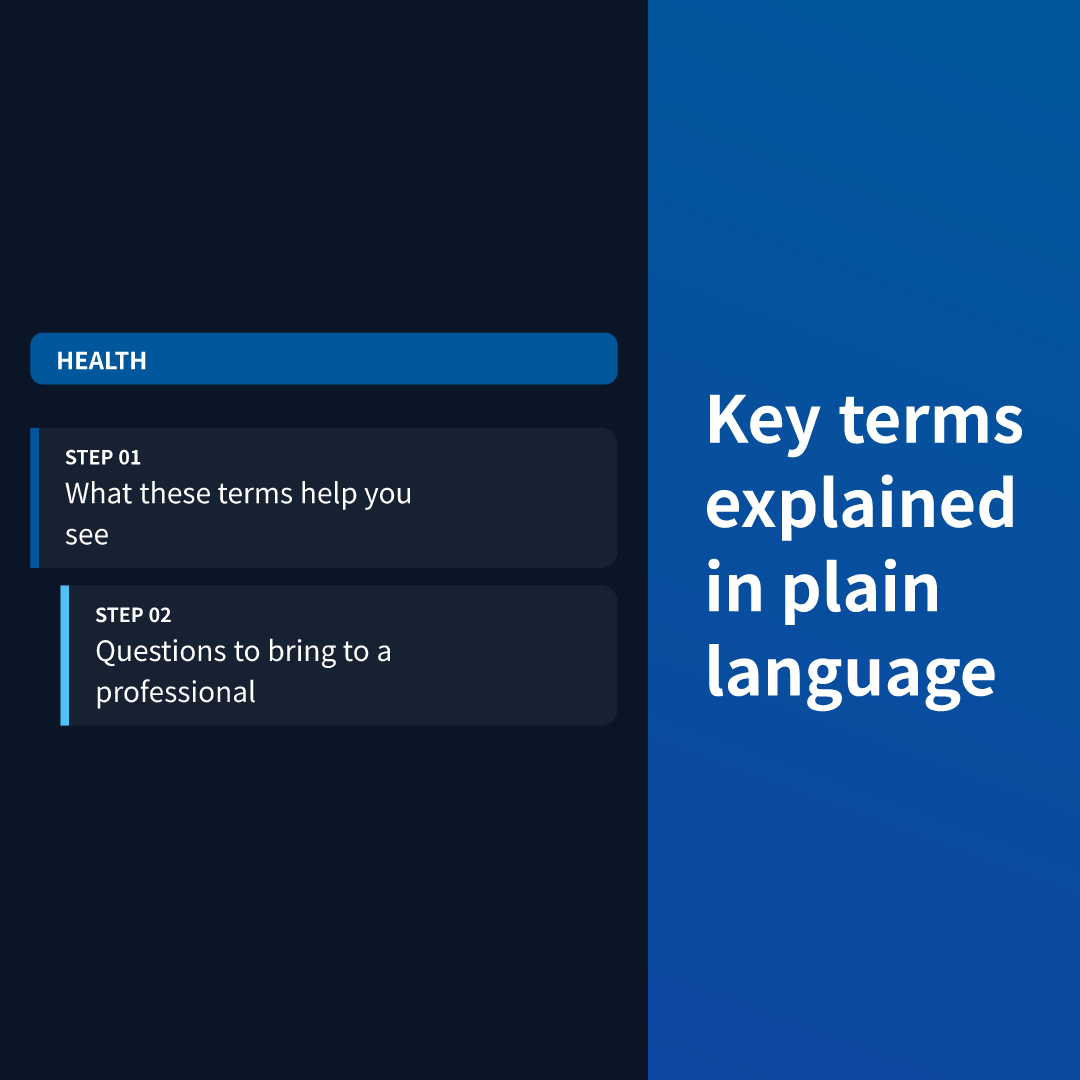
What these terms help you see
Once the vocabulary clicks, a lot of fitness content becomes easier to evaluate. A routine listing "three sets of ten reps" is simply describing how many movements to group together and how many times to repeat the group, and you can compare that to what feels manageable for you.
You also start to notice what is missing. A plan that never mentions rest, never explains how to adjust difficulty, or promises dramatic results in a short time is worth a second look. Results vary widely between people, and reputable guidance tends to emphasize gradual, consistent effort.
Understanding the terms also makes it easier to see why the same exercise can look different on different people. Someone with stiff hips, a past knee injury, or a recent period of inactivity may reasonably modify a move, and that is a normal part of exercising rather than a failure.
Who may want to check in first
General health guidance commonly suggests talking with a health professional before starting a new exercise program if you have a chronic condition, are pregnant or recently postpartum, have had an injury or surgery, or have been inactive for a long time. Chest pain, dizziness, unusual shortness of breath, or sudden sharp pain during exercise are reasons to stop and seek medical care promptly rather than wait.
If you are unsure whether any of these apply, asking is a reasonable first step. A clinician, physical therapist, or certified fitness professional can help you sort out what is appropriate for your situation.
Equipment and space
Most beginner programs at home need very little: a clear patch of floor, supportive shoes if you prefer them, a sturdy chair, and a wall. Some people later add resistance bands or light weights, but these are optional and not required to begin.
Surface and safety deserve a quick look. Slippery floors, cluttered spaces, and unstable furniture are common home hazards, so it helps to set up the space before you start.
Related reading: How to Start a Simple Home Workout Routine
Questions to bring to a professional
Whether you meet with a physical therapist, a certified trainer, or your own clinician, a few well-chosen questions can make the conversation more useful. You do not need to use technical language; plain wording works fine.
- "Are there movements I should avoid or modify, given my health history?" This opens the door to personal limits, such as joint concerns or a recent injury.
- "How would you describe a reasonable starting level for someone like me?" The answer depends on your activity history and goals, so it is better asked than guessed.
- "Can you watch me do one or two basic movements and comment on my form?" Many people find hands-on feedback more helpful than reading descriptions.
- "What should feel normal, and what should make me stop?" This helps you tell ordinary effort or mild soreness apart from warning signs.
- "How would I know when it is time to make things a bit harder?" This ties directly to progressive overload without guessing.
- "How do I fit this around other activities, like walking or sports?" A professional can help you think about the whole week rather than a single routine.
A good question is not one that sounds expert. It is one that gives the professional the information they need to guide you.
Signs it is time to get checked
Some experiences go beyond ordinary effort. Seek medical attention if you notice chest discomfort, fainting or near-fainting, severe or worsening joint pain, swelling, numbness or tingling that does not go away, or pain that persists well after you stop exercising. Emergency symptoms call for emergency services rather than an appointment.
Beginners sometimes worry they are overreacting. In general, it is better to ask than to assume a worrying symptom will pass on its own.
Frequently asked questions
Is it normal to feel awkward or unsure when I first try these movements?
Yes, feeling clumsy at the start is very common. New movements take practice, and coordination usually improves gradually as the patterns become familiar. If something feels confusing or uncomfortable, a short session with a qualified instructor can clear things up.
Do I need to be fit already before I begin?
No, beginner routines are designed for people who are not yet conditioned. What matters more is choosing movements that suit your current ability and health status, which a professional can help you work out. Starting modestly and building gradually is a widely described approach.
I am embarrassed that I cannot do a full version of a move. Does that mean I am doing something wrong?
Not at all, since modified versions exist precisely because people start at different places. Many exercises can be adjusted in angle, range, or support so that they match your current strength. Asking an instructor or clinician about a suitable variation is a normal, common request.
How do I know whether my pain is the "good" kind or a problem?
There is no perfect test, but mild muscle tiredness or soreness is often described differently from sharp, sudden, or joint-focused pain. If pain is intense, getting worse, or does not settle, stop and talk with a healthcare professional. When in doubt, asking is a sensible choice, and nobody expects you to diagnose it yourself.
Getting comfortable with the language of beginner strength exercises at home takes only a little time, and it makes every video, article, and conversation with a professional easier to follow. Keep your questions simple, listen to your body, and remember that results vary from person to person.
Disclaimer: This article is for informational purposes only and is not a substitute for professional medical advice, diagnosis, or treatment. Please consult a licensed professional for personal health decisions.