How to Choose Whole Grains at the Grocery Store
Standing in the bread or cereal aisle can feel like a quiz you didn't study for. Packages say "multigrain," "wheat," "made with whole grains," and "natural," and many of those phrases sound healthier than they really are. If you want to know how to choose whole grains with confidence, the short answer is to read the ingredient list rather than the front of the box, and to look for a whole grain named first. Fixing the confusion goes more smoothly when you take it in order: first decode the label, then adjust this week's shopping, then build habits that last.
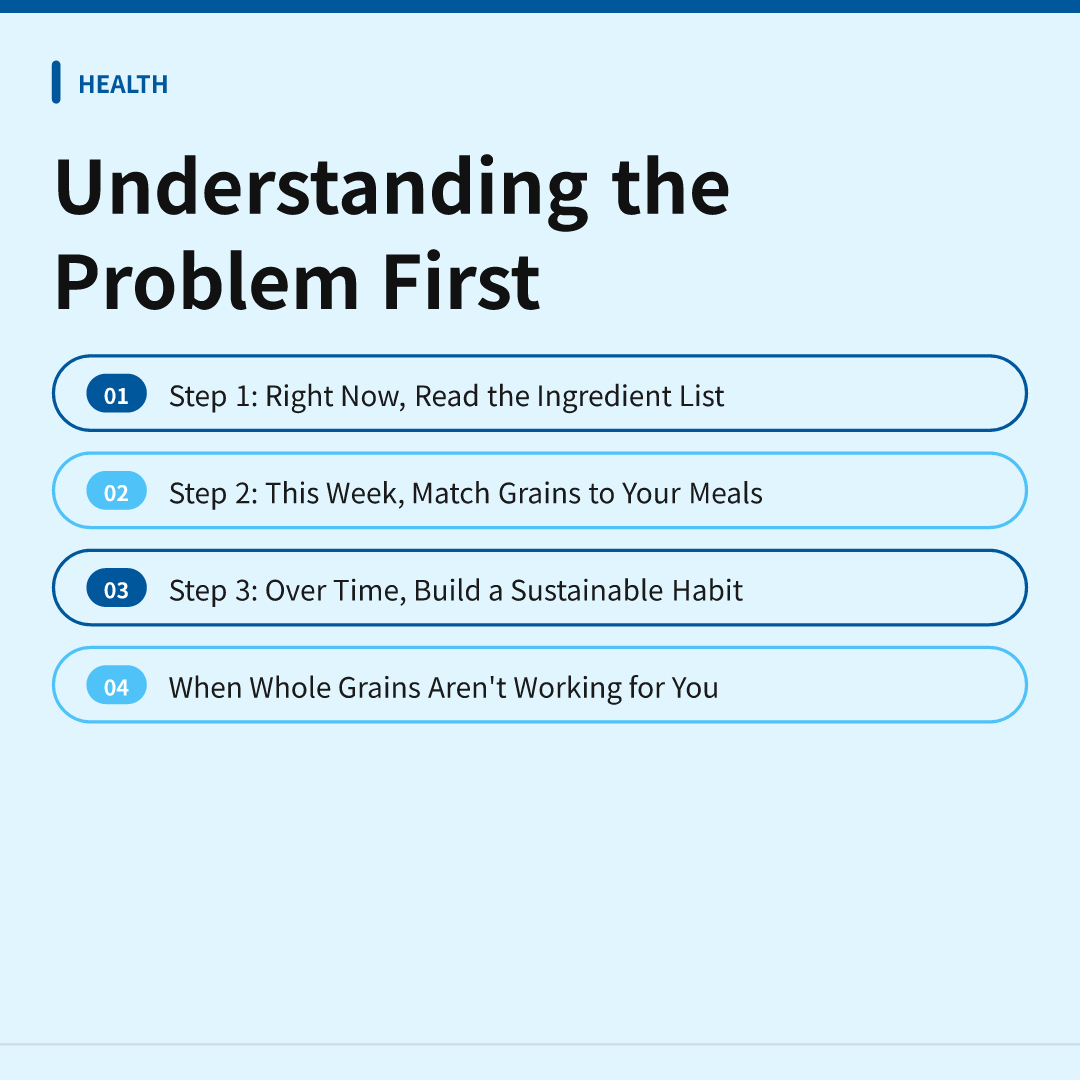
Understanding the Problem First
Most label confusion comes from a gap between marketing language and what is actually inside the package. A whole grain, in general terms, keeps all three parts of the kernel: the bran, the germ, and the endosperm. Refined grains have had some of those parts removed, which changes the texture, shelf life, and nutrient makeup.
According to the U.S. Department of Agriculture's MyPlate guidance and the Dietary Guidelines for Americans, people are generally encouraged to make a good share of their grain choices whole grains. The exact amount that fits you depends on your age, activity level, health conditions, and overall eating pattern.
Common label phrases that can mislead
- "Multigrain": This only means more than one type of grain is used. Those grains may all be refined.
- "Wheat bread": Refined wheat flour is still wheat. The color is sometimes added through molasses or caramel coloring.
- "Made with whole grains": The product may contain only a small amount of whole grain alongside mostly refined flour.
- "Stone-ground," "seven-grain," "natural": These describe style or marketing, not whole grain content.
The U.S. Food and Drug Administration has published labeling guidance on how whole grain claims can appear, and the FDA's Nutrition Facts materials explain how to read ingredient lists. Neither replaces your own close reading in the store.
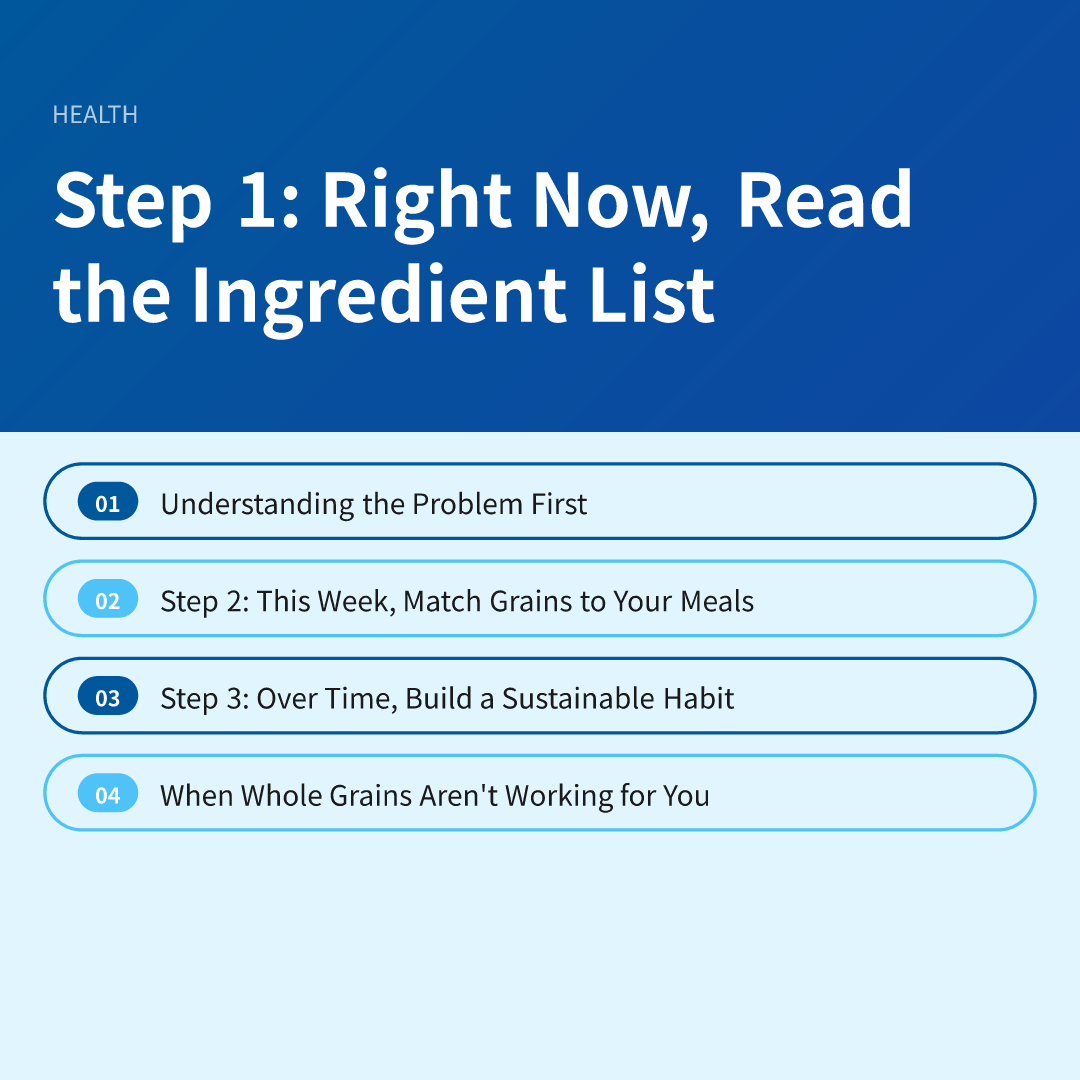
Step 1: Right Now, Read the Ingredient List
The fastest improvement you can make takes about ten seconds per product. Here is how to approach it.
- What: Flip the package over and find the ingredient list.
How: Look at the first one or two ingredients. Words like "whole wheat flour," "whole oats," "brown rice," "whole rye," or "whole grain corn" are good signs.
Why: Ingredients are listed by weight, from most to least, so the first entries tell you what the product is mostly made of. - What: Watch for look-alike terms.
How: "Enriched flour," "wheat flour," "unbleached flour," and "degerminated cornmeal" usually point to refined grain.
Why: These words sound wholesome but generally describe flour that has had the bran and germ removed. - What: Check for a whole grain stamp or statement.
How: Some packages carry a voluntary industry stamp or a statement about whole grain content. Treat it as a clue, then confirm with the ingredient list.
Why: Stamps can be helpful, but they vary in what they promise, and a product can carry one while still containing refined flour.
A useful rule of thumb: if the word "whole" does not appear near the start of the ingredient list, the product is probably not mostly whole grain.
Step 2: This Week, Match Grains to Your Meals
Once you can read labels, the next job is picking grains you will actually eat. A pantry full of ingredients you dislike tends to end up untouched, so this step is about fit rather than perfection.
- What: Choose two or three whole grain staples that suit your routine.
How: Think about where grains show up in your week: breakfast, sandwiches, side dishes, snacks. Swap one item in each spot, such as oatmeal for a sweetened cereal or whole wheat pasta for a regular version.
Why: Small swaps in familiar meals are usually easier to keep up than a total overhaul. - What: Try varieties you may not have cooked before.
How: Options often found in stores include oats, brown rice, quinoa, barley, bulgur, farro, millet, buckwheat, and popcorn. Texture and cooking style differ a lot, so sample in small packages first.
Why: Different grains have different flavors and chew. Finding one you like makes the habit more enjoyable. - What: Compare similar products side by side.
How: Put two loaves of bread or two boxes of crackers next to each other and compare ingredient lists, added sugars, and sodium.
Why: A product can be whole grain and still be high in added sugar or salt, so the grain is only one part of the picture.
Packaged versus plain grains
Plain grains such as oats, brown rice, or barley usually have a short ingredient list, which makes them simple to judge. Packaged foods like cereals, granola bars, and crackers are where marketing claims pile up. Many people find it easier to buy plain grains in bulk and rely on a handful of trusted packaged items.
Step 3: Over Time, Build a Sustainable Habit
Lasting change tends to come from gradual adjustments instead of a strict rulebook. This stage is about making whole grains a normal part of your kitchen without turning every meal into a project.
- What: Ease in if your digestion needs time.
How: Many people notice that a sudden jump in fiber-rich foods can bring bloating or gas. Increasing gradually and paying attention to fluids is a common approach described in general nutrition guidance.
Why: Your digestive system often adapts over time, though how quickly varies from person to person. - What: Store grains so they stay fresh.
How: Whole grain flours and products contain the germ, which has natural oils and can go stale sooner than refined versions. A cool, dry spot or a sealed container is commonly suggested, and some people keep flours in the refrigerator or freezer.
Why: Fresher grains generally taste better, which makes it likelier you will keep using them. - What: Keep an eye on cost and convenience.
How: Buying plain grains in larger quantities, choosing store brands, and cooking a batch to reuse during the week can keep prices manageable.
Why: A habit that fits your budget and schedule is easier to maintain than one that feels expensive or time-consuming.
Situations that call for extra care
- Celiac disease or gluten sensitivity: Wheat, barley, and rye contain gluten. Some grains and oats may be affected by cross-contact, so people avoiding gluten generally look for products labeled gluten-free and talk with a healthcare professional.
- Kidney conditions or specific diets: Some whole grains contain more phosphorus and potassium than refined versions, which may matter for people on restricted diets. A registered dietitian or doctor can advise on this.
- Diabetes or blood sugar concerns: Whole grains are often discussed as part of balanced eating, but portion size and the rest of the meal still matter. Individual responses differ, so personalized guidance is worthwhile.
- Swallowing, chewing, or digestive difficulties: Dense, chewy grains may not suit everyone. A clinician can suggest textures that work for your needs.
- Young children and older adults: Needs and tolerance differ by age, so general advice may not fit everyone in the household.
When Whole Grains Aren't Working for You
Sometimes you follow every step and still feel off. Maybe the new foods cause persistent stomach discomfort, you can't find options that suit your dietary restrictions, or you are unsure whether your eating pattern fits a health condition. Whole grains are widely recommended in general guidance, but they are not a perfect match for every person.
Consider reaching out to a qualified professional if you notice any of the following:
- Ongoing bloating, pain, constipation, or diarrhea after adding whole grains
- Symptoms that could point to an allergy or intolerance, such as hives, swelling, or breathing trouble (seek urgent care for severe reactions)
- A medical condition, medication, or special diet that may interact with changes in what you eat
- Unexplained weight changes or fatigue alongside shifts in your eating
- Uncertainty about what is appropriate for a child, an older relative, or someone who is pregnant
A primary care clinician or a registered dietitian can look at your full picture and help you decide how to choose whole grains in a way that fits your health, preferences, and budget. If label reading still feels overwhelming, bringing a few favorite products to an appointment can make the conversation more concrete.
Disclaimer: This article is for informational purposes only and is not a substitute for professional medical advice, diagnosis, or treatment. Please consult a licensed professional for personal health decisions.