How to Make a Simple Healthy Smoothie That Works
Knowing how to make a simple healthy smoothie mostly comes down to blending a few whole ingredients in sensible balance, and the fix for a disappointing smoothie depends on what went wrong. A drink that tastes grassy needs a different adjustment than one that leaves you hungry an hour later or one that turns out sweeter than you intended. Guessing wrong wastes ingredients and, worse, convinces people that smoothies "just aren't for them."
This guide sorts the common problems into causes, explains how to tell which one you have, and describes what generally helps. It is general food information, not personal nutrition advice, and needs vary from person to person.
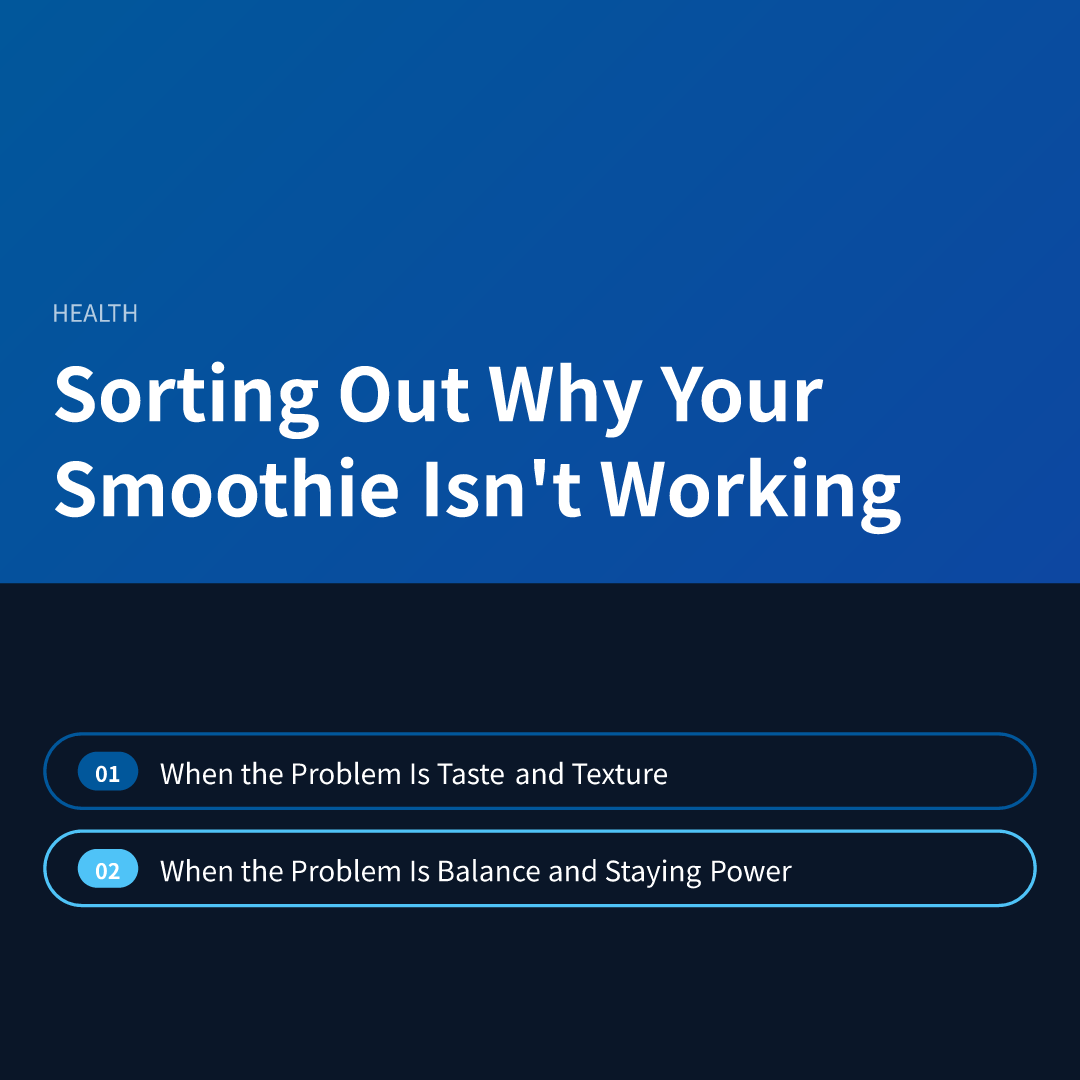
Sorting Out Why Your Smoothie Isn't Working
Most unsatisfying smoothies trace back to one of three things: the flavor, the texture, or what the drink does for you afterward (fullness and sweetness). They overlap, but treating them separately saves effort.
The basic building blocks
Before troubleshooting, it helps to know the usual structure. Most simple smoothies are built from a liquid base, one or two fruits, an optional vegetable, and something that adds body, such as yogurt, nut butter, oats, or seeds. Ice or frozen fruit supplies the chill and thickness.
- Liquid base: water, milk, or a plant-based milk, depending on taste and dietary needs.
- Fruit: bananas, berries, mango, or peaches are popular because they blend smoothly.
- Vegetables: spinach is a common mild choice; others like cucumber or cooked-and-cooled cauliflower also show up.
- Body and staying power: yogurt, nut or seed butters, oats, or protein sources.
According to the U.S. Department of Agriculture's MyPlate guidance, fruits and vegetables are a core part of a balanced eating pattern, and whole fruit is generally encouraged over relying heavily on juice. A smoothie can be one convenient way to fit produce into a day, though it is not the only way and does not replace varied meals.
Which problem sounds like yours?
Read the next two sections and see which one matches your experience. If neither fits, the shared tips afterward still apply.
- If the drink tastes unpleasant, bitter, chalky, or "like lawn clippings," start with the flavor and texture section.
- If it tastes fine but you are hungry soon after, or it feels more like dessert than a snack, look at the balance and fullness section.
When the Problem Is Taste and Texture
How to tell this is your issue
You probably have a flavor or texture problem if you stop drinking before the glass is finished, if you notice gritty bits or stringy leaves, or if the drink separates into a watery layer and a thick layer within minutes. Complaints like "it tastes too green" or "it's icy and watery" point here.
What generally helps
Flavor trouble often comes from too many competing ingredients or from ingredients that do not suit each other. Many people find that a smoothie with just a few components tastes cleaner than one with a dozen. Sticking to a base, one or two fruits, and one add-in is a reasonable starting point for a first attempt.
For a grassy taste, a common approach is to use a milder leafy green in smaller amounts and pair it with stronger-flavored fruit such as pineapple, mango, or berries. Frozen fruit tends to mellow harsh flavors and adds creaminess without watering things down the way ice can.
For a gritty or lumpy result, the usual culprits are not enough liquid, a blender that struggles with fibrous ingredients, or blending too briefly. Adding the liquid first, then softer items, then frozen pieces on top is a widely shared tip because it helps the blades catch everything. Seeds and oats often blend more smoothly when given a bit of extra time or when soaked briefly beforehand.
If the smoothie separates, a thickener that holds water can help. Banana, yogurt, avocado, or chia seeds are commonly used for this reason, and people differ on which texture they enjoy most.
The cost of misdiagnosing
If your real issue is flavor and you respond by adding more protein powder or more fruit, you may end up with a heavier, sweeter drink that still tastes off. Adjust one thing at a time so you can tell what actually changed.
Related reading: Simple Ways to Eat More Vegetables Without Overthinking It
When the Problem Is Balance and Staying Power
How to tell this is your issue
The drink tastes good, but you feel hungry again quickly, a little shaky or sluggish, or you realize the recipe leans heavily on fruit, juice, honey, or sweetened yogurt. Some people also notice that a large smoothie feels like far more than a snack. That pattern suggests a balance problem rather than a taste problem.
What generally helps
Fullness is influenced by several things, and the mix of nutrients is one of them. According to general guidance from the National Institutes of Health and MedlinePlus, foods containing protein and fiber are commonly associated with feeling satisfied longer. In smoothie terms, that often means including some yogurt, milk, nut butter, seeds, or oats alongside fruit, rather than fruit and juice alone.
Sweetness is a separate matter. Fruit naturally contains sugar, and the Dietary Guidelines for Americans encourage limiting added sugars. A smoothie made with whole fruit and unsweetened ingredients is generally different from one made with fruit juice, sweetened yogurt, syrups, or flavored milk. Reading labels on yogurt and plant-based milks is a simple habit, since sweetened and unsweetened versions can taste similar but differ in what they contain.
Portion size matters too. A smoothie in a very large cup can add up to a lot more food than people expect. Some find it useful to treat a small smoothie as a snack and a larger, more balanced one as a light meal, though what suits you depends on your appetite, activity, and health situation.
The cost of misdiagnosing
If hunger is the real issue and you keep tweaking flavor with extra fruit, you may raise the sweetness without improving staying power. On the other hand, if the problem is taste and you pile on seeds and powders, the drink can become thick, bland, or chalky. Checking which complaint is actually yours first keeps the changes useful.
Who may want extra caution
Smoothies are not a one-size-fits-all food. People managing diabetes or blood sugar concerns, kidney conditions, food allergies, or digestive conditions may need to think carefully about fruit amounts, certain ingredients, and portion size. Anyone on a medically directed diet, or who is pregnant, nursing, or preparing food for a young child, can ask a registered dietitian or clinician what fits their situation. Some leafy greens, for example, are relevant to people whose care teams discuss vitamin K intake, so it is worth asking rather than assuming.
Habits That Help Whichever Problem You Have
A few practices tend to make any smoothie routine easier and more enjoyable, regardless of the cause behind a poor first attempt.
Keep the recipe small and repeatable
A short ingredient list is easier to remember, cheaper to stock, and simpler to troubleshoot. Once you find a combination you like, small swaps keep it from getting boring.
Use frozen produce and prep ahead
Frozen fruit and vegetables are widely available and convenient, and many people portion ingredients into bags or containers ahead of time so blending takes only a minute. Keeping ingredients on hand makes it more likely the habit sticks.
Mind food safety and cleanliness
According to the U.S. Food and Drug Administration's general food safety guidance, rinsing fresh produce under running water before use and keeping equipment clean are standard precautions. Blenders have blades and seals where residue can collect, so washing them soon after use is generally recommended. Dairy-based smoothies are best kept cold, and leftovers do not hold up well for long, so it is reasonable to follow general refrigeration guidance and discard anything that smells or looks off.
Watch for how your body responds
Reactions vary from person to person. Some people feel bloated with certain ingredients, such as large amounts of raw greens, certain sweeteners, or dairy. If a particular ingredient seems to cause discomfort, it is reasonable to simplify the recipe and discuss it with a healthcare professional, especially if symptoms are persistent.
Keep expectations realistic
A smoothie can be a pleasant, convenient way to include fruit, vegetables, and other nutritious foods, but it does not do anything magical. It works best as one part of an overall eating pattern that includes a variety of whole foods, and it is not a substitute for medical care or a treatment for any condition.
Putting It Together
If your smoothie tastes or feels wrong, the fix usually sits in the texture and flavor: fewer ingredients, milder greens, frozen fruit for creaminess, and a sensible blending order. If it tastes fine but leaves you hungry or overly sweet, the issue is more likely balance: adding protein or fiber sources, using whole fruit rather than juice, choosing unsweetened bases, and watching portion size. Mixing up the two is what leads to wasted ingredients and frustration.
When you can't tell which problem you have, try changing just one thing per batch and notice the result, or keep a quick note of what you blended and how you felt afterward. If you have a health condition, take medications, or follow a special diet, a registered dietitian or your regular clinician can help you decide what a simple healthy smoothie should include for you. A basic, flexible approach to how to make a simple healthy smoothie tends to serve most people better than a perfect recipe.
Disclaimer: This article is for informational purposes only and is not a substitute for professional medical advice, diagnosis, or treatment. Please consult a licensed professional for personal health decisions.