How to Stay Active in Hot Weather Without Overdoing It
A very common reaction to a heat wave is to push through the same workout at the same time of day and just "tough it out." That usually backfires, because the body is already working harder to cool itself, so the same effort feels much heavier and carries more strain. If you want to know how to stay active in hot weather, the short answer is to adjust the timing, intensity, hydration, and clothing instead of ignoring the temperature. Personal factors such as age, health conditions, and medications change what is reasonable, so treat the ideas below as general information rather than a personal plan.
According to the CDC's general guidance on extreme heat, heat-related illness can develop when the body cannot cool itself well, and it can affect people who exercise or work outdoors. The goal here is not to keep you indoors. It is to help you keep moving in a way that respects how heat changes your body.
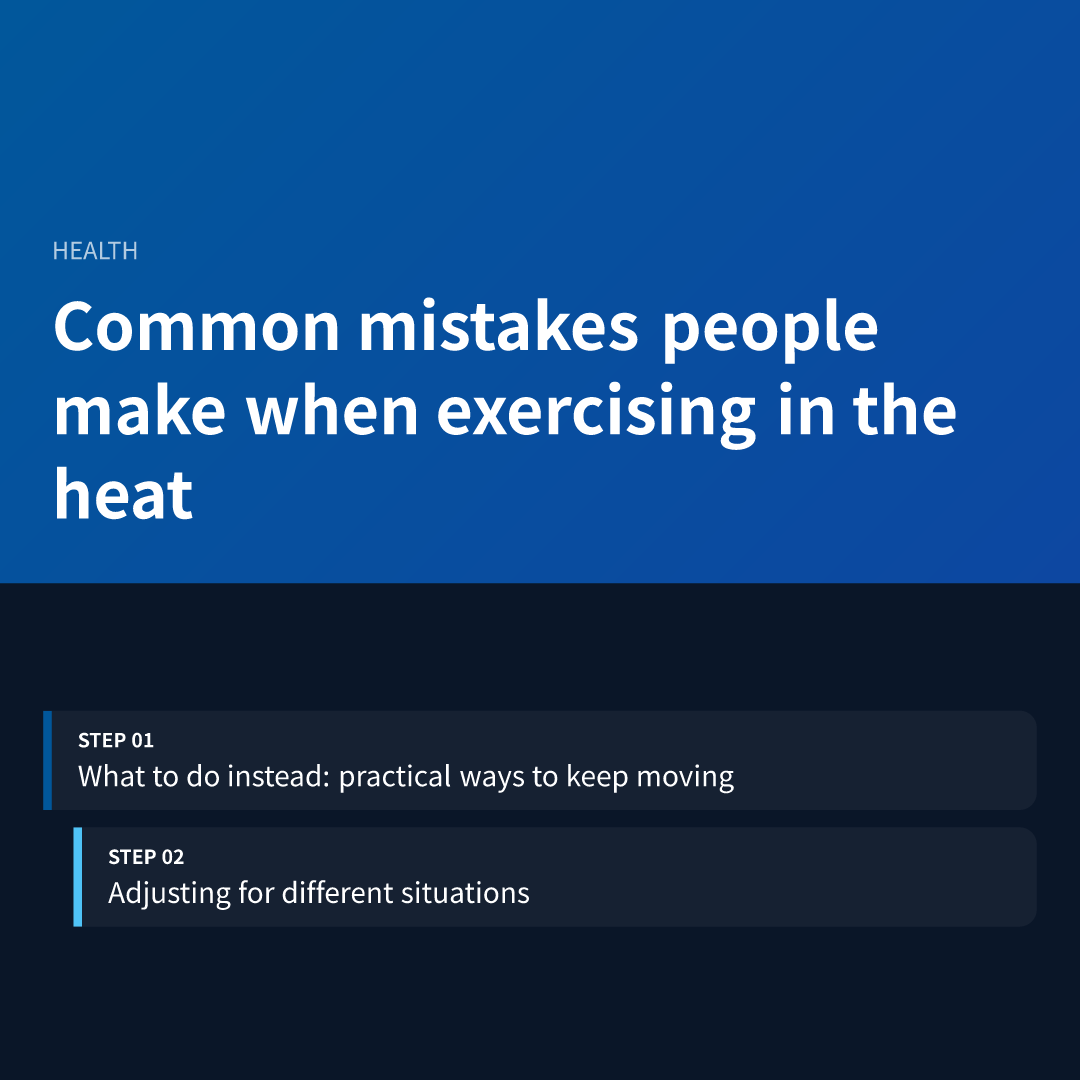
Common mistakes people make when exercising in the heat
Mistake 1: Keeping the usual pace and schedule
Many people hold on to their midday run or long weekend ride because it fits the calendar. The reason this backfires is that heat, sun, and humidity add load on top of the exercise itself, so the heart and skin work harder to shed warmth. Heat and humidity together make it harder for sweat to evaporate, which is how the body normally cools down.
A more workable approach is to move activity to the cooler parts of the day, often early morning or later evening, and to be willing to shorten or slow a session when it feels harder than usual. Many people also find that easing off the pace for the first few hot days feels more sustainable than forcing a normal routine.
Mistake 2: Waiting until you are thirsty to drink
Thirst can lag behind what your body actually needs, especially during long or intense effort. Relying only on thirst can leave some people behind on fluids without realizing it. At the other extreme, drinking a very large amount of plain water in a short time is also not ideal, because sweat carries out salts as well as water.
A steadier habit is to sip fluids before, during, and after activity, and to eat normal meals that supply salts and nutrients. How much fluid suits you depends on your body size, sweat rate, health conditions, and any medicines you take, so a clinician or pharmacist is the right person to ask if you have heart, kidney, or blood pressure concerns or fluid restrictions.
Mistake 3: Wearing the wrong clothes
Dark, heavy, or tight clothing traps warmth and can interfere with sweat evaporating from the skin. Some people also wear extra layers hoping to "sweat more," which mostly adds heat stress rather than any meaningful benefit.
Lightweight, loose, light-colored, breathable fabrics are commonly recommended instead. A wide-brimmed hat or cap and sunglasses can reduce sun exposure, and sunscreen is a standard part of outdoor sun protection. Ask a pharmacist or doctor if you are unsure which products suit your skin or fit with your medications.
Mistake 4: Ignoring early warning signs
Some people treat dizziness, headache, or unusual fatigue as part of a hard workout and keep going. The problem is that these can be early signals of heat strain, and continuing can make things worse.
Stopping, moving to a cooler or shaded place, and resting when symptoms appear is the commonly advised response. If symptoms are severe or do not settle, seek medical care promptly. More on this appears in the warning signs section below.
Mistake 5: Jumping straight into a hard effort after a heat spike
Bodies generally need time to get used to hot conditions, a process often called acclimatization. Going all-out on the first hot day skips that adjustment period, which is one reason sudden heat waves catch people off guard.
Easing in with shorter, lighter sessions and building up gradually over a number of days is the usual pattern described in public health guidance. How quickly someone adapts varies, and people who are older, new to exercise, or returning after illness may need more time.
What to do instead: practical ways to keep moving
Choose your time and place with the weather in mind
Checking the local forecast, heat index, and air quality before heading out helps you decide whether outdoor activity makes sense. The National Weather Service issues heat advisories and warnings, and those are worth paying attention to on very hot days.
Shaded paths, tree-lined parks, and indoor options such as a gym, a mall walking route, or a community pool can keep you active when outdoor conditions are poor. Swimming is a popular choice because water helps with cooling, though basic water safety still applies.
Lower the intensity, not necessarily the habit
On hot days, many people swap high-intensity work for steadier, easier movement. A brisk walk instead of a hard run, or a lighter session with more breaks, keeps the routine going without piling on as much heat strain.
Listening to how your body feels matters more than hitting a particular target. If effort feels unusually hard, that is useful information, and slowing down is a reasonable response rather than a failure.
Build in cooling breaks
Short rests in shade or air conditioning give the body a chance to bring its temperature down. Some people also use a cool, damp cloth on the neck or face, or take a cool shower afterward, to help the body settle.
Planning routes with places to stop, such as water fountains, shaded benches, or indoor spaces, makes breaks easier to take. Exercising with a friend can also help, since another person may notice early signs that you miss.
Support your body before and after activity
Regular meals, enough sleep, and fluids across the day help your body cope with heat better than trying to catch up all at once. Alcohol and heavy meals right before exercise are commonly mentioned as things that can make heat harder to handle for some people.
Be cautious with supplements, energy products, and electrolyte drinks marketed for hot weather. Whether any of these make sense for you depends on your health and what you already take, so check with a pharmacist or doctor before relying on them.
Adjusting for different situations
If you are older or have a chronic health condition
Older adults and people with heart, lung, kidney, or other long-term conditions can be more sensitive to heat. According to the CDC's general heat guidance, certain groups are at higher risk of heat-related illness, which is why individual guidance from a clinician matters here.
Some medications can affect how the body handles heat or fluid balance. If you take regular medicines, ask your pharmacist or doctor whether hot-weather exercise needs any special consideration for you.
If you are pregnant
Pregnancy can change how the body handles heat and fluids. Many people continue gentle activity, but the right level of effort in hot conditions is something to discuss with your prenatal care provider rather than decide alone.
If you exercise with children or teens
Children do not always notice or report that they are overheating, and they may keep playing past the point of comfort. Adults can help by scheduling breaks, encouraging regular drinks, choosing cooler times, and watching for signs of struggle. Youth sports programs often have their own heat policies, and it is reasonable to ask about them.
If you work outdoors or train for an event
Outdoor workers and athletes preparing for races face longer exposure and often cannot simply skip a hot day. Gradual adaptation, scheduled rest, shade, and a plan for hydration are commonly emphasized in occupational heat guidance, including materials from the U.S. Occupational Safety and Health Administration (OSHA). A workplace safety officer or coach can help tailor routines to the setting.
Warning signs that mean stop and get help
Heat cramps, heavy sweating, weakness, headache, nausea, and dizziness are often described as signs of heat strain. The CDC and MedlinePlus describe more serious signs as including confusion, fainting, a very high body temperature, hot and dry skin, or a rapid pulse, which may point to heat stroke.
Heat stroke is a medical emergency. If you or someone near you shows severe symptoms, call emergency services right away and move the person to a cooler place while waiting. Do not wait to see whether it passes.
Frequently asked questions
Is it really a problem if I just keep my regular routine and drink more water?
Drinking fluids helps, but it does not remove the extra strain heat puts on your heart and skin. Many people still feel worse or struggle to cool down when the temperature and humidity are high, even with good hydration. Adjusting time, pace, and rest breaks usually matters as much as fluids, and personal factors can change what is reasonable.
Do I need a sports drink for exercise in the heat?
Many people find water and normal meals are enough for lighter or shorter activity. Sports drinks are often discussed for longer or very intense sessions, but needs vary with sweat rate, health conditions, and diet. A pharmacist, doctor, or dietitian can help you decide, especially if you have blood pressure, kidney, or blood sugar concerns.
How do I know whether to skip a workout altogether?
Heat advisories, very high heat index readings, poor air quality, feeling unwell, or having a condition that heat can worsen are common reasons to move indoors or rest. The National Weather Service and local health departments often post guidance during extreme heat. If you are unsure, choosing a gentler indoor option is a reasonable middle ground, and a clinician can help if you have specific health concerns.
Staying active in hot weather mostly comes down to respecting what heat does to the body: choose cooler times, ease the pace, take breaks, drink and eat sensibly, and stop at the first signs of trouble. That approach keeps movement in your routine without ignoring the conditions. For personal advice, especially with health conditions or medications, a qualified professional can help you set limits that fit you.
Disclaimer: This article is for informational purposes only and is not a substitute for professional medical advice, diagnosis, or treatment. Please consult a licensed professional for personal health decisions.
Related reading: How to Stay Active During Long Commutes