How Time Outdoors Affects Mood: What to Know
Maybe you have noticed that a walk around the block can shift a gloomy afternoon, or that a long stretch indoors leaves you flat and restless. It is natural to wonder whether that is just a feeling or something real. In general, spending time outside is linked with better mood for many people, though the effect varies and is not a replacement for care when someone is struggling.
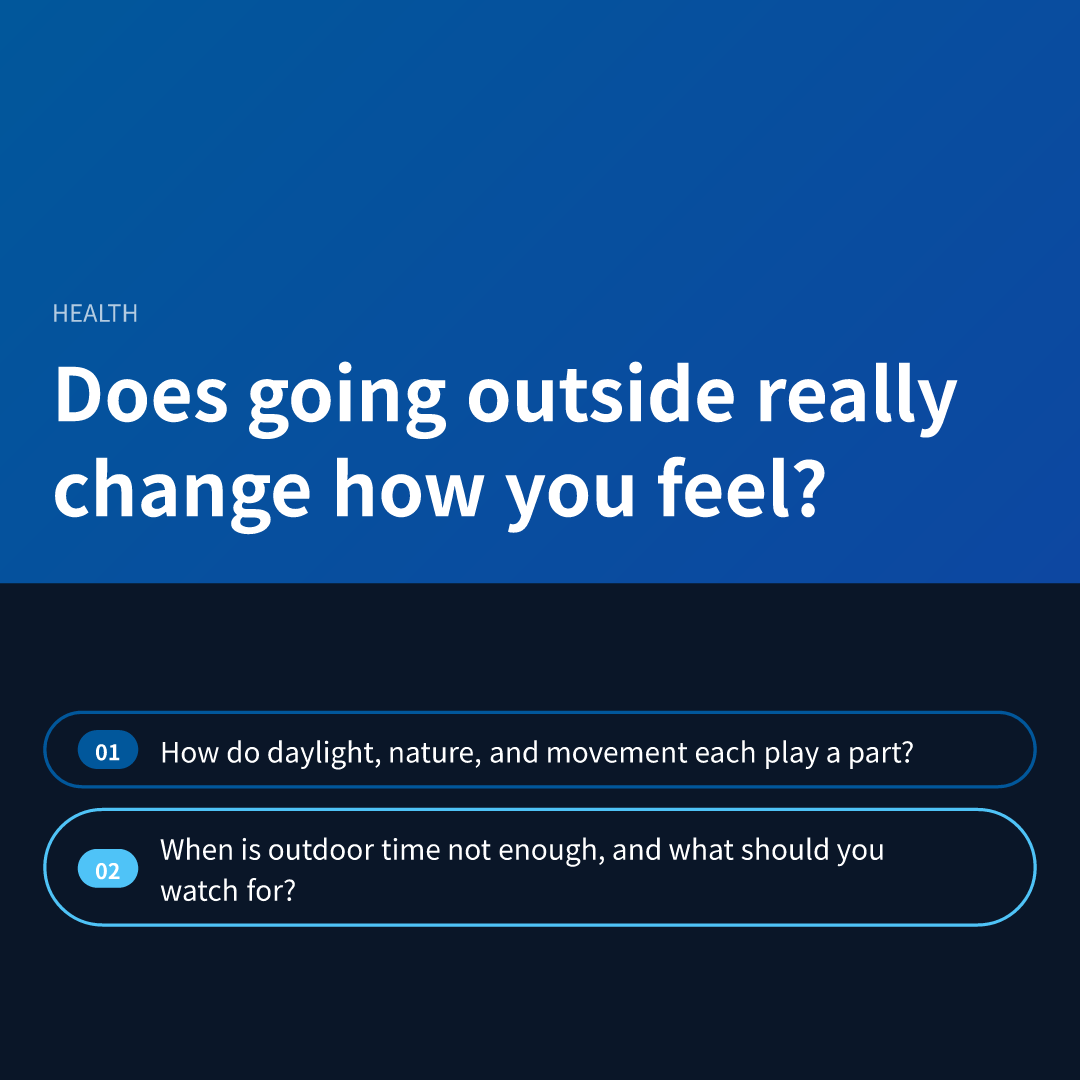
Does going outside really change how you feel?
For many people, yes, at least in small and everyday ways. Time outdoors is commonly associated with feeling calmer, less tense, and more energized. These shifts tend to be gentle rather than dramatic, and they do not happen for everyone every time.
What may be going on behind the scenes
Several factors tend to overlap when people head outside. Daylight, movement, a change of scenery, and a break from screens and indoor routines all arrive together, which makes it hard to say which one matters most. Researchers generally treat the benefit as a mix of these ingredients rather than a single cause.
According to the National Institute of Mental Health, physical activity and regular routines can be part of looking after mental well-being. Because outdoor time often involves both, it can fit naturally into that picture. Still, it is one piece of a larger lifestyle, not a stand-alone fix.
Why the effect can feel inconsistent
Mood responds to many things at once: sleep, stress, relationships, health conditions, and the weather itself. A walk on a rushed, anxious day may feel different from a walk on a relaxed weekend. That is normal, and a single outing rarely tells you much about the long-term pattern.
Personal preference matters too. Some people recharge in quiet green spaces, while others prefer lively streets or a backyard. There is no single correct way to be outdoors.
How do daylight, nature, and movement each play a part?
Each of the three is thought to contribute in its own way, and they often reinforce one another. Understanding them separately can help you choose what suits your day.
Daylight and your body clock
Natural light helps signal to the body when it is day, which is tied to the internal rhythm that guides sleep and wakefulness. The National Institutes of Health describe how light exposure is connected to circadian rhythms in its general educational materials. Since sleep and mood influence each other, regular daylight may support steadier energy for some people.
This is also why shorter winter days can feel heavier for certain people. The Mayo Clinic and the NIMH both describe seasonal affective disorder as a pattern of depression that tends to return at particular times of year. If low mood follows the seasons and interferes with daily life, it is worth discussing with a health professional rather than trying to manage it alone.
Nature and a sense of calm
Many people describe green spaces, trees, water, and open sky as restful. Some research has explored whether natural settings may help reduce feelings of stress, and findings are generally encouraging but not uniform. Study designs differ, and people bring different backgrounds and access to nature.
It also helps to remember that "nature" does not have to mean a remote trail. A small park, a tree-lined street, or a balcony with plants can offer a pause for some people. What counts is often whether the setting feels pleasant and safe to you.
Movement, even the gentle kind
Walking, stretching, gardening, and playing with kids or pets all add movement without needing a formal workout. The Centers for Disease Control and Prevention notes in its general guidance that regular physical activity is tied to a range of health benefits, including mental well-being. Gentle movement outdoors can be an easy way to start. (Source: WHO Fact sheet: Physical activity) (Source: WHO Fact sheet: Mental disorders)
Social contact is another quiet ingredient. Chatting with a neighbor, walking with a friend, or simply being around other people can add to the lift that many people feel. For those who live alone, this may be a meaningful part of the benefit.
When is outdoor time not enough, and what should you watch for?
Outdoor time can be a supportive habit, but it has limits. If low mood, anxiety, or loss of interest lasts for weeks, or starts to disrupt work, relationships, sleep, or appetite, it may be a sign that more support is needed. The NIMH and MedlinePlus both describe persistent sadness and changes in daily functioning as reasons to reach out for help.
Signs that call for professional care
Consider contacting a doctor, therapist, or other licensed professional if you notice any of the following:
- Persistent low mood or hopelessness that does not lift
- Trouble sleeping or sleeping far more than usual
- Pulling away from people and activities you normally enjoy
- Difficulty concentrating or handling everyday tasks
- Thoughts of harming yourself or feeling that life is not worth living
If you are in immediate danger or thinking about suicide, contact local emergency services right away. In the United States, the 988 Suicide and Crisis Lifeline offers free, confidential support by call or text at any hour.
Practical limits and special situations
Going outside is not equally easy for everyone. Chronic illness, mobility challenges, caregiving duties, unsafe neighborhoods, extreme heat or cold, and poor air quality can all make outdoor time harder or less advisable. In those cases, looking for other sources of light and activity, such as sitting by a bright window, may be a reasonable alternative, though it is not a direct equivalent.
Sun exposure also deserves care. The American Academy of Dermatology and the CDC both share general guidance on protecting skin from sun damage, and people with certain conditions or medications may be more sensitive to sunlight. If you are unsure, a pharmacist or doctor can explain what applies to your situation.
Finally, be cautious about treating outdoor time as a cure for a medical condition. It may be a helpful part of a routine, but it does not replace therapy, medication, or other care that a professional recommends. Reactions and results vary from person to person.
Small ways people often work it in
Many people find it easier to attach outdoor time to something they already do. A few common ideas include:
- Taking a phone call while walking
- Having a morning drink on a porch or near an open window
- Eating lunch outside when the weather allows
- Choosing a slightly longer route to a regular destination
These are simply ideas, not rules. Start with whatever feels realistic, and adjust based on your energy, schedule, and comfort. Consistency over time tends to matter more than any single outing.
Frequently asked questions
Does the weather matter for outdoor time and mood?
It can, but many people still find that being outside on a cloudy or cool day feels better than staying in all day. Comfort and safety come first, so dress for the conditions and skip outings during extreme heat, cold, or poor air quality. Preferences differ, and some people simply enjoy certain kinds of weather more than others.
Is exercising outdoors better for mood than exercising indoors?
Some studies have compared the two, and results are mixed, so there is no firm answer that fits everyone. Outdoor settings add daylight and scenery, while indoor settings can offer convenience and climate control. The option you will actually enjoy and keep doing is often the more useful one.
Can spending time outside replace therapy or medication?
No, it is generally considered a supportive habit rather than a substitute for professional care. If you are already receiving treatment, outdoor time can be something to mention to your care team as part of your overall routine. Decisions about starting, changing, or stopping any treatment should be made with a licensed professional.
Disclaimer: This article is for informational purposes only and is not a substitute for professional medical advice, diagnosis, or treatment. Please consult a licensed professional for personal health decisions.
Related reading: How Posture Affects Back Comfort in Daily Life