How Hobbies Support Mental Wellbeing in Daily Life
You finish a long day, collapse on the couch, and scroll for an hour without feeling any better. Then a friend mentions an evening knitting, gardening, or playing guitar, and you wonder whether a hobby could really change how you feel. In general, hobbies may support mental wellbeing by giving the mind a break from stress, adding enjoyment and structure to the week, and creating a sense of accomplishment, though results vary from person to person.
This topic sits in the health category, so it helps to keep expectations realistic. A hobby is not a medical treatment, and it does not replace care for anxiety, depression, or other conditions. It can, however, be one gentle part of a balanced routine.
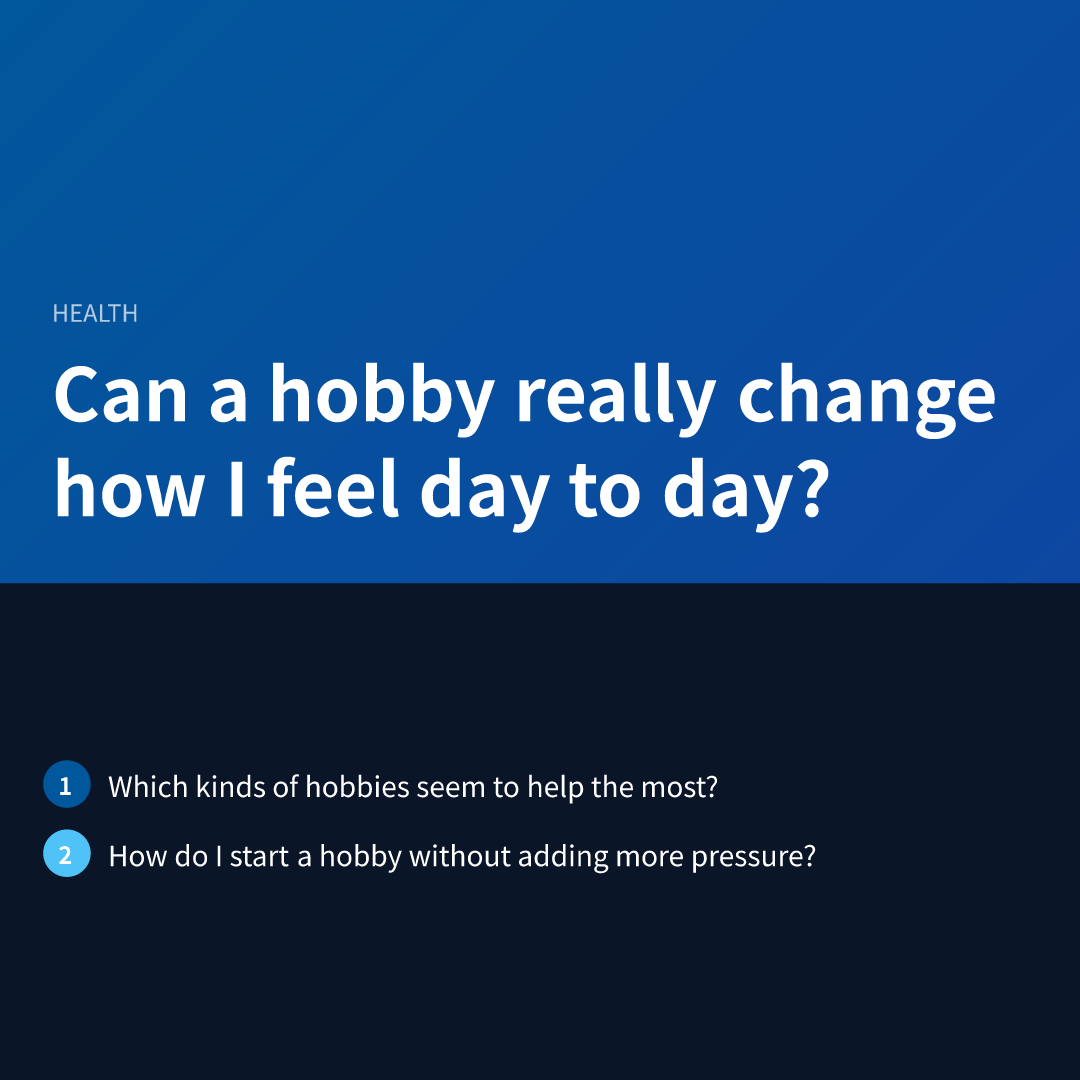
Can a hobby really change how I feel day to day?
A hobby can often lift your everyday mood, but the effect tends to be gradual and personal rather than dramatic. Many people describe feeling calmer or more engaged after doing something they enjoy, and that pattern fits with general wellbeing guidance. Hobbies are not a switch that turns stress off.
According to the National Institute of Mental Health's general guidance on caring for mental health, activities such as staying physically active, keeping routines, and connecting with others are commonly listed among everyday habits that may support wellbeing. A hobby often combines several of these at once. A walking group, for example, mixes movement, fresh air, and company.
Why enjoyable activities tend to help
Several explanations are commonly offered for why hobbies feel good. None of them is a guarantee, and each person responds differently.
- A break from worry. When you are absorbed in a task, your mind has less room to loop on stressful thoughts. People often call this being "in the zone."
- A sense of progress. Finishing a sketch, learning a chord, or growing a tomato plant gives a small, visible win that can build confidence over time.
- Structure and something to look forward to. A regular pastime gives the week a shape, which many people find steadying, especially during uncertain stretches.
- Identity beyond work or responsibilities. Being "the person who bakes" or "the one who paints" reminds you that you are more than your to-do list.
When a hobby may not be enough
If low mood, constant worry, or loss of interest lasts for weeks and starts to interfere with sleep, work, or relationships, a hobby alone is unlikely to be the full answer. The same goes for anyone who finds that things they used to enjoy no longer bring any pleasure. These can be signs worth discussing with a doctor or licensed mental health professional.
If you ever have thoughts of harming yourself, please contact local emergency services or a crisis line in your area right away. In the United States, the 988 Suicide and Crisis Lifeline is available by call or text.
Which kinds of hobbies seem to help the most?
There is no single best hobby, because the right one depends on your personality, energy, budget, and what you already enjoy. Broadly, creative, physical, social, and nature-based activities are the types most often linked with wellbeing in public health discussions. The most useful hobby is usually the one you will actually look forward to doing.
The Centers for Disease Control and Prevention's general guidance on mental health and physical activity notes that movement is commonly associated with better mood and lower stress for many people. That makes active hobbies such as dancing, cycling, or hiking a popular choice. Still, people with injuries, chronic conditions, or mobility limits should check with a healthcare professional before starting something strenuous.
Creative hobbies
Drawing, writing, music, crafting, and cooking give your thoughts somewhere to go. Many people find these relaxing because the focus is on the process, not on being good at it. You do not need talent, only curiosity.
Some people also use journaling or art to put feelings into words or images. That can feel clarifying, though it is not a substitute for therapy if you are dealing with something heavy.
Active and outdoor hobbies
Walking, gardening, swimming, yoga, and team sports combine movement with a change of scenery. Time outdoors is often described as refreshing, and light exposure during the day may also support a steadier sleep routine for some people. Sleep and mood are closely connected, so this can be a quiet bonus.
If you are new to exercise or have a health condition, it is sensible to start gently and ask a clinician what suits you.
Social and shared hobbies
Book clubs, choirs, board game nights, volunteering, and community classes add connection. Loneliness is widely recognized by public health agencies as something that can weigh on wellbeing, and shared interests are a low-pressure way to meet people. The conversation can start around the activity, which helps if small talk feels awkward.
Quieter, solo hobbies are equally valid. Introverts and anyone who feels drained by groups may recharge better with reading, puzzles, or model building, and that is perfectly fine.
How do I start a hobby without adding more pressure?
Start small, keep it low-stakes, and treat it as something you do for enjoyment, not performance. The goal is to add a little pleasure to your week, not another obligation. If a hobby begins to feel like homework, it is reasonable to change it or pause.
Many people find it easier to begin with something they already liked as a kid or have been curious about for years. Trying a short, beginner-friendly session or a free community class can reveal quickly whether it suits you.
Practical ways to ease in
- Pick something forgiving. Activities where mistakes do not matter, like doodling or casual gardening, tend to feel lighter.
- Keep the setup simple. Expensive gear can wait. Borrowing, sharing, or buying secondhand removes a lot of pressure.
- Protect a small window. Even a short, regular slot in your week can be enough to make it stick, and it should feel realistic for your schedule.
- Let it be imperfect. Skipping a week does not mean you failed. Just return when you can.
Limits and things to watch for
Hobbies are meant to be restful, so it is worth noticing if one starts to cause stress. Comparing yourself to others online, spending beyond your budget, or feeling guilty about missed sessions can turn a good thing sour. If that happens, scaling back is a healthy response.
People living with depression, anxiety, burnout, or grief may find it hard to get started, because low energy and low motivation are common symptoms. In that case, a gentler first step, or support from a professional, may be more helpful than pushing harder. Reactions to any activity vary, and there is no right pace.
It can also help to remember that hobbies work best alongside other basics, such as regular sleep, balanced meals, and time with people you trust. When these pieces are in place, a pastime you enjoy can be one more small support for how hobbies support mental wellbeing in real life.
Frequently asked questions
Does a hobby have to be productive to count?
No, a hobby does not need to produce anything useful or impressive. Many people find the most benefit in activities done purely for fun, without the pressure to sell, share, or master them. If turning a pastime into a side income starts to feel stressful, it is fine to keep it just for yourself.
Is watching TV or gaming a hobby that can help wellbeing?
Some people do find screen-based pastimes relaxing, social, or mentally engaging, especially when played or watched with friends. The picture is mixed, though, because long stretches can crowd out sleep, movement, or time with others. If you notice that screen time leaves you more tired or low, mixing in other activities may be worth considering.
What if I try several hobbies and none of them stick?
That is common and does not mean something is wrong with you. Interests can take time to find, and trying a few options is a normal part of the process. If nothing seems enjoyable for a long period, or you feel flat most days, it may be a good moment to talk with a healthcare professional about how you have been feeling.
Disclaimer: This article is for informational purposes only and is not a substitute for professional medical advice, diagnosis, or treatment. Please consult a licensed professional for personal health decisions.
Related reading: How Staying Social Supports Wellbeing in Daily Life