How Sunlight Affects Mood and Sleep
How sunlight affects mood and sleep comes down to one idea: natural light is the main signal that sets the body's internal clock, and that clock influences when you feel alert, when you feel sleepy, and how steady your mood feels. Light reaches special cells in the eyes that pass timing information to the brain, which then adjusts hormones and body rhythms. Below, you will find what that means in plain language, when it matters most, which ideas people often mix up with it, and where the limits are.
What the Light-Mood-Sleep Connection Actually Means
Humans run on a roughly daily cycle called the circadian rhythm (the body's internal 24-hour timing system). It is not a switch but a set of rhythms that shape body temperature, hormone release, alertness, and appetite. Light, especially bright daytime light, is the strongest outside cue that keeps this system lined up with the actual day and night.
Here is the one analogy worth keeping: think of the circadian rhythm as an orchestra and sunlight as the conductor's tempo. Without a clear tempo, the musicians do not stop playing, but they drift out of sync with one another.
How light reaches the brain
The eyes contain light-sensitive cells beyond the ones used for seeing images. These cells respond strongly to bright, blue-rich light, which is common in daytime sky light. They send signals to a small brain region that acts as the body's master clock, often called the suprachiasmatic nucleus (a cluster of nerve cells that coordinates daily rhythms).
Where melatonin fits
Melatonin is a hormone the body releases as evening approaches, and it is associated with the biological signal for nighttime. According to the National Institutes of Health's general sleep guidance, light exposure influences when the body releases melatonin, which is one reason evening brightness can make it harder to feel sleepy. Daytime light, by contrast, generally helps anchor the timing so that melatonin rises later in the day.
Where mood fits
Mood is shaped by many things, including genetics, stress, health conditions, relationships, and sleep itself. Light appears to be one contributor among many. Some research summarized by public health agencies suggests that light exposure can influence brain chemicals involved in mood regulation, but the exact pathways are still being studied, and the effect differs a lot from person to person.
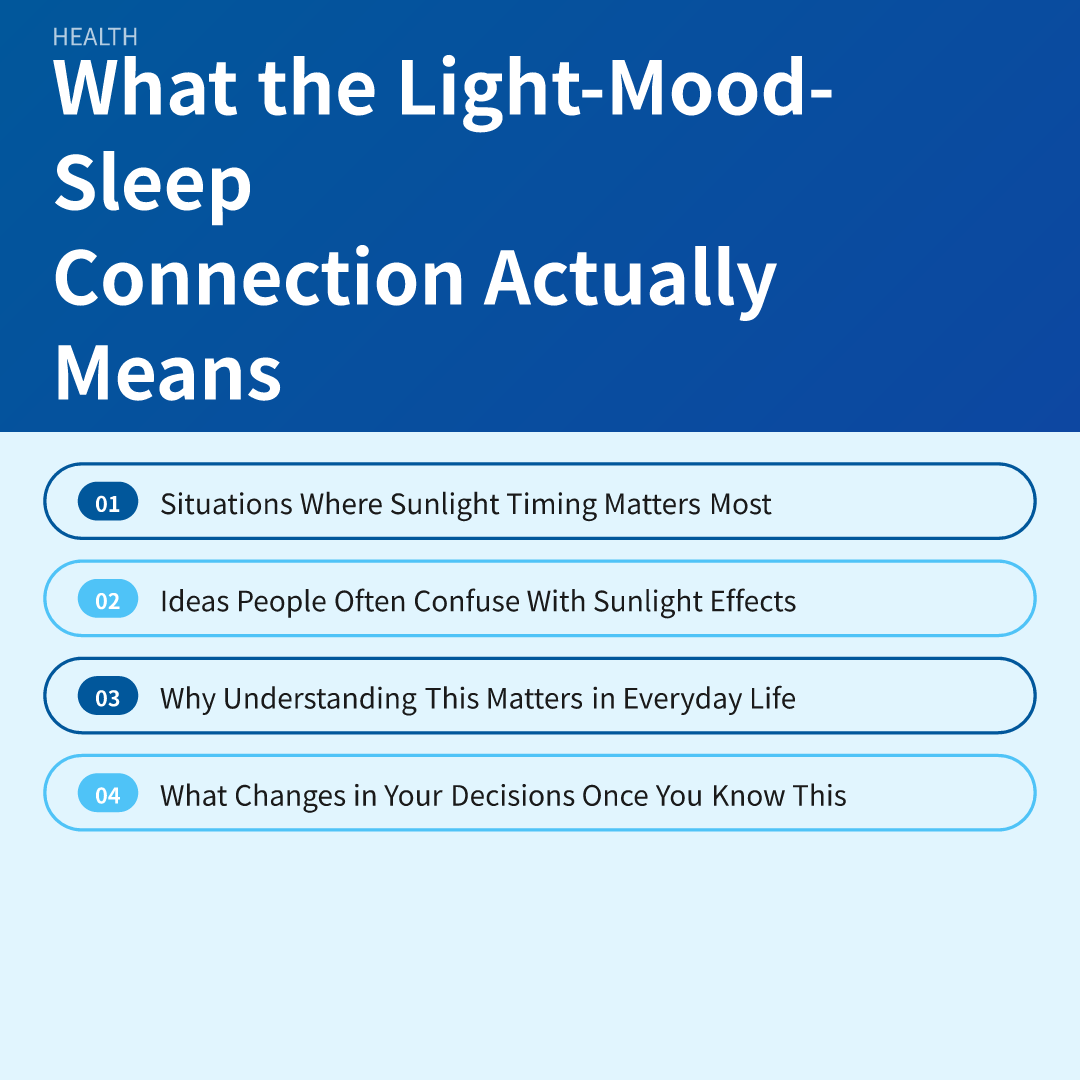
Situations Where Sunlight Timing Matters Most
For many people, the effect of light is subtle and goes unnoticed. It tends to become more obvious when daily routines or seasons change, or when someone spends most of the day indoors.
Morning light and a steadier schedule
Morning daylight is commonly described as a helpful cue for setting the body clock. People who get outdoor light earlier in the day often report feeling more awake and finding it easier to fall asleep at a regular hour. That is a general pattern, not a promise, and sleep depends on many other factors such as caffeine, stress, noise, and health conditions.
Shorter winter days
In places where daylight shrinks during colder months, some people notice lower energy, heavier sleep, or a dip in mood. Seasonal affective disorder (a type of depression that follows a seasonal pattern, usually starting in fall or winter) is a recognized condition. The National Institute of Mental Health describes it as a form of depression, and that means it deserves professional attention rather than self-diagnosis. If low mood is persistent, interferes with daily life, or comes with thoughts of self-harm, seek care promptly.
Shift work, travel, and irregular schedules
When your work hours or time zones change quickly, your body clock may lag behind the new schedule. Light timing becomes especially relevant here, because the same brightness can nudge the clock earlier or later depending on when you encounter it. Many people find that adjusting is gradual and uneven, and those with ongoing sleep trouble may benefit from a conversation with a healthcare professional.
Mostly indoor days
Typical indoor lighting is usually much dimmer than outdoor daylight, even on a cloudy day. People who work in windowless spaces or rarely go outside may get fewer strong daytime light cues. Some find that a short outdoor break during the day feels refreshing, though how much it changes sleep or mood differs from person to person.
Ideas People Often Confuse With Sunlight Effects
Because light, vitamins, and sleep habits are often discussed together, they get blended in everyday conversation. Separating them helps you read health information more clearly.
Sunlight versus vitamin D
Skin makes vitamin D in response to ultraviolet (UV) light, and that is a different process from the way eyes use light to set the body clock. The mood and sleep effects discussed here rely on light entering the eyes, not on vitamin D production. Vitamin D has its own roles in the body, and questions about levels or supplements are best taken to a doctor or pharmacist, who can consider your individual situation.
Sunlight versus light therapy lamps
Bright light therapy devices are sometimes used under professional guidance for seasonal patterns of low mood. They are not the same as ordinary lamps, and product designs vary. The Mayo Clinic and other health organizations note that anyone considering one, especially people with eye conditions, bipolar disorder, or medications that increase light sensitivity, should talk with a clinician first, since reactions and suitability vary.
Sunlight versus screen light
Phones and tablets emit light too, and evening screen use is often discussed as something that can delay sleepiness. The picture is more nuanced than "screens are bad." Content that keeps your mind busy, brightness, and how close the screen is can all play roles, and research results are mixed on how large the effect is for any given person.
Sunlight versus sun protection
Feeling the benefits of daylight does not require long, unprotected sun exposure. The American Academy of Dermatology and the CDC both emphasize protecting skin from excess UV, since sunburn and cumulative sun damage raise skin cancer risk. Daylight can be experienced in shade, through open outdoor time with sensible protection, and on overcast days, though intensity varies. If you have a history of skin cancer, take photosensitizing medicines, or have particular skin concerns, a dermatologist or pharmacist can explain what is appropriate for you.
Sunlight versus "fixing" a sleep disorder
Light habits may support a healthier rhythm, but they do not replace evaluation for conditions such as insomnia, sleep apnea, restless legs, or depression. Loud snoring, gasping at night, severe daytime sleepiness, or sleep trouble lasting for weeks are reasons to seek medical advice rather than adjusting lighting alone.
Why Understanding This Matters in Everyday Life
Sleep and mood influence each other, so a small shift in one can ripple into the other. Poor sleep is commonly linked with irritability and low mood, and low mood can make sleep lighter or more broken. Light is one of the more accessible, everyday inputs into that loop, which is why it comes up so often in general wellness guidance.
What daily habits people commonly try
- Spending some time outdoors earlier in the day, such as a walk or sitting near a bright window.
- Keeping wake-up and bedtime hours fairly regular, including on days off when possible.
- Dimming lights in the evening so the home feels more like nighttime.
- Keeping the bedroom dark and cool, and limiting bright screens close to bedtime.
These are widely shared habits, not prescriptions. What suits a night-shift nurse, a student, a parent of a newborn, and a retiree will look quite different, and comfort and safety come first.
Limits worth keeping in mind
Light is not a cure-all for mood or sleep, and results vary. Some people are naturally night owls, and their clocks may sit later than average. Others live with medical conditions, hormonal changes, or medications that affect sleep. Pregnancy, older age, eye disease, and mental health conditions can all change how light is experienced and what is advisable.
When to reach out for help
Consider speaking with a qualified healthcare professional if low mood lasts, if you lose interest in things you usually enjoy, if sleep problems continue despite regular habits, or if daytime sleepiness affects driving or work. If you ever have thoughts of harming yourself, contact local emergency services or a crisis line right away. In the United States, the 988 Suicide and Crisis Lifeline offers support by call or text.
What Changes in Your Decisions Once You Know This
Knowing how sunlight affects mood and sleep shifts two practical judgments. First, it changes how you read a rough patch: if your days have been mostly indoors, your schedule has moved, or winter has set in, it makes sense to consider light timing as one possible piece of the puzzle, rather than assuming something is wrong with your willpower or discipline.
Second, it changes what you reach for. Instead of looking for a single product or quick fix, you can weigh simple daily rhythms first, while staying realistic about their limits and bringing persistent mood or sleep concerns to a professional who can look at the whole picture, including conditions that light alone cannot address.
Disclaimer: This article is for informational purposes only and is not a substitute for professional medical advice, diagnosis, or treatment. Please consult a licensed professional for personal health decisions.
Related reading: How Time Outdoors Affects Mood: What to Know