How to Start a Simple Home Workout Routine
The easiest way to start a simple home workout routine is to pick one or two small movement habits and repeat them until they feel ordinary. Most people who give up early do not lack willpower. They try to build a perfect plan on day one, with equipment, a long schedule, and a dozen exercises, and the plan collapses the first busy week. This guide starts from the opposite direction: what is the least you can do that still counts, and what can safely wait?
A quick note on scope. Fitness needs differ widely with age, health conditions, injuries, and past activity, so treat what follows as general information rather than a personal plan. If you have a medical condition or any doubts, the section on when to get advice from a professional is worth reading before you begin.
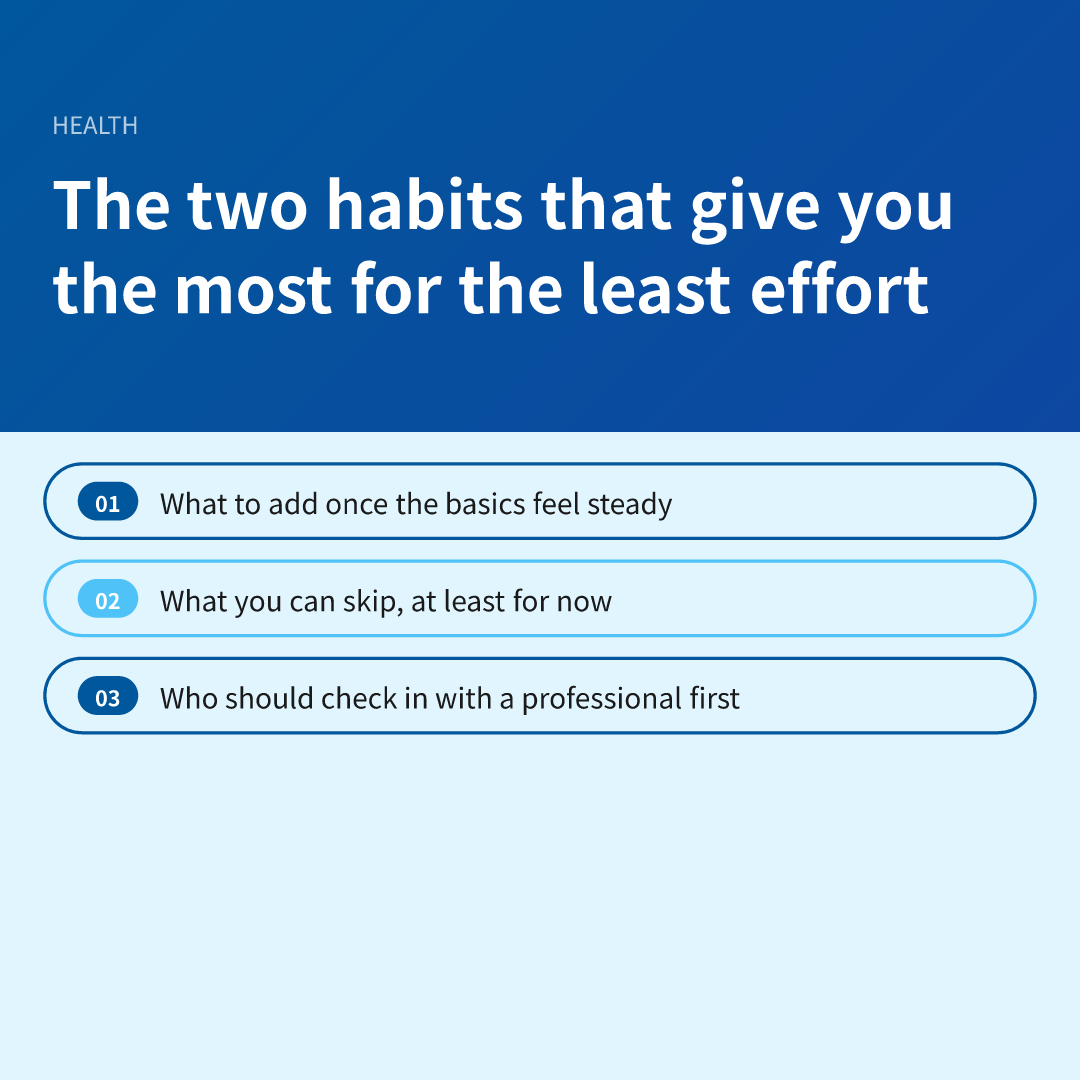
The two habits that give you the most for the least effort
If you only do two things, make them a short, regular block of movement and a basic set of whole-body strength exercises using your own body weight. Public health guidance, including general physical activity information from the CDC and the World Health Organization, describes both regular aerobic-type activity and muscle-strengthening activity as useful parts of a healthy routine. Neither needs a gym.
Habit one: a short, repeatable block of movement
Pick a block of time you can realistically protect, even if it feels almost too small. Ten minutes of brisk marching in place, stair climbing, or dancing around the living room is a perfectly reasonable beginning. The point at the start is not intensity; it is building the cue that tells your brain, "this is the time we move."
The expected benefit is mostly about consistency. A modest session that happens often tends to be easier to sustain than an ambitious one that happens rarely. The limit is that very light activity alone may not challenge your body much over time, so you may eventually want to nudge things up gradually. That can wait until the habit is stable.
Habit two: a handful of bodyweight strength moves
Strength work does not require weights at first. Many beginners use a small group of familiar movements that cover the main areas of the body:
- A squat or sit-to-stand from a chair for the legs and hips
- A wall or incline push-up for the chest, shoulders, and arms
- A bridge or similar floor movement for the glutes and lower back area
- A plank or modified plank for the trunk muscles
Choosing a few moves and repeating them is usually more manageable than rotating through a long list. Guidance from the NHS and similar public health sources generally encourages people to work the major muscle groups on a regular basis, but how often and how hard is individual. Form matters more than speed, and if a movement causes sharp pain, it is reasonable to stop and ask a qualified professional about alternatives.
The honest limit here is that bodyweight exercises can only go so far. Over time, some people find they want more resistance, and that is a good problem to have, not a requirement for starting.
What to add once the basics feel steady
When the first habits start to feel automatic, you can add small layers without rebuilding everything. The key is to change one thing at a time so you can tell what is working and what feels like too much.
A gentle warm-up and cool-down
Many people find that a few minutes of easy movement before exercise, such as arm circles, marching, or slow leg swings, makes the start of a session feel smoother. A short, relaxed finish can help you wind down. These extras are comfortable additions for many people, though they are not a guarantee against soreness or injury.
Mobility and stretching
Some people like to add light stretching or mobility work for areas that feel tight from desk time. Stretching can feel pleasant and may support your sense of ease in movement, but experiences vary, and it is not a substitute for the strength and activity habits above. If a stretch causes pain, backing off is sensible.
Simple progress and variety
Once a movement feels easy, people commonly make it slightly harder in small steps, such as a deeper range, a slower pace, or an extra round. Others bring in inexpensive tools like a resistance band or a backpack with books for added load. These are optional upgrades. A varied routine can also help with boredom, which is a common reason people drop off.
What you can skip, at least for now
A lot of the pressure around exercise comes from things that sound necessary but are not required to begin. Letting go of them can make the routine feel lighter.
- Special equipment. You can start with a clear patch of floor and a sturdy chair. Equipment can be added later if you want it.
- Expensive programs or subscriptions. Free or low-cost guidance from public health organizations covers the fundamentals. Paid programs are a personal choice, not a prerequisite.
- Long sessions. Shorter blocks count. Waiting for a free hour is a common way to never start.
- Perfect timing. There is no single ideal time of day. The best slot is generally the one you will actually keep.
- Hard, exhausting effort every time. Going all out is not needed in the early stage and can make it harder to come back the next day.
- Tracking everything. Gadgets and detailed logs can be helpful for some people, but a simple note of "I did it today" is enough to begin.
- Strict rules about missed days. Missing a session does not erase your effort. Picking up again at the next opportunity is what matters.
It is also worth saying that exercise on its own does not replace medical care, and no routine can promise a specific result. Responses to activity differ from person to person.
Who should check in with a professional first
For many healthy adults, light activity is considered a reasonable place to start, but general guidance from organizations such as the CDC and NHS also notes that some people should get advice before changing their activity level. This can include people who have a heart or lung condition, diabetes, joint or back problems, or who are pregnant, recently ill, or recovering from an injury or surgery. People who have been inactive for a long time or who take regular medication may also want to ask.
Stop and seek medical attention if you experience chest pain or pressure, severe shortness of breath, dizziness or fainting, an irregular or racing heartbeat, or sudden sharp pain during activity. A physician, physical therapist, or other qualified professional can help you decide what kind of activity fits your situation and what to avoid.
Frequently asked questions
Do I need to work out every day to build a routine?
No, daily sessions are not required to start. Many people find a rhythm of regular activity with rest days in between easier to maintain, and rest is a normal part of how the body adapts. What suits you depends on your fitness, schedule, and how you feel, so it is fine to adjust as you learn.
What if I feel sore after my first sessions?
Mild muscle soreness after trying something new is common and usually fades as the body gets used to the movement. If the soreness is severe, comes with swelling, or sharp or lingering joint pain, it is sensible to pause and ask a healthcare professional. Easing back and choosing gentler movements can make restarting more comfortable.
How do I stay motivated when my schedule gets chaotic?
Shrinking the routine usually works better than abandoning it. On a hectic day, a few minutes of movement keeps the habit alive and lowers the pressure to start over later. Linking exercise to something you already do, such as after brushing your teeth or while the coffee brews, helps some people remember.
Why do some people notice changes sooner than others?
People notice changes at different times because starting points, sleep, stress, nutrition, past activity, age, and health conditions all play a part. Some people first feel a shift in energy or mood, others in how everyday tasks feel, and some mainly notice changes in strength or stamina later. Because there is no universal timeline, comparing yourself with someone else's pace is usually less useful than noticing your own small signs of progress.
Starting a simple home workout routine is less about doing everything and more about doing a little, reliably, and building from there. Keep the first steps small, add layers only when you are ready, and bring in a qualified professional whenever your health situation raises questions.
Disclaimer: This article is for informational purposes only and is not a substitute for professional medical advice, diagnosis, or treatment. Please consult a licensed professional for personal health decisions.
Related reading: How to Start Walking for Exercise: Key Terms Explained