How to Wash Fruits and Vegetables the Right Way
The best way to wash fruits and vegetables is to rinse them under plain running water just before eating or cooking, rub or scrub firm produce gently, and dry it with a clean cloth or paper towel. According to the U.S. Food and Drug Administration (FDA) and the Centers for Disease Control and Prevention (CDC), soap, detergent, and commercial produce washes are generally not recommended. Most people already own everything they need for this job: a clean sink, clean hands, and a little time.
Still, it is easy to get this wrong. Maybe the bag of spinach says "triple washed" and you wonder whether to rinse it again. Maybe a bowl of berries has sat in the fridge for days, or a cutting board that touched raw chicken is about to touch a cucumber. Social media adds to the confusion with vinegar soaks, baking soda hacks, and special sprays. The fix is not one magic product. Getting this right is about order: deal with the biggest risks first, then build habits that hold up week after week.
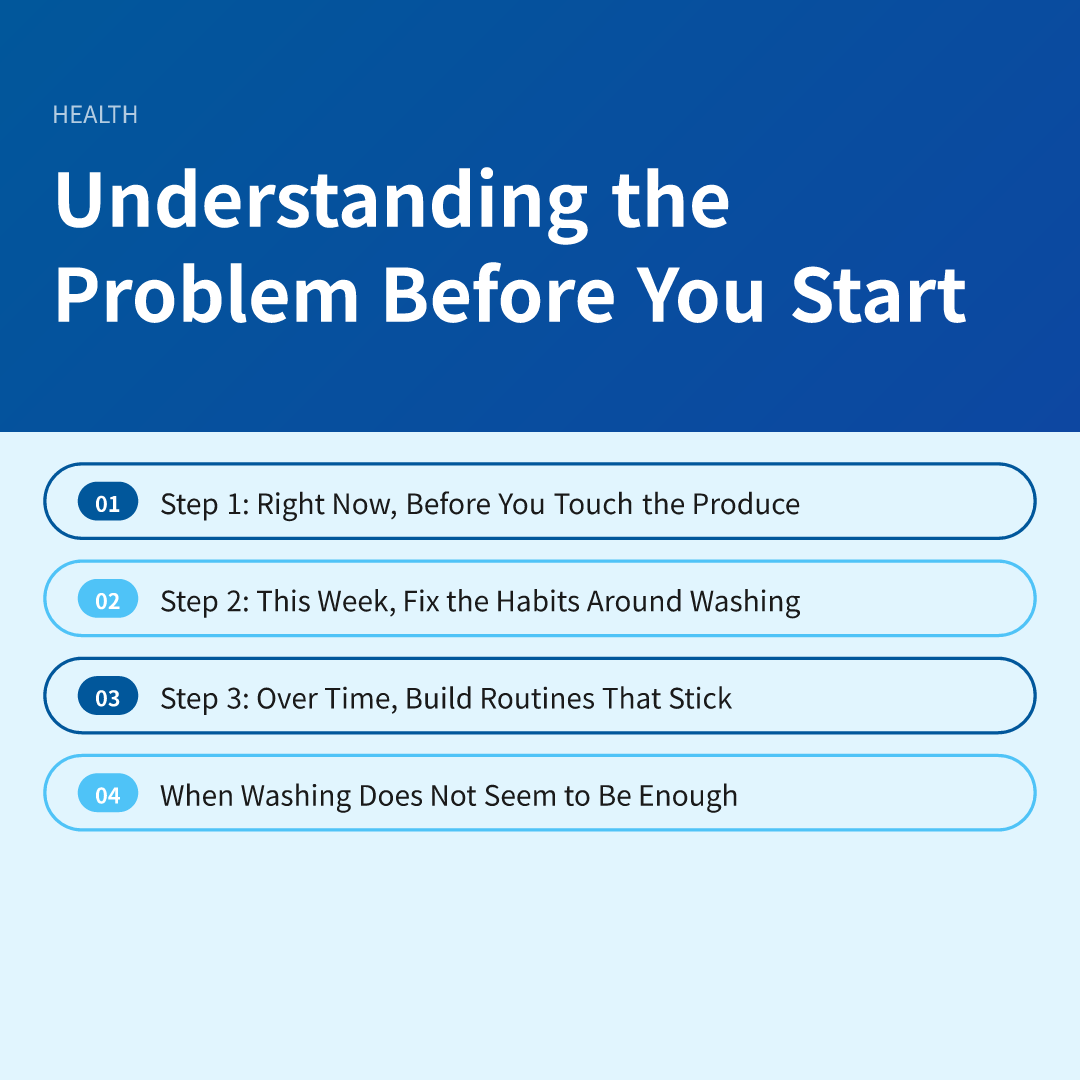
Understanding the Problem Before You Start
Raw produce grows outdoors, travels through many hands, and is often eaten without cooking. That means it can pick up soil, residue, and microorganisms along the way. The CDC notes that germs can reach produce in the field, during harvest, in transport, in stores, or in a home kitchen. Washing helps reduce what is on the surface, but it does not make produce sterile, and no home method removes everything.
What washing can and cannot do
Rinsing under running water mainly helps remove dirt and some surface germs and residues. Friction matters too, since rubbing or brushing loosens material that water alone may leave behind. Washing cannot reach germs that have worked their way inside a plant, and it cannot undo contamination from poor storage afterward.
Why soap and produce washes are discouraged
It seems logical that stronger cleaners would work better, but food safety agencies generally advise against them. According to the FDA, soap and detergent are not meant for food, and produce can absorb residue from them. Commercial produce washes have also not been shown to be clearly better than plain water, as general guidance from the FDA and the U.S. Department of Agriculture (USDA) suggests.
Who should be extra careful
Food safety agencies point out that some people face higher risk from foodborne illness. This generally includes young children, older adults, pregnant people, and people with weakened immune systems. If that describes someone in your household, it is worth asking a clinician or dietitian about which raw items, such as sprouts, are best handled with extra caution. Personal circumstances vary.
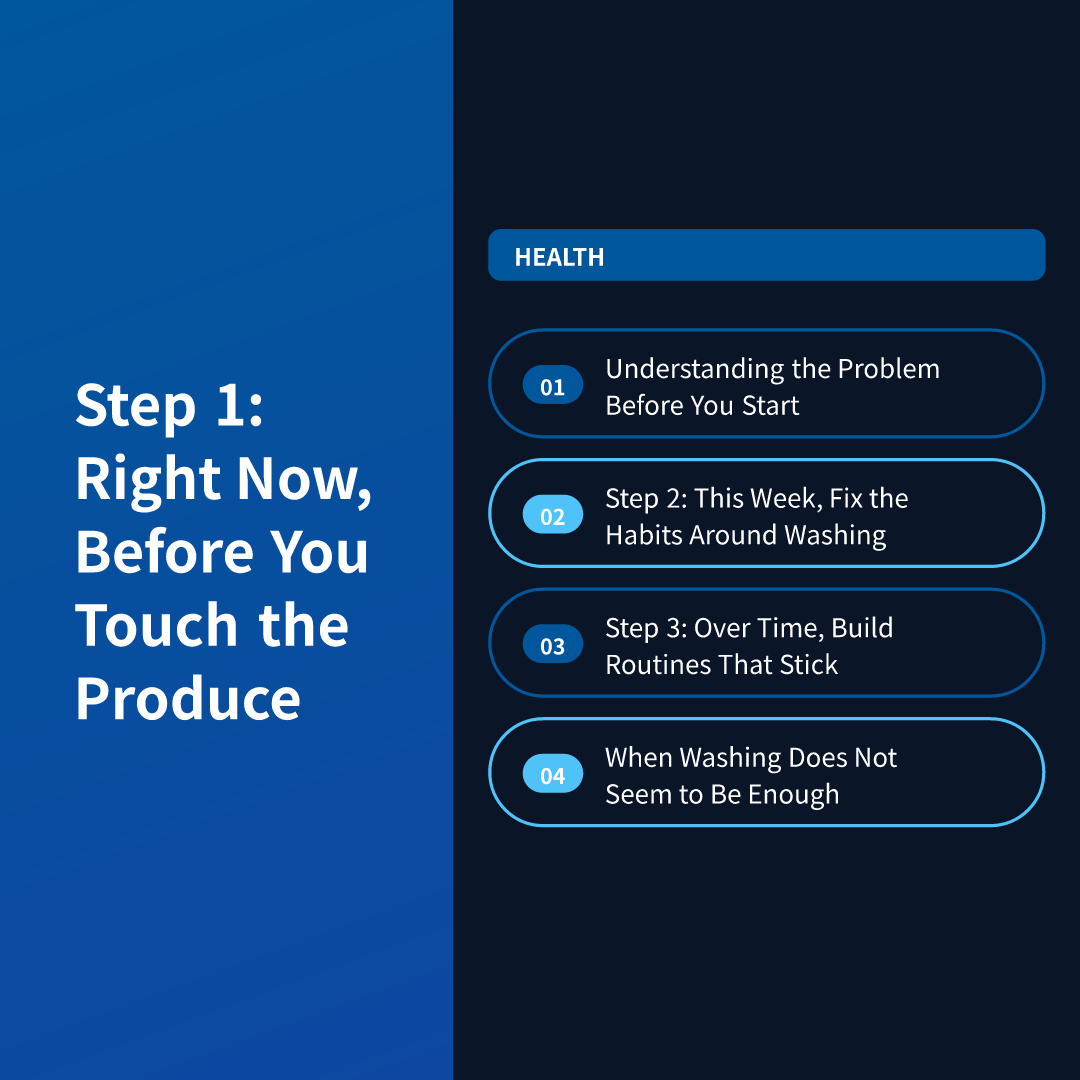
Step 1: Right Now, Before You Touch the Produce
These are the moves that make the biggest difference today, with no special equipment.
- Wash your hands first. How: use soap and water and dry with a clean towel. Why: hands are one of the most common ways germs reach food, and the CDC and FDA both list hand washing as a core food safety habit.
- Clean the sink and work surfaces. How: wash counters, the sink basin, and cutting boards with hot soapy water before produce goes near them. Why: a sink that recently held raw meat or dirty dishes can undo your rinsing.
- Rinse under cool running water. How: hold the item under the tap and turn it in your hands so every side is covered. Why: running water carries away loosened dirt rather than leaving it in a standing bowl.
- Rub or scrub where it fits. How: rub soft items such as tomatoes or peaches with your hands, and use a clean produce brush on firm items such as potatoes, carrots, and melons. Why: friction helps lift material that water alone can miss.
- Dry with a clean cloth or paper towel. How: pat the produce dry after rinsing. Why: the FDA notes that drying may further reduce surface germs, and dry produce also tends to keep better.
Do not forget the rind
Melons, oranges, and avocados are often peeled, so people skip washing them. But a knife can drag whatever is on the outside into the part you eat. Rinsing and scrubbing the outer surface before cutting is a common recommendation from the FDA and USDA.
Timing matters
General guidance from food safety agencies is to wash produce shortly before use rather than as soon as you get home. Washing in advance can leave extra moisture that speeds spoilage for some items, especially berries and leafy greens. If you prefer to prep ahead, make sure the produce is fully dry and stored in a clean container.
Step 2: This Week, Fix the Habits Around Washing
Once the basic rinse is routine, the next gains come from the details that surround it. A week is plenty of time to adjust how you shop, store, and prepare.
- Separate produce from raw meat, poultry, seafood, and eggs. How: use different bags in the cart, separate shelves or bins in the fridge, and dedicated cutting boards. Why: the CDC and USDA both highlight cross-contamination as a common route for germs to reach food that will be eaten raw.
- Check produce when you buy it. How: choose items without obvious bruises or damage, and favor pre-cut produce that is kept cold or on ice. Why: damaged skin can give germs an easier way in, as general FDA guidance describes.
- Cut away damaged areas. How: remove bruised or cut spots before eating or cooking. Why: those areas may harbor more microorganisms, and removing them is a standard recommendation.
- Store produce properly. How: keep cut or peeled items and many perishable fruits and vegetables in a fridge set to a safe cold temperature, and follow storage notes on packaging. Why: cold storage slows the growth of many germs, according to the FDA and USDA.
Related reading: Basic Food Safety at Home: Who Needs Extra Care
What about leafy greens?
For heads of lettuce or cabbage, general guidance is to remove and discard the outer leaves, then rinse the rest. For loose leaves, a rinse under running water while separating them helps reach each surface. A salad spinner or a clean towel can help with drying.
Bagged salad labeled "ready to eat"
Packaged greens labeled prewashed, triple washed, or ready to eat can generally be eaten without more washing, according to the FDA. Rewashing at home is not usually needed and could introduce germs from your sink or hands. If the label says otherwise, or if you have a specific health concern, follow the package directions and consider asking a food safety professional or your clinician.
Berries, grapes, and other small fruit
Small fruit is fragile, so rinse it gently in a colander under cool running water and let it drain. Many people find it works best to rinse just before eating, since moisture can encourage mold. Moldy berries are usually best discarded along with others that touched them in the container.
Step 3: Over Time, Build Routines That Stick

Safe produce handling is less about one perfect wash and more about repeating small habits. The goal for this stage is to make the routine automatic so it takes little thought.
- Set up a simple wash station. How: keep a clean produce brush, a colander, and a dedicated towel near the sink. Why: when tools are easy to reach, people are more likely to use them every time.
- Replace sponges, brushes, and towels regularly. How: launder cloth towels often, let brushes dry fully between uses, and swap worn items. Why: damp tools can hold germs and spread them back to clean produce.
- Handle special items with extra care. How: treat raw sprouts, fresh-cut melon, and unpasteurized juices thoughtfully, especially if someone in the home is at higher risk. Why: public health agencies have linked these foods to foodborne illness outbreaks in the past, and washing may not fully address the risk for sprouts.
- Stay alert to recalls. How: follow notices from the FDA and the USDA about recalled produce. Why: if a product is recalled, washing is not a substitute for following the recall advice.
A word on pesticide worries
Many people wash produce hoping to reduce pesticide residue. According to general guidance from the FDA and the Environmental Protection Agency (EPA), rinsing under running water and scrubbing firm items may help reduce residues on the surface, though it may not remove all of them. Whether to buy organic or conventional produce is a personal choice involving budget, availability, and preference. Eating a variety of fruits and vegetables is widely encouraged by public health agencies regardless of how they are grown.
Popular hacks, and a sensible attitude toward them
Vinegar soaks, baking soda baths, and similar tricks circulate widely online. Some small studies have explored them, but the main agencies that issue food safety guidance generally still point people to plain running water and friction. If you enjoy a soak for texture or to loosen dirt, it is not likely to replace the basics, and it should be followed by a clear-water rinse. When in doubt, the simpler method is the one with the clearest official backing.
When Washing Does Not Seem to Be Enough
Sometimes you do everything right and still run into trouble. Produce may look slimy, smell off, or show mold. You may notice a stomach upset after a meal and wonder if the salad was responsible. Here is how to think about those situations.
When to throw the produce out
If something looks spoiled, smells unusual, or has widespread mold, it is generally safer to discard it than to try to wash it into shape. The same applies to produce linked to a recall, or items that sat out for a long time at warm temperatures. Washing is not a rescue method for food that has gone bad.
When symptoms may signal a problem
According to the CDC, common signs of foodborne illness can include stomach cramps, diarrhea, nausea, vomiting, and sometimes fever. Many mild cases pass on their own, but symptoms vary from person to person. Contact a doctor or other qualified healthcare provider if symptoms are severe, if there is blood in stool, if fever is high, if you cannot keep fluids down, or if signs of dehydration appear. Seek care sooner for infants, older adults, pregnant people, and anyone with a weakened immune system or ongoing health condition. In an emergency, call your local emergency number.
When to ask for personalized guidance
If you have a health condition, take medications, or are pregnant, ask a clinician or registered dietitian which foods and preparation steps suit your situation. Local public health departments and the FDA, CDC, and USDA also publish consumer food safety information, and questions about a specific product can often be directed to the manufacturer or to a health department. Knowing how to wash fruits and vegetables is a solid foundation, but it works best alongside professional advice when your circumstances call for it.
Disclaimer: This article is for informational purposes only and is not a substitute for professional medical advice, diagnosis, or treatment. Please consult a licensed professional for personal health decisions.