How to Keep a Clean Kitchen When Mess Has Different Causes
Two kitchens can look equally messy for completely different reasons, and the fix for one often does nothing for the other. If you want to know how to keep a clean kitchen, the most useful first step is working out whether your problem is mostly clutter and habits, or mostly hidden germs, grease, and moisture. Once you know which one you are dealing with, the routine gets simpler and you stop wasting time on chores that were never the issue.
This guide splits the problem into two main causes, explains how to tell which one applies to you, and then covers the habits that help in nearly every home. It is general information, not personalized advice, and a few situations (such as a household member with a weakened immune system) call for extra care that a professional can help you plan.
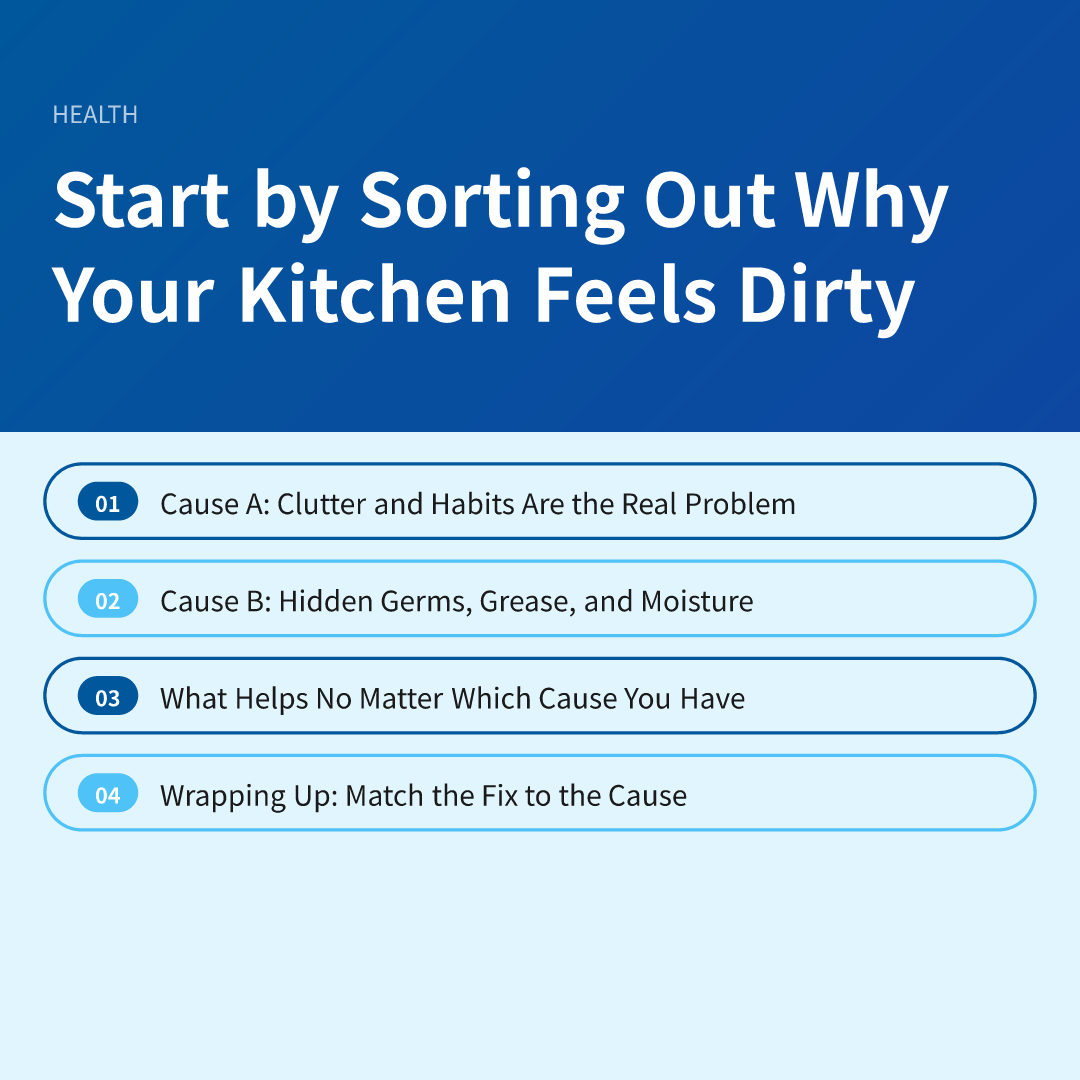
Start by Sorting Out Why Your Kitchen Feels Dirty
"Dirty" is a catch-all word. Sometimes it means the counters disappear under mail, dishes, and appliances. Other times the room looks fine but smells off, feels sticky, or has cloths and sponges that never quite seem fresh. These are different problems with different solutions.
A quick way to separate them is to stand in the doorway and ask two things. First, can you see clear, usable surface space? Second, do things feel or smell clean when you touch or sniff them? If the first answer is no, your main issue is probably visible clutter and workflow. If the second answer is no, the issue is more likely residue, moisture, or food handling.
Many kitchens have a bit of both, which is normal. The goal is to figure out which cause is bigger so you can start there. Treating a grease problem with more decluttering, or a clutter problem with stronger cleaning products, is the most common way people burn out on kitchen upkeep.
Cause A: Clutter and Habits Are the Real Problem
How to tell if this is your situation
This cause is likely if the surfaces are mostly clean underneath but you rarely see them. Dishes pile up near the sink, small appliances crowd the counters, and wiping down feels pointless because you have to move ten things first. You may also find that cleaning feels like a big weekend project rather than something that happens in small bits.
Another sign is that the mess returns within a day, no matter how thoroughly you clean. That usually points to a system issue, such as items without a clear home, rather than a lack of effort.
What tends to help
Organizing guidance from many home-care sources generally points to the same idea: make the clean state easy to maintain. That often means giving frequently used items a defined spot, clearing counters of things you rarely use, and keeping the sink area as empty as you realistically can.
- Reduce what lives on the counters. Items used daily can stay out; seldom-used gadgets often do better in a cabinet.
- Close the loop on dishes. Many people find that washing or loading dishes right after a meal prevents the pile from forming at all.
- Give mail, keys, and paperwork a home elsewhere. Kitchens quietly become drop zones, and that clutter makes real cleaning harder.
- Clean as you cook. Wiping a spill while the pan heats is usually easier than scrubbing it later.
If this is your cause but you keep reaching for heavy-duty cleaners, that is a mismatch. The surfaces were not the problem, the system was, so the extra products mostly add cost and fumes without changing how the room feels.
When this cause is harder to fix
Clutter can be tied to stress, limited time, fatigue, or health conditions that make daily upkeep difficult. If keeping up with the kitchen feels overwhelming in a way that goes beyond habits, it may be worth talking with a healthcare professional or a trusted support person. There is no shame in needing a different approach.
Cause B: Hidden Germs, Grease, and Moisture
How to tell if this is your situation
This cause is likely if the kitchen looks tidy but still feels off. Surfaces may be tacky near the stove, the sink may have a lingering odor, and sponges or dishcloths may smell musty. You might notice a greasy film on cabinet fronts or dark spots in damp corners.
These are signs that residue and moisture are building up even though the room is organized. In this case, adding more organization will not help much, because the issue is what is sitting on the surfaces, not what is piled on top of them.
What tends to help
According to the CDC's general food safety guidance, keeping hands, surfaces, and utensils clean is one of the basic ways to reduce the spread of germs that can cause foodborne illness. The same guidance also stresses keeping raw meat, poultry, and seafood separate from ready-to-eat foods so that germs do not move between them.
In practical terms, many households focus on a few high-contact areas rather than everything at once:
- Cutting boards and prep surfaces. These are where raw and ready-to-eat foods most often meet, so they deserve regular washing with soap and water.
- The sink and faucet handles. They get touched constantly, often with unwashed hands.
- Sponges and dishcloths. Because they stay damp, they can hold onto residue and odor. Replacing or laundering them regularly is a common habit.
- The refrigerator. Spills and forgotten leftovers can spread odor and grime, so periodic clear-outs help.
- Stovetop and range hood areas. Grease builds up gradually and is easier to manage when wiped before it hardens.
The USDA's general food safety guidance also notes that washing hands before and after handling food, and keeping the fridge at a safe cold temperature, are central parts of kitchen hygiene. If you are unsure which temperature or timing applies to your situation, the agency's materials are a good place to check, and product labels on cleaners explain how each one is meant to be used.
A note on cleaning products
More product is not always better. Mixing different household cleaners can create harmful fumes, and some combinations are specifically warned against by poison-control and public health sources. Reading the label, ensuring good ventilation, and asking a pharmacist or the product maker if you have questions are sensible steps. People with asthma, skin sensitivities, or young children at home may want to ask a healthcare professional what is appropriate for them.
When this cause points to something bigger
Persistent dampness, visible mold, or recurring pest activity can signal a moisture or building problem that surface cleaning will not solve. In those cases, a landlord, property manager, or qualified home professional may need to look at leaks, ventilation, or sealing. Scrubbing harder tends to be a waste of effort if water keeps getting in.
What Helps No Matter Which Cause You Have
Some habits are useful in almost every kitchen, because they address both clutter and cleanliness at once. They are not glamorous, but they tend to be the ones that last.
- Small, regular resets beat occasional marathons. A short wipe-down at the end of the day often does more than a long scrub once in a while.
- Handwashing before cooking. This is a consistent recommendation in public health food safety guidance, and it costs almost nothing.
- Take the trash and compost out before they overflow. Odors and pests often start here.
- Let things dry. Dish racks, sinks, and cloths that stay wet tend to develop odor faster, so airflow and drying time matter.
- Check the fridge on a regular rhythm. Many people tie it to trash day so it becomes automatic.
- Pick a realistic routine. A plan you can actually keep is better than an ambitious one you abandon.
It also helps to be honest about your household. A kitchen shared by several people, a home with pets, or a space where someone cooks frequently will need a different rhythm than a small kitchen used lightly. There is no single correct schedule, and what feels manageable varies from person to person.
kitchen food safety basics for everyday cookingExtra caution for higher-risk households
According to the FDA's and CDC's general food safety materials, some groups are more vulnerable to serious illness from foodborne germs, including older adults, pregnant people, young children, and those with weakened immune systems. If someone in your home falls into one of these groups, it is reasonable to ask a healthcare professional what extra precautions make sense. Stomach illness that is severe, lasts a long time, or comes with signs like dehydration or high fever is a reason to seek medical care rather than rely on home cleaning alone.
Wrapping Up: Match the Fix to the Cause
If your kitchen looks messy but is basically clean underneath, the problem is most likely clutter and habits, and the helpful moves are about creating a system: fewer items on the counters, dishes handled promptly, and small resets that keep things from piling up. If your kitchen looks organized but feels sticky, smells off, or has damp spots, the cause is more likely residue, moisture, or food handling, and attention to handwashing, separating raw foods, regularly washed surfaces, and dry, fresh cloths tends to matter more.
When you cannot tell which cause is bigger, try one change at a time for a couple of weeks and notice what actually improves the room. If something stays stubborn, such as persistent odors, mold, or pests, a landlord or qualified home professional can help trace the source. And if health concerns are part of the picture, a healthcare professional is the right person to ask. Knowing how to keep a clean kitchen is less about doing everything and more about choosing the right thing to fix first.
Disclaimer: This article is for informational purposes only and is not a substitute for professional medical advice, diagnosis, or treatment. Please consult a licensed professional for personal health decisions.