How to Take a Proper Break at Work and Actually Recharge
Knowing how to take a proper break at work is less about willpower and more about what the break actually contains. Many people blame laziness or a short attention span when they feel just as tired after a pause as before it. The more common explanation is that the break itself never gave the mind or body a real change of pace. What follows separates the popular explanation from the more likely ones, so you can judge your own situation.
This is general information from a health and wellness editor's perspective, not personal medical advice. Needs differ from person to person, and the points below are meant to help you think, not to diagnose anything.
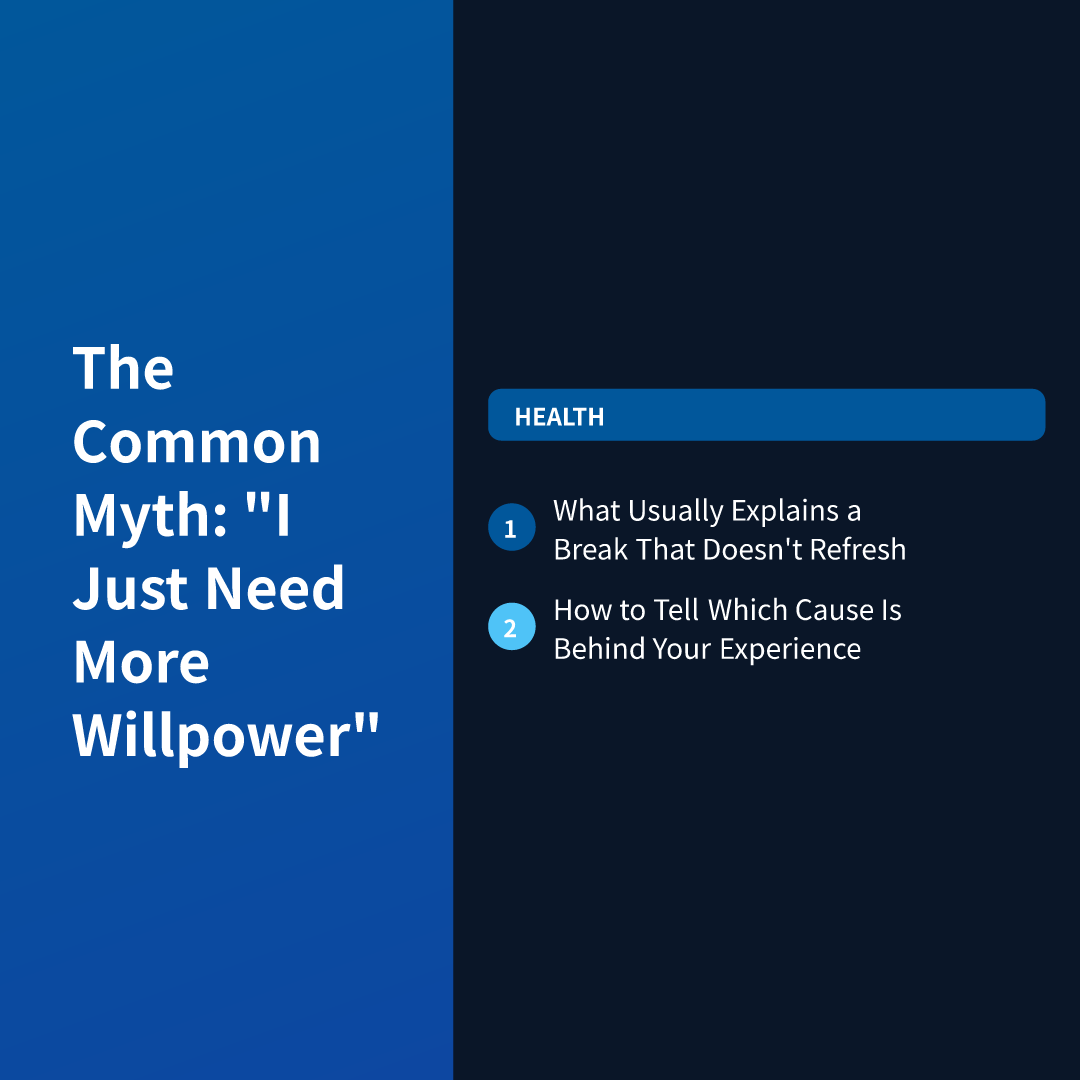
The Common Myth: "I Just Need More Willpower"
A frequent assumption is that people who feel drained after breaks simply lack discipline. The thinking goes that if you were more motivated, you would bounce back faster and return to your desk ready to go. That idea is appealing because it puts the fix entirely in your own hands.
The reality is different. Feeling unrefreshed after a pause usually says more about the design of the pause than about character. A break spent in the same posture, with the same stream of information, often asks the same systems to keep working.
Myth: Any Pause Counts as a Break
Many people count a few minutes of scrolling on a phone as downtime. Yet the eyes are still focused on a screen, the mind is still processing text and images, and the neck and shoulders often stay in the same position. In that sense, the work simply changed form.
Fact: a pause tends to feel restorative when something actually shifts, such as your posture, your surroundings, or the kind of thinking you are doing. Individual responses vary, and some people do find light phone use relaxing. Still, it is worth noticing whether you return feeling lighter or just slightly more scattered.
Myth: Pushing Through Saves Time
Another popular belief is that skipping breaks makes you more productive. It can feel true in the moment, especially on a busy day. Over longer stretches, however, many people notice more mistakes, more irritability, and more difficulty focusing.
According to general workplace wellness guidance from the CDC and NIOSH (the National Institute for Occupational Safety and Health), long uninterrupted periods of demanding work are commonly associated with fatigue and strain. Fact: stepping away is often part of sustaining effort rather than a loss of it, though the right rhythm depends on your job and your body.
What Usually Explains a Break That Doesn't Refresh
When the willpower explanation is set aside, several more practical causes tend to show up. They often overlap, and most people recognize more than one.
The Break Uses the Same Mental Channel
If your work is mostly reading, writing, or screen-based problem solving, then reading news or checking messages keeps the same channel busy. The mind has no chance to idle. Many people find that a break feels more complete when it involves a different kind of input, such as looking out a window, walking, or talking about something unrelated to work.
Physical Stillness Carries Over
Sitting through the break after sitting through the work leaves the body in much the same state. The Mayo Clinic and the CDC have both published general information noting that long periods of sitting are linked with discomfort and other health concerns, and that moving around periodically is commonly encouraged. A short change of position or a gentle walk is often what people mean when they say a break "reset" them.
Anyone with pain, a mobility limitation, or a medical condition affecting movement should ask a qualified professional what kind of activity suits them. A pause that works for one person can be uncomfortable for another.
Interruptions Eat the Pause
A break that is cut short by notifications, quick questions, or a sense that someone might need you rarely feels like a break. The mind stays on alert even while the body is away from the desk. This is a very common pattern in open offices and remote roles where availability is expected all day.
Eating and Drinking Get Skipped or Rushed
Hunger and thirst can quietly make a workday feel heavier. Eating at the desk while answering messages tends to blur the line between meal and work. General nutrition information from the U.S. Dietary Guidelines for Americans emphasizes regular, balanced eating, though individual needs vary widely and some people have medical reasons for specific eating patterns that a clinician or dietitian should guide.
Stress and Poor Sleep Change What a Break Can Do
Sometimes the break is fine and the underlying tiredness comes from elsewhere. According to the National Institutes of Health and the CDC's general sleep information, sleep needs differ, and ongoing sleep trouble can affect concentration and mood in ways a short pause cannot fully fix. If a break never seems to help, the cause may sit outside the workday.
Workplace Culture Sends Mixed Signals
Even when a break is technically allowed, it may feel unwelcome. If colleagues eat at their desks or leaders respond to messages at all hours, stepping away can carry guilt. That worry follows you out of the room and weakens the rest you were hoping to get.
How to Tell Which Cause Is Behind Your Experience
Because several explanations can apply at once, a little observation helps. The goal is not to label yourself but to notice patterns you can discuss with a manager, or with a health professional if needed.
The table below summarizes how common patterns differ in what you might notice and what they may point to.
| Pattern | What you may notice | What it may suggest |
|---|---|---|
| Screen-to-screen break | Eyes and mind still feel busy afterward | The break used the same channel as work |
| Sitting through the pause | Stiffness remains when you return | The body had no change of position |
| Frequent interruptions | You feel on edge even while away | The pause was never fully protected |
| Rushed or skipped meals | Energy dips and irritability appear | Basic needs may be going unmet |
| Tired no matter what | Breaks rarely help at all | Sleep or stress may deserve attention |
Try Noticing Before Changing
For a few days, it can help to jot down what you did during each pause and how you felt when you sat back down. You are looking for patterns, not perfection. Many people find that the breaks that help share a trait, such as being outdoors, being away from screens, or involving movement.
Match the Break to the Work
A useful rule of thumb is that the break should contrast with the task. If the work is sedentary and focused, a movement-based or visually relaxed pause tends to feel better. If the work is physical or highly social, a quiet seat and a calm moment may be what feels restorative. Preferences differ, so experimenting gently is reasonable.
Consider Your Own Limits
Not every job allows flexible breaks. Shift work, caregiving roles, customer-facing jobs, and safety-sensitive positions may have fixed schedules. In those cases, the aim is often to make the time you do have as restful as possible and to raise concerns about scheduling through appropriate workplace channels.
When to Seek Professional Help
Persistent exhaustion, ongoing low mood, trouble sleeping, chest discomfort, dizziness, or pain that does not ease should be discussed with a licensed healthcare professional rather than managed through break habits alone. The CDC and NIOSH also provide general information on work-related stress and strain, and many employers offer confidential support programs. If you feel overwhelmed or unsafe, contact a local health service or emergency number promptly.
Frequently asked questions
Is it a problem if I take breaks but still feel guilty about them?
Guilt around breaks is very common and does not mean you are doing something wrong. It often reflects workplace expectations more than your actual needs. If the feeling is strong or constant, talking with a manager or a counselor about workload and norms may help.
Can a break ever be too long or too frequent?
There is no single pattern that fits everyone, and job requirements often set the limits. Some people feel best with short, regular pauses, while others prefer fewer, longer ones. If your work suffers or your employer has specific rules, it is reasonable to adjust and ask for guidance.
What if I work from home and the lines between work and rest are blurry?
Blurred boundaries are a widely reported challenge of remote work. Many people find it helps to leave the workspace physically during a pause and to treat the pause as separate from household tasks. What works depends on your home, your schedule, and your responsibilities.
Do caffeine or snacks count as a proper break?
A drink or snack can be part of a pause, but on its own it may not give the change of pace some people are looking for. Reactions to caffeine and foods vary, and people with health conditions or sensitivities should ask a pharmacist, doctor, or dietitian what suits them. Pairing a drink with a few minutes away from work often feels more complete.
Disclaimer: This article is for informational purposes only and is not a substitute for professional medical advice, diagnosis, or treatment. Please consult a licensed professional for personal health decisions.