How to Plan a Relaxing Weekend at Home
The same tired, restless weekend can have very different causes, and that is why one person's perfect lazy Saturday leaves another person feeling worse. If you want to know how to plan a relaxing weekend at home, the most useful first step is to work out what is actually wearing you down: too much stimulation, too little downtime, or a body that simply needs rest. This guide sorts the common causes into branches and matches each one with gentler plans. It is general information, not personal medical advice.
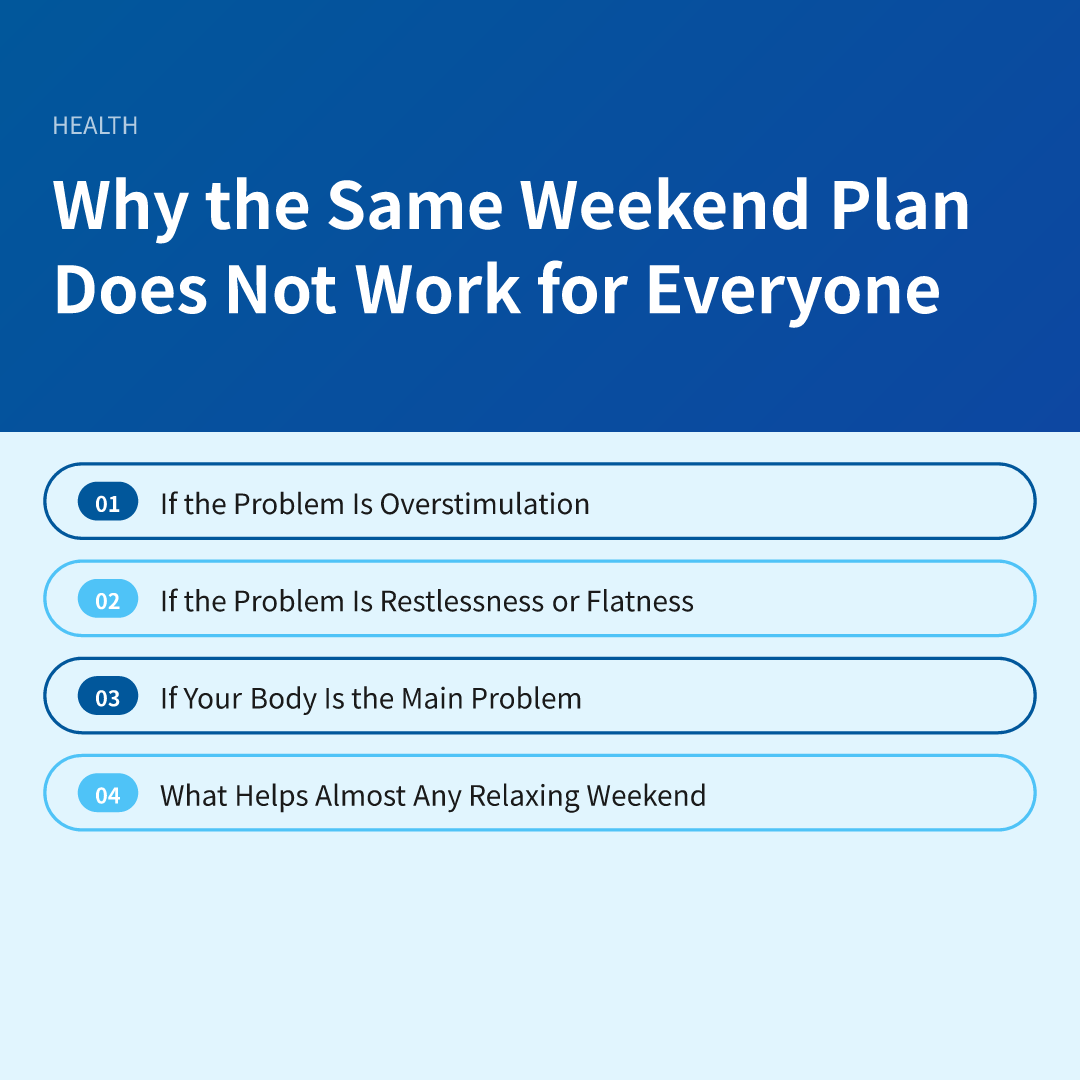
Why the Same Weekend Plan Does Not Work for Everyone
Many people block out a weekend, promise themselves a rest, and then spend Sunday evening feeling oddly unrefreshed. Often the plan did not match the problem. Someone whose week was full of meetings and noise needs something very different from someone who spent five days alone at a screen.
According to the CDC's general guidance on stress, people respond to pressure in different ways, and what helps one person unwind may not help another. That is worth keeping in mind before you build a schedule. A plan copied from someone else's routine can quietly add pressure, which defeats the purpose.
Three common patterns behind a "bad rest" weekend
- Overstimulation: too many notifications, errands, people, and decisions during the week.
- Understimulation or restlessness: a quiet, unstructured week that leaves you flat, bored, or stuck in your head.
- Physical depletion: a body that is short on sleep, movement, or regular meals, which makes any plan feel heavy.
These are not medical categories, and many people sit somewhere between them. Think of them as a quick way to decide where to begin. If more than one fits, pick the one that feels loudest right now.
How to tell which pattern fits you
Look back at the last few days rather than the last few hours. Did you feel wired and snappy, or flat and unmotivated? Did small sounds and requests feel like too much, or did everything feel dull? Did your body feel heavy, achy, or sluggish?
If you guess wrong, the cost is mostly wasted time. A packed "self-care" itinerary will overload someone who is already overstimulated, while an empty, screen-heavy couch day may deepen the flatness of someone who is understimulated. A quick honest check on Friday evening can save you from that.
If the Problem Is Overstimulation
How to check whether this is you
You may recognize this pattern if you feel irritable by Friday, find it hard to focus on one thing, keep reaching for your phone without enjoying it, or feel tense even when nothing is happening. Weekends that begin with a long list of chores and social plans often make it worse.
What tends to help
The goal here is to lower input, not to fill the time with a different kind of busyness. Many people find it helps to keep the first few hours of the weekend deliberately empty and to silence nonessential notifications. Dimmer light, quieter rooms, and slower tasks such as tidying one shelf or making a simple meal can feel restful without demanding much attention.
- Choose one or two anchor activities instead of a full schedule.
- Keep screens out of the first and last part of the day if that feels doable.
- Leave gaps between activities so nothing feels rushed.
- Say no, or "not this weekend," to optional invitations without over-explaining.
The Mayo Clinic's general stress-management information describes simple practices such as deep breathing, gentle stretching, and time in quiet surroundings as common ways people try to settle down. These are everyday habits, not treatments, and how much they help varies from person to person.
When this branch backfires
If you spend the whole weekend alone in silence and feel lonelier rather than calmer, the overstimulation label may not fit. In that case, move on to the next branch. Another common trap is replacing work noise with endless streaming or scrolling, which can feel like rest but leave the mind just as crowded.
If the Problem Is Restlessness or Flatness
How to check whether this is you
This pattern often shows up as a heavy, "nothing sounds good" mood, a tendency to doomscroll, or a sense that the days blur together. You may be tired but not in a way that sleep fixes. Weeks with little variety, little movement, or little contact with other people can feed it.
What tends to help
Here, a gentle structure usually serves better than a blank calendar. A small, pleasant plan gives the day a shape without turning it into a project. Some people like a slow morning, a short walk, a hands-on hobby in the afternoon, and a simple evening ritual such as a favorite meal or a film chosen in advance.
- Pick one activity that uses your hands, such as cooking, baking, gardening, a puzzle, or sketching.
- Add light movement you actually enjoy, like a stroll around the block or easy stretching.
- Arrange a short, low-pressure check-in with a friend or family member, by call or in person.
- Open a window or step outside for some daylight.
According to the NIH's general information on physical activity and mood, regular movement is often linked with feeling better, though the effect differs between people and does not replace care when it is needed. Keep activities small enough that you can start them even on a low-energy day.
When this branch backfires
If you build a long to-do list under the banner of "being productive and relaxed," you may end up with the same pressure you were trying to escape. Likewise, if the flatness is severe, lasts for weeks, or comes with hopelessness, a weekend plan is not the right tool on its own. More on that below.
If Your Body Is the Main Problem
How to check whether this is you
Physical depletion often looks like a short fuse, a foggy head, aches, or a strong urge to nap at odd hours. You might have been skipping meals, sleeping unevenly, or sitting for long stretches. In this case the issue is less about mood and more about basic needs.
What tends to help
Start with the basics before adding anything enjoyable. The CDC's general sleep guidance highlights keeping a regular sleep schedule and a restful bedroom as common foundations for better rest. Many people also feel steadier when meals are regular and water is within reach. A weekend can be a chance to reset these rhythms gently rather than to "catch up" in dramatic ways.
- Keep wake-up times reasonably close to your weekday pattern if you can, since big swings can leave you groggy.
- Plan simple, familiar meals so you are not making decisions while tired.
- Build in short rests and brief movement breaks instead of one long stretch on the couch.
- Make the bedroom cool, dark, and quiet if that works for you.
Questions about supplements, sleep aids, or anything you would take or apply to help you rest are best taken to a pharmacist or doctor, who can consider your health history and any medicines you already use.
When this branch backfires
Sleeping for most of the weekend can sometimes leave people feeling more sluggish. And if tiredness is constant, unexplained, or paired with other changes, treating it as a scheduling problem may delay getting useful answers.
What Helps Almost Any Relaxing Weekend
Whichever branch fits you, a few habits tend to carry across. They are not rules, just common sense that many people find workable.
Decide the shape of the weekend before it starts
A few minutes on Friday evening is enough. Choose what you want to feel, such as calm, lightly energized, or simply rested, and pick one or two activities that support it. A loose plan beats a rigid one, and it helps to leave at least one block completely open.
Protect the edges of each day
Mornings and evenings set the tone. Many people feel better when they avoid work email at the start and end of the day and keep a familiar, soothing routine, such as a warm drink, a short walk, or a few minutes of reading.
Handle chores on purpose
Chores can quietly eat a relaxing weekend. Instead of letting them hover, some people set a single short window for essentials and then let the rest wait. That boundary can make the remaining time feel genuinely free.
Keep the setting comfortable, not perfect
You do not need a spotless home or special equipment. A tidy corner, a comfortable blanket, soft lighting, and a few favorite things within reach are usually plenty. Perfecting the space can turn into another task.
Make room for connection and for solitude
Some people recharge alone, others through company. Notice which one you tend to need and plan for it without guilt. A short call, a shared meal, or an hour of quiet can each count as rest.
When a Weekend Plan Is Not Enough
A restful weekend is a reasonable everyday goal, but it cannot solve everything. According to the NIH's general mental health information, persistent low mood, ongoing anxiety, long-lasting sleep trouble, or feeling unable to cope are reasons to talk with a qualified professional rather than trying to manage alone.
Consider reaching out to a licensed clinician if you notice any of the following:
- Exhaustion that continues despite regular rest.
- Sleep problems that last for weeks.
- Loss of interest in things you usually enjoy.
- Physical symptoms that worry you, such as ongoing pain, chest discomfort, or sudden changes in how you feel.
- Thoughts of harming yourself. In the United States, you can call or text 988 to reach the Suicide and Crisis Lifeline at any time, or contact local emergency services if you are in immediate danger.
Conclusion: Match the Plan to the Cause
Knowing how to plan a relaxing weekend at home comes down to matching the plan to what is actually going on. If the week was loud and crowded, lower the input and leave space. If it left you flat or restless, add a small amount of gentle structure, movement, and connection. If your body is running on empty, begin with regular sleep, meals, and short rests before anything fancy.
If you cannot tell which branch fits, try a simple experiment: choose the gentlest option from two branches, see how you feel by Sunday, and adjust next time. If rest keeps failing no matter what you try, or if something feels off, a conversation with a licensed professional is a sensible next step. Results differ from person to person, and a good weekend plan is one you can actually enjoy.
Disclaimer: This article is for informational purposes only and is not a substitute for professional medical advice, diagnosis, or treatment. Please consult a licensed professional for personal health decisions.