How to Dress for Cold Weather Walks, Day by Day
Knowing how to dress for cold weather walks is less about a perfect outfit and more about small habits tucked into three points of your day: morning, midday, and evening. Most people stay comfortable with a layered system of a moisture-managing base, a warming middle, and a wind-blocking outer layer, then adjust as the weather and their body change. Personal variation is large, so treat everything below as general information rather than a prescription.
Big plans tend to fade by the second cold week. Small, repeatable steps tied to the time of day usually last longer, and they make it easier to notice what your own body needs when the temperature drops.
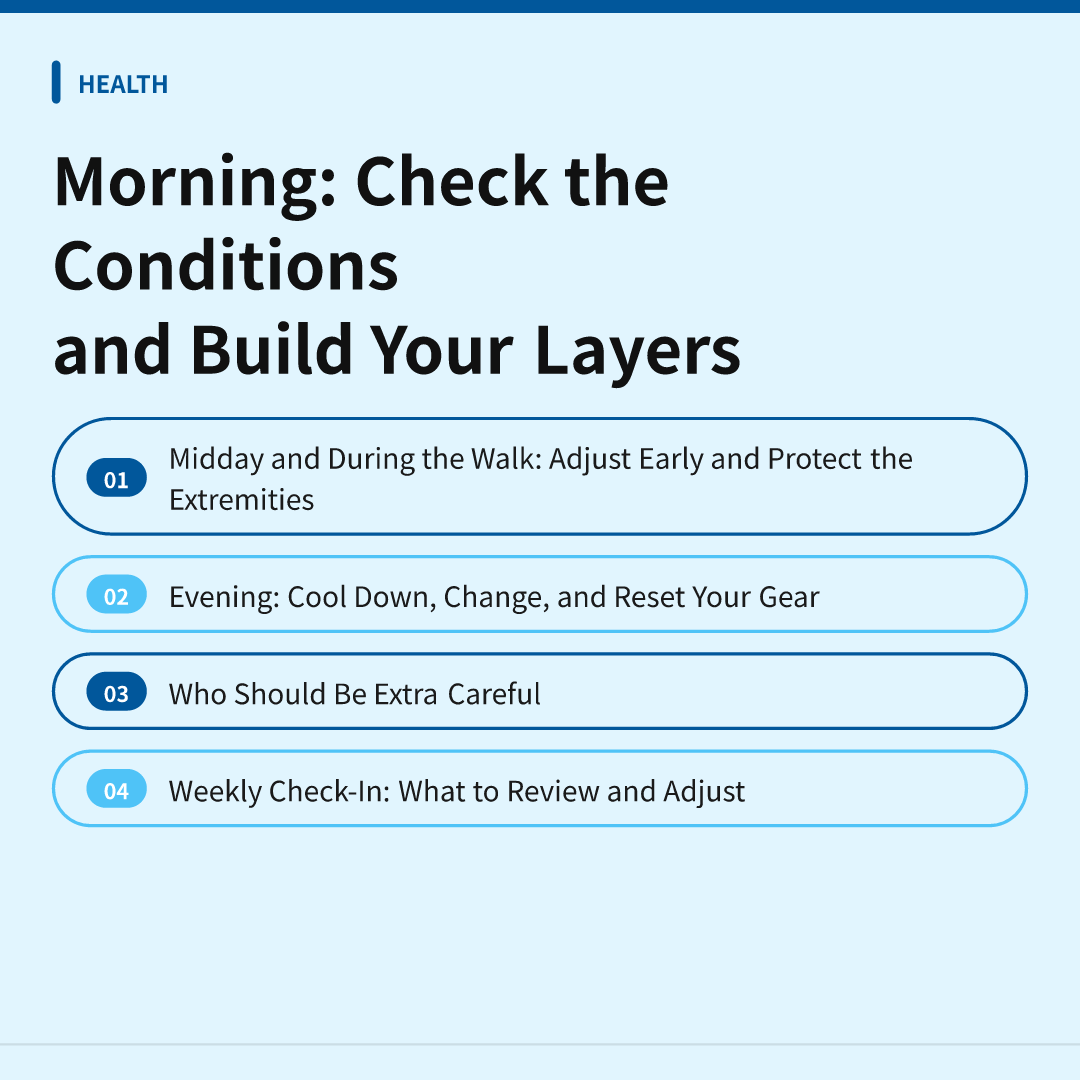
Morning: Check the Conditions and Build Your Layers
Mornings are usually the coldest part of the day, and they are also when you can make the most useful decisions. A quick look at the forecast before you dress helps you plan for wind, damp air, and the gap between the starting temperature and what it may feel like an hour later.
Look at the "feels like" reading, not just the number
Wind and humidity can make the air feel much colder than the thermometer suggests. The National Weather Service describes wind chill as how cold the air feels on exposed skin, which is why a breezy day can call for more coverage than a still one at the same temperature. Checking this in the morning lets you decide on a windproof outer layer before you are standing at the door.
Start with a base layer that handles moisture
Why does the base layer matter so much? Because sweat that stays against your skin can leave you chilled once you slow down or stop. Many walkers prefer fabrics that move moisture away from the skin, such as synthetic blends or merino wool, and tend to avoid cotton next to the body on longer outings. Fit matters too: snug enough to sit close, but not so tight that it restricts movement.
Add a middle layer you can remove
A fleece, light wool sweater, or similar mid-layer traps warm air. The reason to choose something easy to unzip or tie around your waist is simple: most people warm up within the first stretch of a walk, and it is more comfortable to adjust than to overheat and then cool off damp.
Finish with a shell suited to the weather
An outer layer that blocks wind is often the single most helpful piece on a blustery day. If rain or wet snow is likely, a water-resistant or waterproof shell makes sense, though these can trap heat, so ventilation features like underarm zips are worth noticing.
Start slightly cool
A common rule of thumb among walkers is to feel a touch cool when you step outside, since your body generates heat as you move. This is a general habit, not a rule for everyone. People who run cold, who are older, or who have circulation concerns may reasonably start warmer.
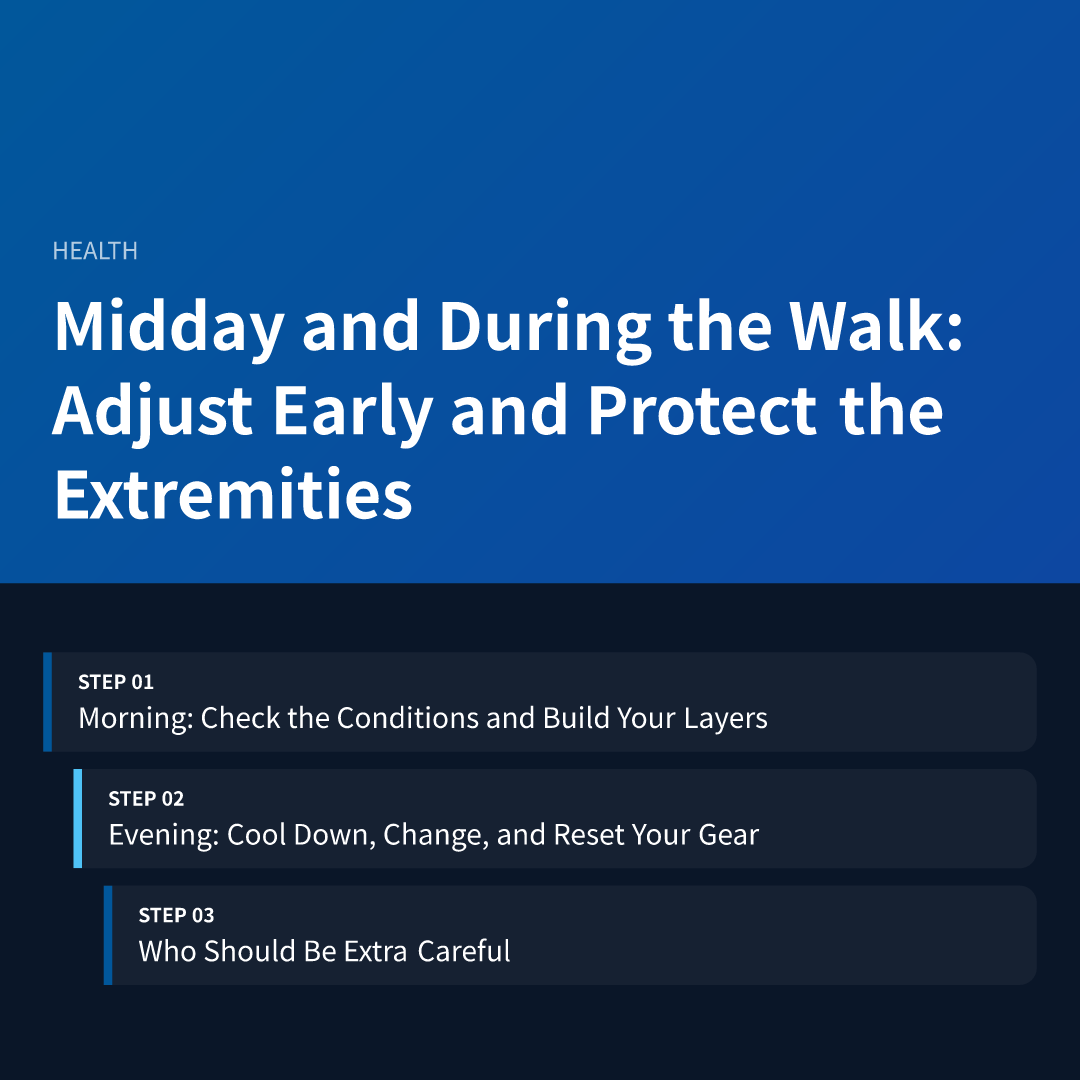
Midday and During the Walk: Adjust Early and Protect the Extremities
Once you are moving, the goal shifts from dressing to adjusting. Midday walks often bring sun, a warmer temperature, and a different level of effort than a brisk morning stroll, so the layers you chose earlier may need a second look.
Vent before you sweat
Unzipping a jacket, pushing up sleeves, or removing a hat for a few minutes can keep you from soaking your base layer. This is the "why" behind removable layers: adjusting early is easier than recovering from being damp in cold air. If you do feel clammy, it is generally a sign to slow down, loosen a layer, or head somewhere sheltered.
Take care of hands, feet, ears, and face
Fingers, toes, ears, and the nose tend to feel the cold first because the body prioritizes keeping the core warm. Many people use a hat or headband that covers the ears, gloves or mittens (mittens are often warmer for people whose hands get cold easily), and a neck gaiter or scarf that can be pulled up over the lower face in wind. For feet, socks that wick moisture and shoes with room for toes to move are commonly preferred, since overly tight footwear can reduce warmth.
According to the CDC's general cold-weather guidance, extremities and exposed skin are among the areas most vulnerable to cold-related problems. If you notice numbness, a waxy or pale look to the skin, or burning and stinging that does not ease once you are warm, that is a signal to get indoors and seek medical advice.
Mind the footing and visibility
Cold weather often means slick patches, early darkness, and low sun. Shoes with decent traction can help on frosty paths, and a short, careful stride is a common approach on uncertain surfaces. On shorter days, bright or reflective clothing can make you easier to see during a midday walk that stretches toward dusk.
Keep fluids and snacks in mind
Thirst can be less noticeable in the cold, but the body still uses fluids while walking. Bringing something to drink, and perhaps a small snack on longer outings, is a common habit. Needs differ by person and by health condition, so anyone with specific dietary or medical considerations may want to check with a clinician.
Evening: Cool Down, Change, and Reset Your Gear
Evening is where good habits quietly pay off. The minutes right after a walk are when damp clothes can leave you chilled, and the hours that follow are your chance to get everything ready for tomorrow.
Change out of damp clothing promptly
After a walk, your body is cooling down while your clothes may still hold sweat. Changing into dry layers soon afterward is a widely shared practice for staying comfortable, and a warm (not scalding) drink and a few minutes to settle can help you feel normal again. People who tend to feel very cold, or who feel unusually shivery or confused after being outside, should treat that as a reason to warm up gradually and contact a healthcare professional if it persists.
Check your skin
Take a moment to notice your fingers, toes, ears, and cheeks. Redness that fades as you warm up is common. Persistent numbness, blistering, or color changes are not something to wait out, and the National Institutes of Health and CDC both advise seeking medical care for suspected frostbite or hypothermia symptoms.
Dry and reset your gear
Damp gloves, socks, and shoes lose warmth quickly, so many walkers let items air-dry fully before the next outing. Rotating between two pairs of gloves or socks can make this easier. Laying out tomorrow's layers the night before also removes a small decision from a cold morning, which is exactly when motivation can dip.
Think about skin comfort
Cold, dry air can leave skin and lips feeling tight or chapped. Many people use a gentle moisturizer or lip balm, but reactions vary from person to person, so if you have sensitive skin or a skin condition, it is worth asking a pharmacist or dermatologist what suits you before trying something new.
Who Should Be Extra Careful
Cold exposure does not affect everyone equally. Older adults, young children, people with circulation problems, diabetes, heart or lung conditions, and those taking certain medications may be more sensitive to cold or less able to notice early warning signs. Anyone with these considerations, or who is simply unsure, may want to talk with a clinician about whether cold-weather walking suits them and how to approach it.
Pregnancy, recent illness, and conditions such as Raynaud's phenomenon can also change how the body responds to cold. There is no one-size-fits-all answer here, which is why professional guidance matters more than any general checklist.
Weekly Check-In: What to Review and Adjust
Once a week, take a few minutes to look back over how your walks felt. Small tweaks often matter more than buying new gear, and your notes will show patterns that a single day cannot.
- Comfort at the start and end: Did you feel slightly cool when you left and comfortably warm, not damp, when you finished?
- Layer performance: Did your base layer stay dry, and was your outer layer enough against wind or wet weather?
- Extremities: Were your hands, feet, and ears comfortable, or do they need a warmer or better-fitting option?
- Footing and visibility: Did your shoes grip well, and were you easy to see in low light?
- Gear condition: Are gloves, socks, and shoes drying fully between walks, and is anything worn out?
- Skin and body signals: Did you notice numbness, lingering chill, or irritated skin that deserves a closer look or a professional opinion?
- Routine fit: Is your morning check, midday adjusting, and evening reset realistic, or does one step need simplifying?
Dressing well for cold weather walks is a skill that builds gradually. Pay attention to the forecast, layer with intention, adjust early, and let your own comfort and any health considerations guide the details. If something feels off, or you have a medical condition that makes cold riskier, a qualified professional can help tailor the approach to you.
Disclaimer: This article is for informational purposes only and is not a substitute for professional medical advice, diagnosis, or treatment. Please consult a licensed professional for personal health decisions.
Related reading: How Much Fiber to Aim for in a Day: Reading the Label