Benefits of Standing Up More Often: What to Know
Picture a typical workday: you sit down with your coffee in the morning, and the next time you notice your body, the afternoon is half gone and your back feels stiff. Plenty of people wonder whether getting up more often during the day actually matters or whether it is just wellness folklore. The benefits of standing up more often are generally described as modest but real, mostly because breaking up long stretches of sitting may support circulation, joint comfort, and overall daily movement.
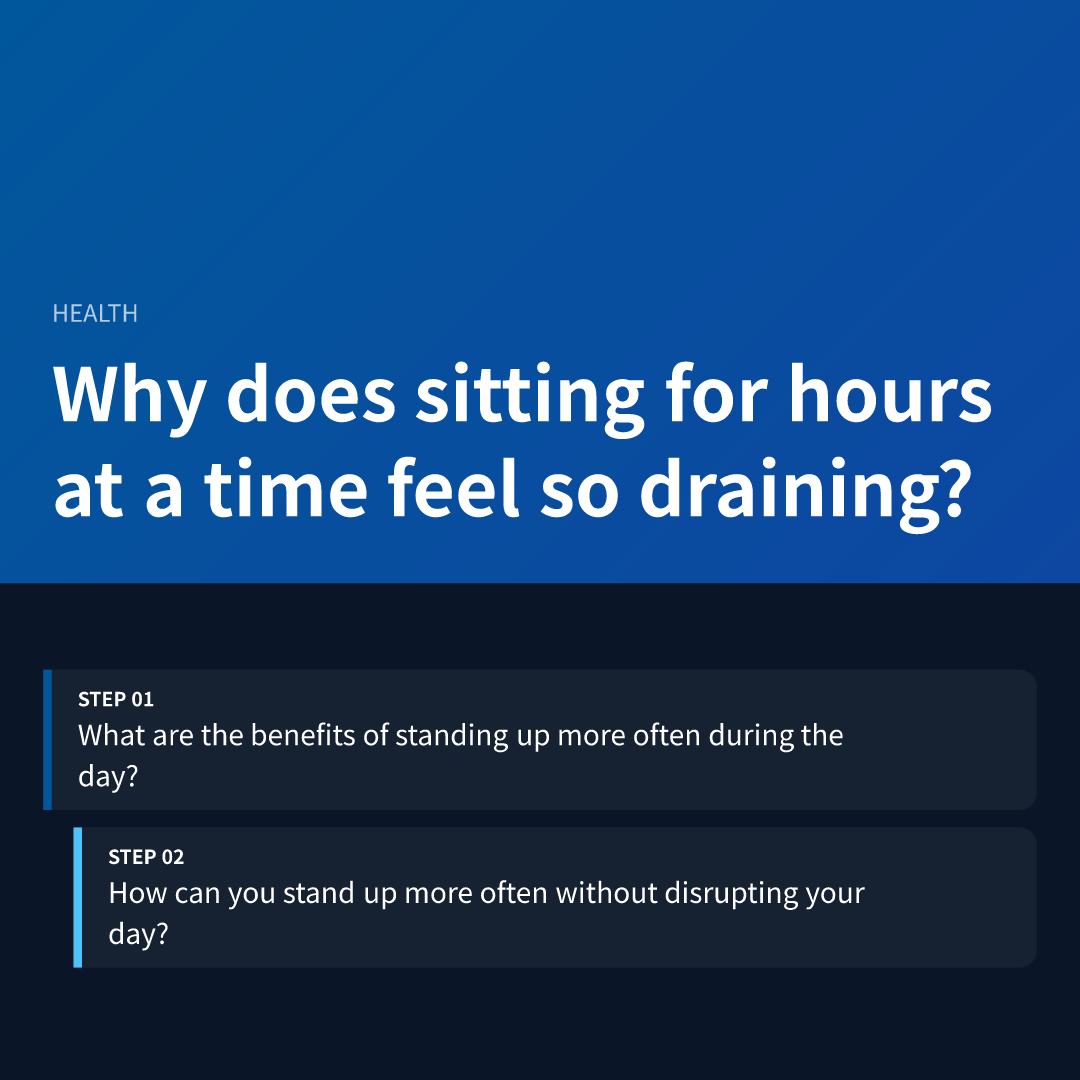
Why does sitting for hours at a time feel so draining?
Long, uninterrupted sitting tends to leave the body in one position, and that is often what people feel as stiffness, heaviness in the legs, or a tired lower back. When you stay still, the large muscles of the legs and hips are barely working, so the body uses less energy than it does during even light movement.
According to the CDC's general physical activity guidance, adults are encouraged to move more and sit less throughout the day. The agency frames sitting less as part of an overall active lifestyle rather than as a single fix.
What happens in the body when you stay seated
Muscles in the legs and trunk are not asked to do much while you sit, and blood flow in the lower body can slow down. Many people notice swollen ankles, a stiff neck, or tight hips after a long meeting or a long drive.
Posture also tends to drift over time. Shoulders round forward, the head moves toward the screen, and the lower back may lose the support it gets when you are upright and moving.
Why the break matters as much as the exercise
Some people assume that a workout at the end of the day cancels out hours in a chair. Research summarized by public health agencies, including the NIH and the CDC, suggests that long periods of sitting are worth addressing on their own, even for people who exercise regularly.
That does not mean exercise is less useful. It simply means that regular movement during the day and planned exercise seem to play different roles.
The exception: sitting is not the enemy
Sitting is a normal part of life, and nobody needs to feel guilty about it. Resting, eating, driving, and focused desk work all involve sitting, and some people have medical reasons to sit more than they would like.
If you have pain, a mobility limitation, or a health condition that affects balance or circulation, how much you stand should be guided by a healthcare professional rather than by general tips.
What are the benefits of standing up more often during the day?
The commonly described benefits include less stiffness, a bit more daily energy use, and a more comfortable posture. Results vary from person to person, and none of these effects are guaranteed.
The key idea is frequency rather than intensity. Short, regular breaks from sitting are the pattern most guidance points to, rather than a single long period of standing.
Possible benefits people commonly report
- Less stiffness: Changing position may ease the tight feeling in the hips, back, and neck that comes with long sitting.
- Better circulation in the legs: Standing and walking engage the calf muscles, which help move blood back toward the heart.
- More overall movement: Each time you stand, you are adding small bits of activity that can add up across a day.
- Mental refresh: Many people feel more alert after a short break, though this varies and depends on sleep, workload, and mood.
- A prompt to stretch or walk: Standing often leads naturally to moving around, which is where much of the value seems to come from.
What the research generally suggests about health
According to the CDC and the NIH, being physically active and reducing long periods of inactivity are associated with better long-term health, including heart and metabolic health. These agencies describe the link in general terms, and individual outcomes depend on many factors such as age, diet, genetics, and existing conditions.
Observational studies have linked more sitting with higher health risks, but those studies cannot prove that sitting alone is the cause. Other habits tend to travel with it, so it is wise to read headlines on this topic with some caution.
The exceptions and limits
Standing still for very long stretches is not automatically better than sitting. Some people develop sore feet, achy knees, or tired legs when they stand for long periods without moving.
The aim is variety: sit, stand, walk, and shift position. A standing desk is one option, but it is not required, and it does not replace moving your body.
How can you stand up more often without disrupting your day?
The easiest approach is to attach standing to things you already do, so it does not feel like another task. Small, repeatable cues tend to work better than ambitious plans that are hard to keep up.
Personal comfort matters here. What suits a desk worker may not suit someone who drives for a living or cares for children, so it helps to pick ideas that fit your routine.
Easy ways to build in breaks
- Stand up when you take a phone call or join a video meeting where you do not need to type.
- Refill your water glass or tea regularly, which gives you a natural reason to move.
- Walk to a colleague's desk instead of sending a message, when that is practical.
- Use a timer or reminder on your phone or watch if you tend to lose track of time.
- Stand while watching television or waiting for something to heat up at home.
Think of these as nudges, not rules. If a reminder starts to feel stressful, loosen it and find a rhythm that works for you.
Making a standing setup comfortable
If you try a standing desk or a raised surface, comfort tends to depend on posture and footwear. Many people find that supportive shoes or a cushioned mat make standing more tolerable, and that alternating between sitting and standing is easier than switching completely.
Screen height, keyboard position, and chair setup are all part of the picture. Workplace ergonomics resources from agencies such as OSHA offer general guidance, and an occupational health professional can help tailor a setup to your body.
Who should check with a professional first
Some people should talk with a qualified healthcare professional before changing how much they stand or move. This includes people who are pregnant, who have dizziness or fainting episodes, who have heart or circulation conditions, or who are recovering from surgery or injury.
Seek medical care if standing brings on chest pain, shortness of breath, severe leg swelling, new numbness, or sudden lightheadedness. These can be signs that need professional evaluation rather than self-adjustment.
Frequently asked questions
Is a standing desk necessary to get these benefits?
No, a standing desk is not required. The general idea is to interrupt long periods of sitting, and that can be done by walking around, stretching, or standing during calls. A standing desk is simply one tool some people find convenient.
Can standing too much cause problems?
It can for some people. Long periods of standing in one spot may lead to sore feet, tired legs, or back discomfort, especially without supportive footwear. Mixing standing, walking, and sitting is generally seen as more comfortable than any single position, and a healthcare professional can advise if discomfort persists.
Does standing more help with weight management?
Standing uses a little more energy than sitting, but the difference is generally small, and it varies by person. Public health agencies such as the CDC describe weight management as involving eating patterns, overall activity, sleep, and other factors. If weight is a concern, a clinician or registered dietitian can discuss options that fit your situation.
Disclaimer: This article is for informational purposes only and is not a substitute for professional medical advice, diagnosis, or treatment. Please consult a licensed professional for personal health decisions.